


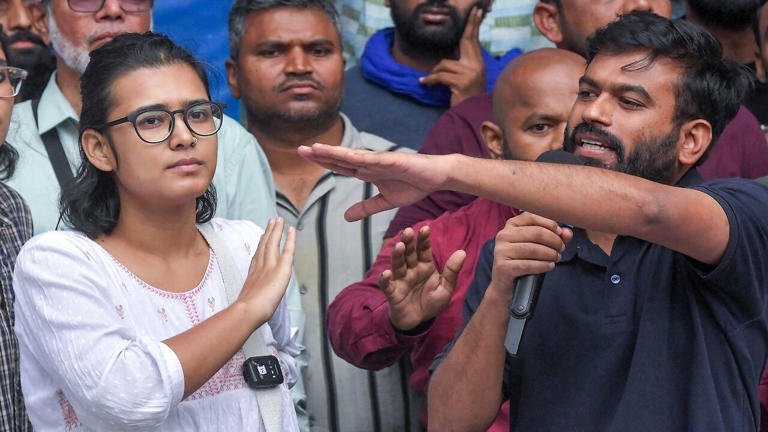
A nationwide campaign against the Special Intensive Revision (SIR) of electoral rolls is set to intensify on Friday, October 23, with activists and civil society figures invited to join protests against Chief Election Commissioner Gyanesh Kumar. Cockroach Janta Party (CJP) founder Abhijeet Dipke and All India Students’ Association (AISA) president Neha Bora are among those invited to participate in the planned march in New Delhi.
The protest aims to oppose the ongoing voter-roll revision exercise and demand Kumar’s removal. Organisers have described the campaign as a movement to protect voting rights and democratic institutions. They have also called for greater accountability from the Election Commission of India (ECI).
Anti-SIR March Planned From Bangla Sahib to Election Commission
The proposed Delhi march will begin at Bangla Sahib Gurdwara in Connaught Place and proceed towards the Election Commission’s office near Patel Chowk, according to the organisers. The campaign will also encourage demonstrations in other parts of the country.
The platform, called the People’s March to Reclaim Democracy, has announced that it will not seek police permission for its planned marches. Organisers have said that if authorities block the proposed route, participants will hold a “People’s Parliament” before dispersing after singing the national anthem.
The campaign will operate under the slogan “Har Gali Jantar Mantar, Har Gaon Jantar Mantar, Mera Ghar Jantar Mantar”. The slogan seeks to encourage people across neighbourhoods and villages to participate in the movement.
Abhijeet Dipke and Neha Bora Among Invitees
CJP founder Abhijeet Dipke and AISA president Neha Bora are among the prominent figures invited to the protest. Other invitees include senior advocate Prashant Bhushan, economist Parakala Prabhakar, actor and activist Prakash Raj, farmer leader Rakesh Tikait and author Tushar Gandhi.
Student leader Aishe Ghosh has also been invited, along with other activists and public figures. The organisers have extended an invitation to the opposition INDIA bloc as well.
However, an invitation does not confirm participation. The organisers had not received public confirmation from all the invitees at the time of the report.
Dipke and Bora have previously criticised the handling of protests against the SIR exercise. Both have demanded accountability from the Election Commission and opposed restrictions on peaceful demonstrations.
Protesters Demand Gyanesh Kumar’s Removal
The removal of Chief Election Commissioner Gyanesh Kumar remains a central demand of the campaign. Organisers have accused the poll body of mishandling the voter-roll revision process and have called for an investigation into alleged irregularities.
The protesters have also demanded the prosecution of Kumar, arguing that the Election Commission must remain accountable to the public. These allegations and demands reflect the organisers’ position and have not been established as legal findings.
The campaign also seeks changes to the legal framework governing the appointment of election commissioners. Organisers want a more transparent selection process with civil society participation.
They have further called for the withdrawal of the SIR exercise and a review of changes to electoral rolls. The movement argues that voter-list revisions must protect eligible citizens from wrongful exclusion.
SIR Exercise Sparks Political and Public Debate
The Special Intensive Revision is intended to review and update electoral rolls. However, the process has triggered political controversy, with opposition parties and activists raising concerns about possible voter deletions and access to voting rights.
CJP has alleged that large-scale deletions could affect electoral outcomes. The organisation has cited the importance of accurate voter lists and demanded greater transparency from the poll body.
The Election Commission’s role in maintaining electoral rolls remains central to the dispute. Critics argue that any revision must include safeguards, clear procedures and effective ways for voters to challenge errors.
The controversy has also widened into a debate about democratic accountability and the right to peaceful protest.
Previous Demonstrations Led to Police Action
The latest mobilisation follows several protests in Delhi and other cities. On October 16, CJP and student activists organised demonstrations against Kumar and the SIR exercise. Police detained several protesters during the demonstrations.
Dipke and Bora were among the activists detained during the earlier protest movement. Their actions and public statements have helped bring greater attention to the campaign.
The organisers have criticised police restrictions and argued that peaceful demonstrations should receive adequate protection. Authorities have previously cited security and public-order concerns during protest-related actions.
The dispute has increased tensions between activists and law enforcement as demonstrators continue to press their demands.
Nationwide Campaign Seeks to Protect Voting Rights
The planned October 23 march marks another phase in the wider anti-SIR campaign. Organisers want to expand participation among students, farmers, workers and ordinary citizens.
They argue that electoral-roll revisions must remain transparent and must not deprive eligible voters of their rights. The movement also seeks stronger accountability mechanisms for constitutional institutions.
Whether the planned demonstrations will draw broad participation remains to be seen. The response from the Election Commission and the government could also shape the next stage of the dispute.
For now, the anti-SIR campaign continues to focus on the revision of voter rolls, the role of Chief Election Commissioner Gyanesh Kumar and the protection of democratic rights.