


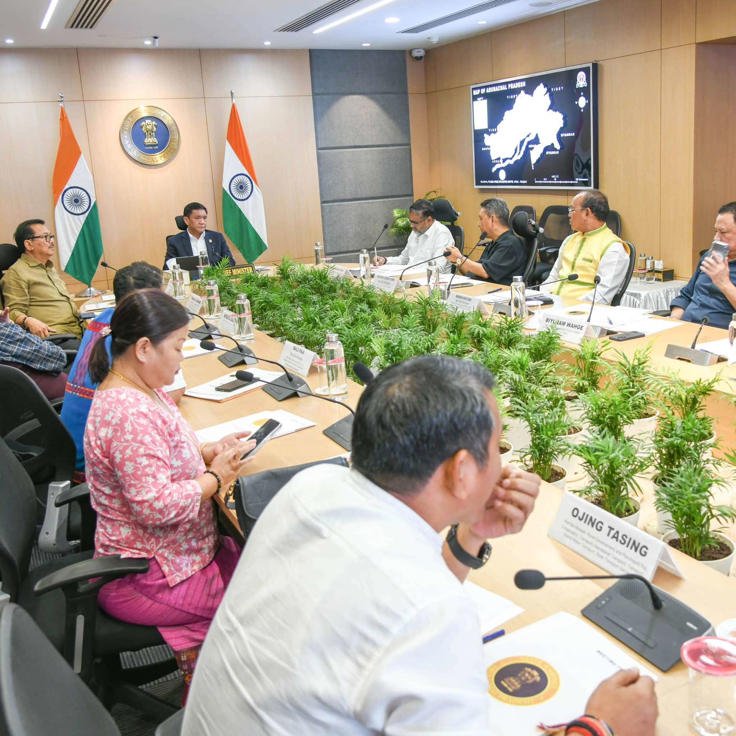
The Arunachal Pradesh Cabinet has approved an empowered high-level committee to guide and coordinate the pre-feasibility report (PFR) survey for the proposed Siang Upper Multipurpose Project (SUMP).
Chief Minister Pema Khandu chaired the Cabinet meeting on September 23. The decision covers survey work and related activities in Siang and Upper Siang districts.
The government said the committee will help ensure a transparent, peaceful and people-centric survey process. It also stressed the need for continued engagement with local communities and families that could be affected by the project.
Read More: Creation of Arunachal Staff Selection Board Historic, Says CM Pema Khandu
Ojing Tasing to Head the Committee
The new committee will be headed by Rural Development and Panchayati Raj Minister Ojing Tasing.
Chief Minister’s Adviser and Yingkiong-Tuting MLA Alo Libang will serve as a member. Geku-Mariyang MLA Oni Panyang will also join the panel.
The committee will guide the engagement process during the PFR survey. It will also coordinate with residents in the two districts.
The Cabinet said sustained and meaningful dialogue would remain important for the peaceful conduct of the survey.
Project Declared a National Project in 2008
The Upper Siang Multipurpose Project has a long history. The Centre declared it a National Project in 2008.
The proposed project is planned across the Siang region. The government has highlighted its potential importance for water and energy security.
Officials have also linked the project to flood moderation in the Siang-Brahmaputra basin. They have cited employment generation and long-term economic development as other potential benefits.
The proposed project has an estimated generation capacity of around 11,000 MW, according to recent reports.
Government Links Project to Water and Energy Security
The state government has presented the project as part of a broader strategy for water and energy security.
The Siang River is an important part of the Brahmaputra river system. Changes in the river basin can have wider implications for the region.
The Cabinet said the project could help moderate floods in the Siang-Brahmaputra basin. It also said the project could support employment and socio-economic development.
These objectives form part of the government’s stated rationale for continuing the PFR process.
Local Engagement at the Centre of Survey Process
The Cabinet has placed particular emphasis on engagement with local residents.
It said the voices and concerns of likely Project Affected Families (PAFs) would remain central to the process. The government also said local communities must remain part of discussions surrounding the survey.
The Cabinet reaffirmed its stated commitment to development while respecting local traditions and community interests.
The committee is expected to provide an institutional mechanism for such engagement during the survey process.
Concerns Over Survey Activities
The decision comes amid opposition from sections of the local population.
Some villagers and activists have raised concerns about the proposed project and survey activities. Reports have cited fears related to displacement, livelihoods, environmental impacts and seismic risks.
Some local groups have also called for a halt to survey and drilling activities. The concerns reflect wider debates about the potential impact of a large infrastructure project on communities and the river ecosystem.
The government, however, has maintained that the survey should proceed through dialogue and engagement.
Cabinet Refers to Misinformation Concerns
The Cabinet also took note of concerns about what it described as misinformation and disinformation surrounding the project.
The government said sustained engagement with residents could help address concerns and improve understanding of the survey process.
The reference to misinformation reflects the government’s position. It does not settle the concerns raised by local groups about the project.
The committee will therefore have to deal with different views during its engagement with communities.
Government Says Survey Will Be Peaceful
The Cabinet resolution stressed that the PFR survey should take place in a peaceful manner.
The government has said it wants the process to remain transparent and people-centric. This comes after concerns emerged over survey activities in parts of the Siang region.
Chief Minister Pema Khandu has separately said there would be no forceful military deployment to implement the project. He said the government’s approach would focus on dialogue and consultation.
The statement was aimed at addressing concerns over the role of security forces during the project-related process.
Strategic Importance of the Project
The Upper Siang project also has a strategic dimension.
The Siang region lies in Arunachal Pradesh’s eastern frontier area. The wider Brahmaputra basin has significance for both water management and regional security.
The New Indian Express reported that the Centre has viewed the proposed project in the context of a much larger hydropower project planned by China upstream. Chief Minister Khandu has previously raised concerns about the possible implications of developments on the Chinese side.
The strategic aspect adds another dimension to the project’s development and planning.
Survey Is Still at the Pre-Feasibility Stage
The current process concerns the Pre-Feasibility Report survey. This stage involves gathering information needed to assess the proposed project.
The formation of the committee does not itself mean that the project has reached final construction approval.
Instead, the panel will guide and coordinate the survey and associated activities. Further assessments and government processes would be required before any later stages of project development.
This distinction is important as the government continues discussions with communities in the affected districts.
Balancing Development and Community Concerns
The Cabinet’s decision brings the government’s development plans and local concerns into the same process.
The state government has highlighted possible benefits in energy, water security, flood management and employment. At the same time, sections of the local population have raised concerns about displacement, livelihoods and environmental risks.
The newly formed committee will have a role in managing this engagement during the PFR survey.
Its effectiveness will depend on how it communicates with residents and addresses questions raised by Project Affected Families and other local stakeholders.
Dialogue to Shape the Next Phase
The formation of the empowered committee marks a new administrative step in the Upper Siang project process.
The Cabinet has made clear that it wants the PFR survey to proceed through dialogue and consultation. Local communities will remain an important part of that process.
For now, the focus remains on the survey and pre-feasibility assessment. The findings and subsequent consultations will provide further information about the project’s technical, environmental and social implications.
As the process moves forward, the balance between Arunachal Pradesh’s development objectives and the concerns of communities in the Siang region will remain central to discussions surrounding the project.
Read More: Jaishankar, Nepal FM Review Energy and Development Progress at UNGA