


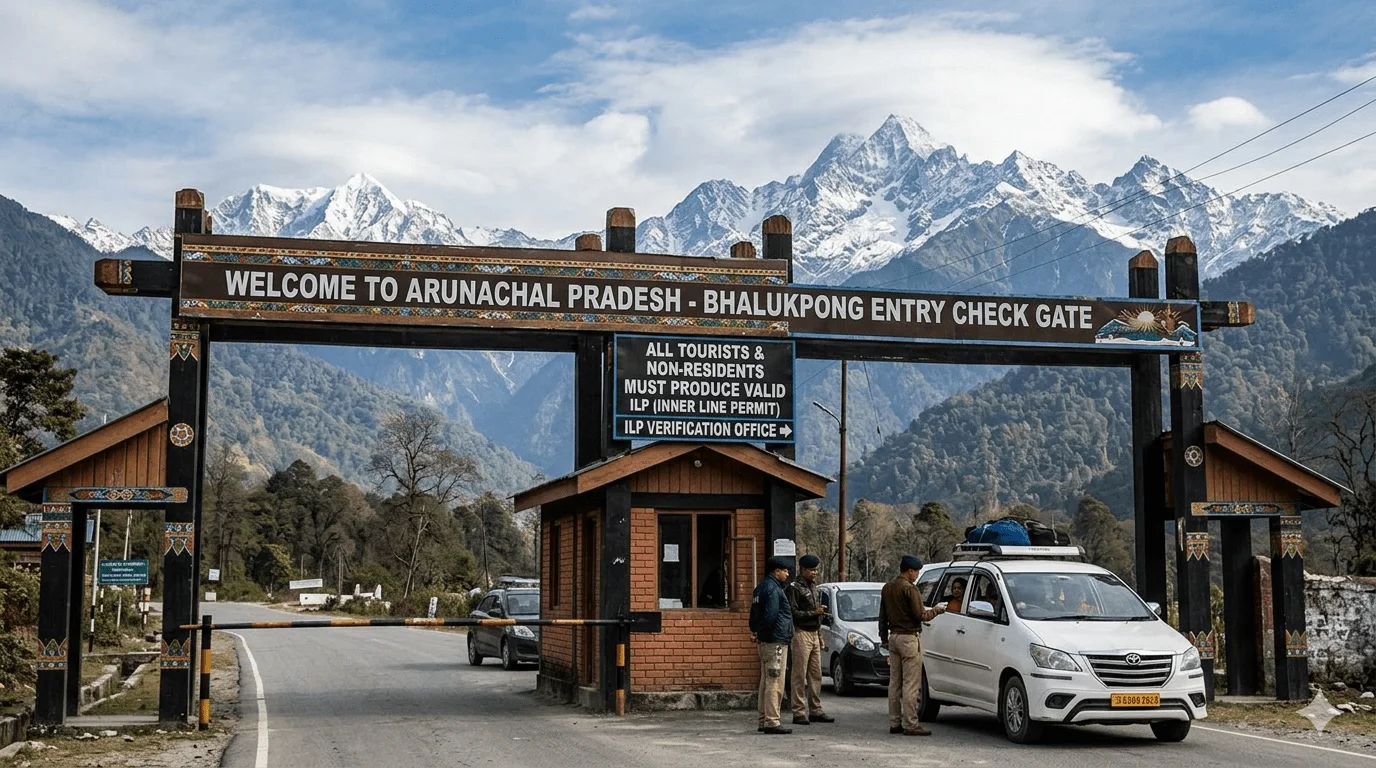
Arunachal ILP violation crackdown operations intensified after authorities in Lower Dibang Valley detected 118 individuals allegedly residing without valid Inner Line Permits during a major five-day enforcement drive. Meanwhile, officials confirmed that 17 Non-FIR cases were registered following verification procedures carried out by district enforcement teams and police personnel. The administration immediately initiated expulsion measures through the Shantipur check gate as part of ongoing efforts to strengthen permit compliance and border-entry regulation in Arunachal Pradesh. Additionally, authorities described the operation as one of the district’s most extensive recent enforcement campaigns targeting unauthorized stay violations.
The Inner Line Permit system remains a sensitive administrative mechanism in several northeastern states because it regulates entry, residence, and movement of non-residents in protected tribal regions. Furthermore, officials stated that periodic verification drives remain necessary for maintaining legal compliance and protecting local administrative frameworks.
Assam Encroachment Eviction Drives Intensify Statewide
Bengal Sikkim Tourism Circuit Expands Himalayan Travel
Lower Dibang Valley Conducts Five-Day Drive
District authorities launched the enforcement operation across multiple areas in Lower Dibang Valley over a five-day period. Arunachal ILP violation crackdown activities therefore involved coordinated inspections, identity verification, and permit reviews carried out by administrative officials and law enforcement personnel.
Meanwhile, officials stated that teams inspected residential areas, work sites, commercial establishments, and transit locations during the operation. Additionally, authorities reportedly checked documents of individuals suspected of staying in the district without proper authorization.
The district administration confirmed that 118 individuals failed to produce valid Inner Line Permit documentation during verification procedures. Furthermore, officials indicated that 17 Non-FIR cases were formally registered under relevant administrative provisions connected to permit violations.
Earlier, Arunachal Pradesh authorities conducted similar inspection drives in other districts to strengthen enforcement of ILP regulations. Consequently, the latest operation reflected continuing administrative efforts to tighten monitoring mechanisms across protected regions.
At the same time, officers appealed to employers, contractors, and landlords to verify documents carefully before accommodating outside workers or visitors.
Shantipur Check Gate Used for Immediate Expulsion
Authorities stated that individuals identified without valid permits were immediately removed through the Shantipur check gate following procedural formalities. Arunachal ILP violation crackdown enforcement therefore demonstrated the administration’s strict approach toward unauthorized stay violations.
Meanwhile, officials explained that expulsion procedures were conducted under established administrative guidelines governing entry regulation in protected areas. Additionally, security personnel coordinated transportation and monitoring arrangements during the removal process.
The administration emphasized that enforcement measures aim to strengthen compliance rather than target any specific community or profession. Furthermore, district officials reiterated that all non-residents entering Arunachal Pradesh must obtain legally valid permits before traveling into restricted zones.
Several governance experts noted that the ILP framework plays a central role in protecting indigenous communities, demographic balance, and tribal land rights in northeastern states. Consequently, authorities continue treating permit enforcement as a significant administrative priority.
However, some labor rights observers urged officials to ensure that migrant workers and temporary laborers receive adequate awareness regarding permit requirements and renewal procedures.
Inner Line Permit System Remains Politically Sensitive
The Inner Line Permit mechanism continues holding major administrative and political significance in Arunachal Pradesh and other northeastern states. Arunachal ILP violation crackdown discussions therefore generated broader debate regarding border regulation, migration management, and local identity protection.
Meanwhile, legal experts explained that the ILP framework originated during the colonial period and remains operational under the Bengal Eastern Frontier Regulation of 1873. Additionally, the system regulates entry of outsiders into protected tribal regions to preserve indigenous cultures and administrative autonomy.
Political leaders in Arunachal Pradesh frequently stress the importance of strict ILP enforcement to prevent unauthorized settlement and demographic pressure. Furthermore, several community organizations support stronger monitoring measures linked to permit verification and migration control.
Earlier, public debates intensified in northeastern states regarding border security, migration management, and protection of indigenous land rights. Consequently, administrative actions involving ILP violations often attract significant political and public attention.
At the same time, constitutional experts emphasized that enforcement activities must remain legally compliant and procedurally transparent to avoid misuse of administrative authority.
Police and Administrative Coordination Strengthened
The operation involved close coordination between district administration officials, police personnel, and enforcement teams in Lower Dibang Valley. Arunachal ILP violation crackdown measures therefore reflected broader administrative efforts to improve monitoring of unauthorized entry and stay.
Meanwhile, police officials reportedly assisted in identity verification, movement tracking, and enforcement support throughout the five-day operation. Additionally, authorities used local intelligence inputs and document checks to identify suspected permit violators.
District officers stated that enforcement drives may continue periodically in sensitive regions to ensure compliance with existing permit regulations. Furthermore, officials warned that stricter action could follow against repeat offenders and individuals facilitating unauthorized stay arrangements.
Several analysts observed that northeastern states increasingly rely on coordinated enforcement strategies to manage migration-related administrative challenges. Consequently, digital verification systems and checkpoint monitoring may become more prominent in future ILP enforcement efforts.
At the same time, business groups and labor contractors requested clearer awareness campaigns regarding documentation requirements for temporary workers entering Arunachal Pradesh.
Public Reactions Emerge Following Operation
The enforcement drive triggered varied reactions across local communities and administrative circles. Arunachal ILP violation crackdown discussions therefore expanded into broader conversations involving governance, labor movement, and regulatory enforcement.
Meanwhile, several local organizations welcomed the operation and argued that strict permit enforcement remains essential for safeguarding indigenous interests and maintaining legal order. Additionally, some residents praised authorities for conducting systematic verification procedures rather than selective inspections.
Human rights observers, however, emphasized the importance of ensuring humane treatment and due process during expulsion operations. Furthermore, labor advocates urged authorities to provide multilingual information regarding permit regulations to avoid confusion among migrant workers.
Political commentators also noted that ILP enforcement frequently intersects with larger regional concerns involving employment patterns, infrastructure projects, and cross-border mobility. Consequently, the latest crackdown may influence future administrative strategies related to migration regulation.
At the same time, civic groups encouraged continued public awareness regarding legal travel requirements and documentation responsibilities within protected states.
Authorities Signal Continued Monitoring
Officials indicated that monitoring and verification drives will likely continue across different districts of Arunachal Pradesh. Arunachal ILP violation crackdown efforts therefore form part of an ongoing administrative strategy focused on strengthening permit compliance statewide.
Meanwhile, authorities stressed that employers, transport operators, and accommodation providers must cooperate fully with verification systems and reporting procedures. Additionally, district administrations may intensify inspections in areas experiencing increased labor movement and commercial activity.
Security experts argued that effective permit regulation supports both governance and regional stability in sensitive border states. Furthermore, administrative transparency and regular public awareness campaigns may help improve voluntary compliance among visitors and temporary workers.
Earlier, several northeastern administrations expanded technology-based monitoring systems to improve tracking of permit issuance and entry records. Consequently, Arunachal Pradesh may also strengthen digital enforcement infrastructure in future operations.
At the same time, policy observers stressed that balanced implementation combining enforcement and public education remains essential for maintaining administrative fairness and efficiency.
Conclusion
Arunachal ILP violation crackdown operations in Lower Dibang Valley resulted in the detection and expulsion of 118 individuals allegedly staying without valid permits during a five-day enforcement drive. Meanwhile, authorities registered 17 Non-FIR cases and carried out immediate removals through the Shantipur check gate as part of strict Inner Line Permit enforcement measures. Officials continue emphasizing the importance of regulatory compliance, border management, and protection of indigenous administrative systems across Arunachal Pradesh. Ultimately, the operation highlights the growing focus on migration monitoring and permit regulation in sensitive northeastern regions.
FAQs
What action did authorities take in Lower Dibang Valley?
Officials detected 118 individuals without valid permits and expelled them through the Shantipur check gate.
Why were the individuals removed?
Authorities stated that the individuals were staying without valid Inner Line Permit documentation.
Why is Arunachal ILP violation crackdown important?
The operation reflects stricter enforcement of entry regulations protecting indigenous and administrative interests in Arunachal Pradesh.
How many cases were registered during the drive?
Officials confirmed that 17 Non-FIR cases were registered during the enforcement operation.
What is the Inner Line Permit system?
The ILP system regulates entry and stay of non-residents in protected northeastern states and tribal areas.
Will similar operations continue in the future?
Authorities indicated that monitoring and enforcement drives may continue across different districts of the state.