


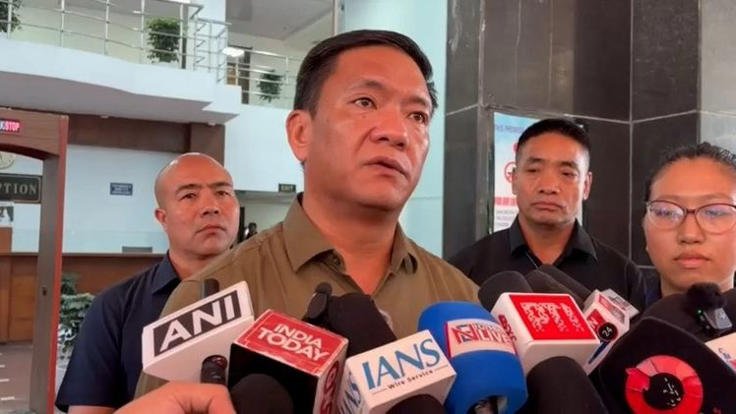
Arunachal Pradesh has achieved a major milestone in healthcare with its first kidney transplant at the Tomo Riba Institute of Health and Medical Sciences (TRIHMS) in Naharlagun. Chief Minister Pema Khandu announced the successful procedure on September 28, describing it as an important step in the state’s healthcare journey.
The transplant took place on Sunday with support from a team of senior transplant specialists from Sir Ganga Ram Hospital in New Delhi. Doctors from TRIHMS worked with the visiting specialists during the complex procedure.
The development gives Arunachal Pradesh a new capacity to provide advanced renal treatment within the state. Patients who previously needed to travel to major cities for kidney transplants could gradually have access to such specialised care closer to home.
TRIHMS performs state’s first renal transplant
The landmark surgery took place at TRIHMS, one of the state’s leading tertiary healthcare institutions. According to officials, the transplant involved a 34-year-old man who received a kidney from his 45-year-old elder sister. Both the recipient and donor remained stable after the procedure.
TRIHMS transplant surgeon Dr Naloh Mibang said doctors monitored the vital parameters of both individuals after the operation. The medical team expected them to recover well during the following 48 to 72 hours.
The successful procedure marks a significant expansion of the institute’s specialised medical capabilities. It also demonstrates the growing role of TRIHMS in providing advanced treatment within Arunachal Pradesh.
Pema Khandu praises medical teams
Chief Minister Pema Khandu visited TRIHMS after the surgery. He met the transplant recipient and his sister and interacted with the doctors, nurses, technicians and other healthcare professionals involved in the procedure.
Khandu congratulated the medical teams and thanked Sir Ganga Ram Hospital for its support. He said the state government had worked with the Delhi-based hospital for the past three years to develop the skills and capacity of doctors and nurses at TRIHMS.
The Chief Minister also acknowledged the contribution of transplant surgeon Dr Harsha Jauhari and his team. Their continued guidance helped TRIHMS prepare its medical staff for kidney transplantation.
Khandu said the state would continue working to expand transplant services in the coming days.
Three years of training and collaboration
The first kidney transplant followed several years of preparation. TRIHMS doctors and nurses received training and guidance from specialists at Sir Ganga Ram Hospital.
Health and Family Welfare Secretary Vivek H P said several batches of medical professionals from TRIHMS had undergone training at the Delhi hospital. Doctors from Arunachal also accompanied patients who travelled to Delhi for treatment. This allowed them to gain practical experience in transplant care.
The collaboration helped build institutional expertise rather than relying entirely on outside specialists.
Officials said the initial transplant programme would focus on a limited number of procedures. Doctors and nurses will continue their training as they gain greater experience with kidney transplantation.
Government aims to expand transplant services
Khandu said the government wants to increase the number of kidney transplant procedures in Arunachal Pradesh. The administration also plans to strengthen other specialised departments at TRIHMS.
Cardiology has emerged as the next major area of focus. The government plans to further strengthen the cardiology programme and DNB training at the institute.
The state is also developing a cancer hospital at Midpu. Khandu said around 55 per cent of construction work had been completed. The government expects the facility to become operational next year.
These projects form part of a broader effort to expand specialised healthcare infrastructure within Arunachal Pradesh.
Financial support for organ transplants increased
The state government has also increased financial assistance for major transplant procedures. Under its healthcare support programme, assistance for kidney transplants has increased from Rs 10 lakh to Rs 12.5 lakh.
Support for bone marrow transplantation has risen from Rs 15 lakh to Rs 17.5 lakh. Assistance for liver transplantation has increased from Rs 20 lakh to Rs 22.5 lakh.
The additional support aims to reduce the financial pressure on families requiring expensive specialised treatment.
Khandu said the broader goal is to ensure that people can receive advanced medical treatment within Arunachal Pradesh. Patients would then avoid travelling to major cities, reducing both travel time and related expenses.
TRIHMS could expand advanced renal care
The successful transplant has opened the possibility of further developing renal care in Arunachal Pradesh. Sir Ganga Ram Hospital transplant surgeon Dr Harsha Jauhari described the procedure as the first of many that could follow.
The continued handholding programme will remain important as TRIHMS doctors build greater experience. The state government has also asked the Delhi hospital to continue supporting the medical team during this development phase.
For patients with kidney disease, the creation of transplant capacity within the state could reduce the need to travel outside Arunachal Pradesh.
A new chapter in Arunachal’s healthcare sector
The first Arunachal Pradesh kidney transplant at TRIHMS represents a significant development in the state’s healthcare infrastructure. The procedure brought together local medical professionals and transplant specialists from Sir Ganga Ram Hospital.
The success also reflects several years of training, institutional preparation and collaboration. As TRIHMS continues to strengthen its specialist departments, the state government hopes to expand access to advanced medical treatment.
For Arunachal Pradesh, the first successful kidney transplant marks not only a medical achievement but also a step towards building stronger specialised healthcare services within the state.