


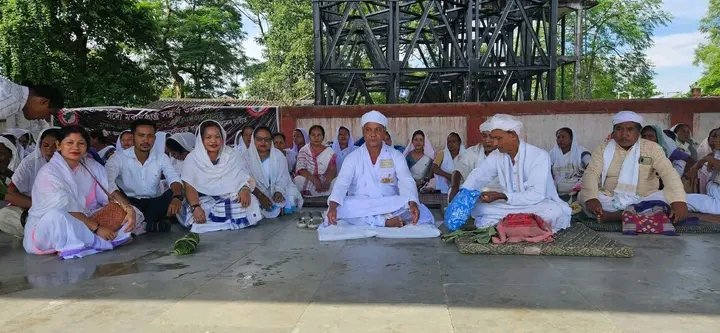
Guwahati: In a powerful display of solidarity, prominent intellectuals and community leaders across Assam have thrown their weight behind the All Moran Students’ Union (AMSU) on Wednesday as the indigenous Moran community’s relentless demand for Scheduled Tribe (ST) status and autonomy under the Sixth Schedule enters a critical phase.
Educators like Pradip Moran, headmaster of Kordoiguri M.E. Girls’ School located approximately 475 kilometers from Dispur have emerged as vocal champions, decrying centuries of exploitation and urging an end to governmental neglect.
This surge of intellectual backing has amplified the movement, transforming it into a broader call for justice amid escalating protests that have gripped eastern Assam.
The AMSU-led agitation, now in its third day at Makum in Tinsukia district, has brought economic activities to a grinding halt, underscoring the community’s unshakeable resolve.
Hundreds of vehicles laden with oil, coal, and timber remain stranded on bypass roads and national highways, as protesters enforce an indefinite blockade to force the central government’s hand. The Baghjan Early Production System (EPS), a key oil facility in the region, has been shuttered, exacerbating disruptions in Assam’s vital energy sector.
AMSU leaders, including president Palindra Borah and general secretary Joykanta Moran, have lambasted successive governments for betraying promises made over a decade ago.
“This is non-negotiable; we’ve been used as electoral pawns while our identity erodes. We must get ST status.,” Borah declared during a massive torch rally in Tinsukia that drew over 20,000 participants.
Pradip Moran’s impassioned statement highlights the Morans’ tragic history: unlike the Ahoms who ruled for six centuries, the Morans endured 797 years of ruthless exploitation under Ahom and British regimes. He recounts the brutal Moran genocide during the Moamoria rebellion under Ahom king Gaurinath Singha, where lakhs perished or hid their identities, decimating the population. Yet, the community survives, now fiercely pursuing constitutional recognition to reclaim land rights and cultural sovereignty. “This ongoing inferno of protest must burn until ST status is granted,” Moran asserted, framing the movement as the final battle for dignity.
The protests, which intensified ahead of Prime Minister Narendra Modi’s recent Assam visit, have sparked nationwide attention, with warnings of escalation if demands remain unmet before the 2026 elections likely to be held in April next year.
Intellectuals emphasize the Morans’ status as ancient indigenous inhabitants of Assam’s plains, arguing that denial of ST protections perpetuates systemic disenfranchisement. As tea estates, oil firms, and timber operations suffer mounting losses, state authorities face mounting pressure for dialogue. This is no fleeting unrest,it’s a thunderous demand for equity, backed by history and fueled by unbreakable spirit.
With intellectuals leading the charge, the Moran movement stands as a beacon of resistance against entrenched injustice.
It is remarkable that the protesters in Makum including women facing a lot of problems in a hope that government will listen to their plea at the earliest.