


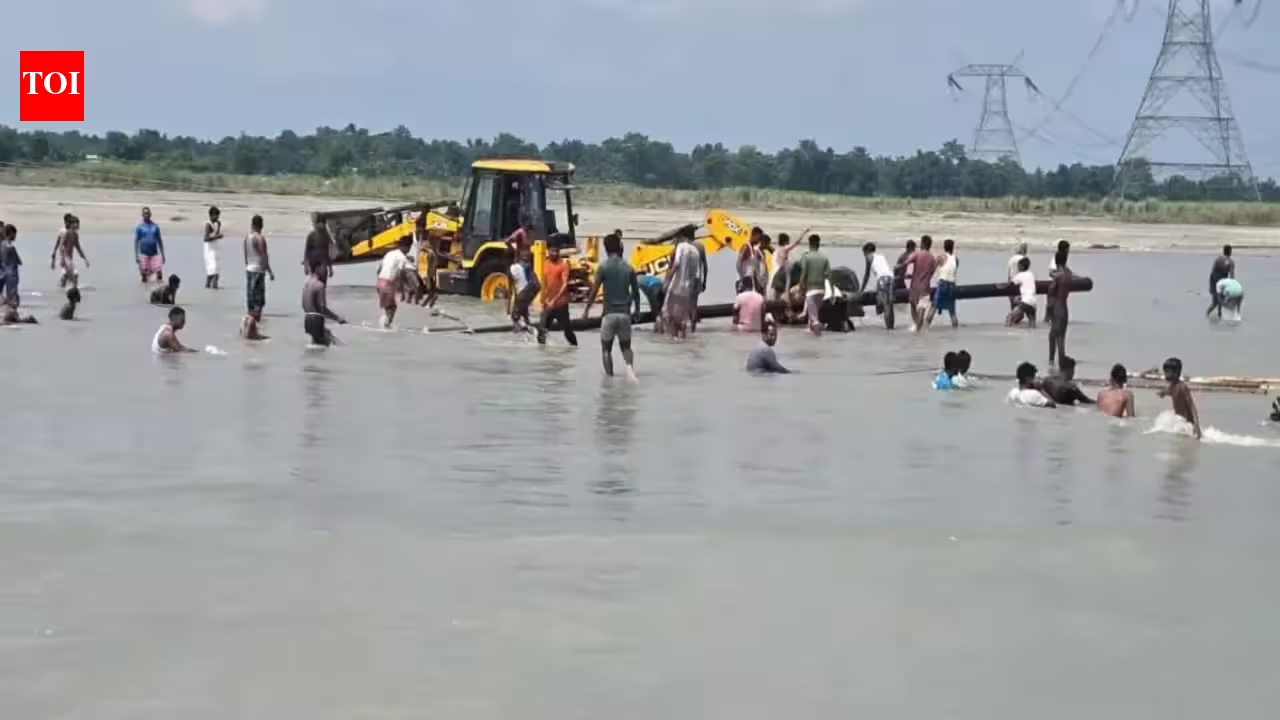
Assam’s opposition parties have intensified their criticism of the BJP-led government after the state’s reported flood-related death toll reached 95. Opposition leaders have focused on disaster preparedness, relief distribution, infrastructure, compensation, and government accountability as floodwaters continue to affect communities across the state.
The political response has grown alongside the humanitarian crisis. Moreover, opposition parties have sought to highlight the concerns of displaced families, farmers, and communities dealing with damaged homes and disrupted livelihoods.
However, political allegations about administrative failures require evidence and official verification. The immediate challenge for all sides remains ensuring that flood victims receive timely relief while authorities prepare for the recovery phase.
Relief Camp Boycott: WC-JTCM Committee Rejects Manipur CM’s Visit
Opposition Sharpens Attack on BJP
Opposition parties have used the reported death toll of 95 to intensify criticism of the BJP-led administration.
Leaders have questioned whether existing disaster-preparedness measures adequately protect vulnerable communities. Furthermore, they have raised concerns about relief delivery, infrastructure resilience, and assistance for affected families.
The coordinated criticism has consequently increased political pressure on the government.
However, opposition statements represent political positions and should not be treated as independent findings of administrative failure.
95 Deaths Intensify Political Debate
The reported casualty figure has made the flood crisis a major issue in Assam’s political conversation.
Each fatality adds urgency to questions about evacuation, early-warning systems, rescue operations, and emergency preparedness. Additionally, families affected by deaths may require financial assistance and administrative support.
The human cost has therefore become central to the political debate.
However, officials may revise casualty figures as authorities continue verifying cases across affected areas.
Relief Operations Face Scrutiny
Opposition leaders have also focused on the condition of relief operations.
Flood victims may require food, drinking water, medicines, sanitation, temporary shelter, and assistance with evacuation. Moreover, authorities must maintain accurate records of displaced residents to distribute resources effectively.
Any reported shortages can quickly attract political attention.
However, conditions may differ between relief camps and affected districts.
Sivasagar Draws Attention
Sivasagar has become one of the areas under scrutiny as authorities manage displaced residents and flood-related losses.
Local officials need to coordinate relief camps, rescue teams, healthcare services, and essential supplies. Furthermore, changing water levels can require authorities to adjust evacuation and shelter arrangements.
The district’s experience has therefore become part of the wider political discussion.
However, local conditions require separate assessment rather than assumptions based on statewide figures.
Agriculture Adds to Public Pressure
Flooding has caused serious concerns for Assam’s farming communities.
Farmers can lose crops, livestock, equipment, and access to agricultural land. Additionally, prolonged flooding can delay cultivation and create financial pressure on households dependent on farming.
Opposition leaders may therefore demand faster compensation and rehabilitation.
However, authorities need verified damage assessments before determining the scale of eligible assistance.
Infrastructure Comes Under Fire
Flood damage has renewed political attention on Assam’s roads, bridges, embankments, and drainage systems.
Opposition parties can question infrastructure maintenance and long-term flood-control planning. Moreover, damaged roads can delay rescue teams and relief supplies, increasing pressure on local administrations.
The infrastructure debate could continue after floodwaters recede.
However, severe weather can damage infrastructure even when authorities maintain existing systems.
Government Defends Its Response
The BJP-led government can point to rescue operations, relief camps, emergency supplies, and coordination with disaster-response agencies.
Government officials may also highlight steps taken to evacuate residents and provide assistance to affected families. Furthermore, authorities can use official flood and casualty data to adjust relief operations.
These measures will influence how the public assesses the response.
However, residents’ experiences on the ground will also shape perceptions.
Opposition Demands Accountability
Opposition parties have called for greater accountability over the handling of the crisis.
Their demands can include information about relief spending, flood-control projects, evacuation planning, and compensation. Additionally, opposition representatives can visit affected areas and raise complaints reported by residents.
Such scrutiny can encourage greater transparency.
However, political criticism does not automatically establish negligence or corruption.
Political Coordination Could Grow
The scale of the disaster may encourage opposition parties to coordinate their messaging.
Different parties can raise common demands concerning relief, compensation, infrastructure, and disaster preparedness. Moreover, a united political response can increase pressure on the government during the recovery period.
Such coordination could strengthen the opposition’s public campaign.
However, differences between opposition parties may still emerge over strategy and priorities.
Families Need Immediate Assistance
For flood victims, political confrontation remains secondary to basic survival and recovery needs.
Displaced families need safe shelter, food, drinking water, healthcare, and sanitation. Furthermore, households that have lost homes or livelihoods may require longer-term financial support.
Authorities therefore face pressure to maintain relief regardless of political disputes.
However, recovery requirements will vary depending on the severity of damage in each community.
Healthcare and Sanitation Remain Important
Flood emergencies can create additional public-health risks.
Authorities must maintain medical services, safe water supplies, sanitation facilities, and hygiene measures in affected communities and relief camps. Additionally, vulnerable residents may require specialised healthcare support.
These services can reduce preventable health problems.
However, healthcare needs may increase if displacement continues for an extended period.
Compensation Becomes Key Political Issue
Affected families are likely to seek assistance for damaged homes, crops, livestock, and other property.
Opposition parties can demand quick and transparent compensation procedures. Moreover, government agencies may need to conduct detailed assessments before distributing assistance.
The compensation process could therefore become an important measure of the government’s recovery response.
However, eligibility depends on official assessments and applicable relief guidelines.
Central Support May Increase
The scale of the disaster can also require coordination between state and central authorities.
National disaster-response agencies may provide specialised personnel, equipment, logistics, or other assistance when required. Furthermore, central financial mechanisms can support eligible disaster-relief activities.
Such support can strengthen the state’s response.
However, central involvement does not automatically indicate that the state administration failed.
Flood Preparedness Returns to Agenda
The crisis has once again highlighted Assam’s long-term flood-management challenges.
Political debate may focus on embankment maintenance, drainage, river management, wetland protection, flood forecasting, and resilient infrastructure. Moreover, opposition parties can demand clearer long-term strategies to reduce recurring flood risks.
The issue could remain politically significant beyond the current emergency.
However, meaningful flood mitigation requires sustained investment and implementation.
Public Sentiment Could Shape Politics
The government’s handling of the recovery phase may influence public opinion.
Timely relief, transparent compensation, and effective infrastructure restoration could strengthen public confidence. Conversely, prolonged delays or unresolved complaints could give opposition parties additional political momentum.
The political impact may therefore develop over time.
However, it remains too early to determine how the flood crisis will affect future electoral outcomes.
Conclusion
The reported 95 flood-related deaths in Assam have intensified opposition criticism of the BJP-led government, with political parties focusing on relief operations, disaster preparedness, infrastructure, compensation, and accountability. The crisis has consequently created a major political challenge alongside the urgent humanitarian response.
Moreover, opposition coordination could increase pressure on the government as affected families seek assistance and communities begin rebuilding. At the same time, allegations of negligence or other wrongdoing require evidence and independent verification rather than political statements alone.
Overall, the coming recovery period will play a crucial role in shaping the political debate. Effective relief, transparent compensation, infrastructure restoration, and stronger flood preparedness could influence public confidence, while unresolved grievances could sustain opposition pressure on the BJP-led administration.
FAQs
1. Why are Assam opposition parties criticising the BJP?
Opposition leaders have raised concerns about disaster preparedness, relief distribution, infrastructure, compensation, and government accountability following the reported flood death toll of 95.
2. What is the reported Assam flood death toll?
The figure referenced in this report has reached 95, although authorities can revise casualty numbers as verification continues.
3. Are the opposition’s allegations proven?
No. Political allegations require evidence and appropriate investigation before authorities can establish negligence, corruption, or other wrongdoing.
4. What do flood victims need most?
Immediate priorities include safe shelter, food, drinking water, healthcare, sanitation, evacuation support, and assistance for damaged homes and livelihoods.
5. Could the floods affect Assam politics?
The crisis could influence public opinion depending on the quality of relief and recovery efforts. However, its eventual electoral impact remains uncertain.