


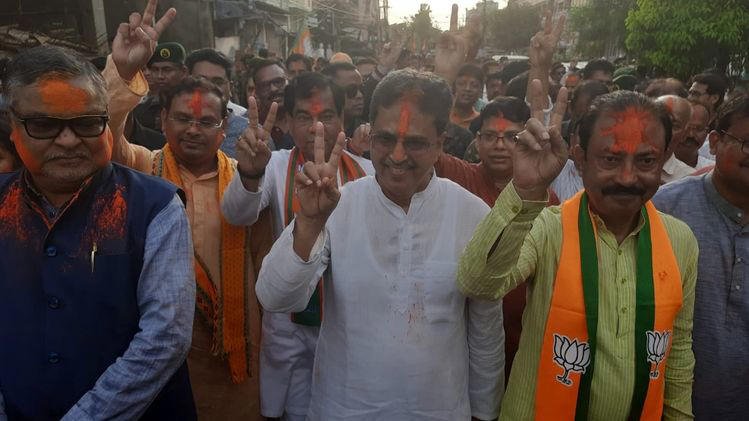
Tripura Chief Minister Manik Saha on Tuesday welcomed the Bharatiya Janata Party’s performance in West Bengal, stating that the result marks a turning point in the state’s political journey. Reacting strongly to the outcome, he remarked that “Bengal has got freedom,” indicating what he described as a shift in public sentiment.
His statement came soon after the election results drew national attention, with leaders from various states weighing in on the implications. Saha’s remarks, however, stood out due to their assertive tone and broader political messaging. He suggested that the results reflect a deeper transformation in voter preferences.
Read More: Historic Victory for Assam Temporary Tea Workers on May Day
Moreover, the Tripura Chief Minister linked the outcome to a growing demand for change, governance, and development. According to him, the electorate in West Bengal has signalled a new direction through its voting choices.
Statement highlights political change in West Bengal
Expanding on his remarks, Manik Saha emphasized that the election outcome should be viewed as a reflection of people’s aspirations. He argued that voters have increasingly prioritised governance, transparency, and development over traditional political narratives.
He further stated that the phrase “Bengal has got freedom” symbolises liberation from what he described as outdated political practices. While his comments drew strong reactions, they also highlighted the BJP’s attempt to position the result as a mandate for change.
In addition, Saha pointed out that such outcomes are rarely isolated events. Instead, they often indicate broader shifts in political attitudes. Therefore, he suggested that similar trends could emerge in other regions as well.
BJP leadership credits governance and development agenda
The Bharatiya Janata Party leadership echoed similar sentiments following the West Bengal results. Leaders within the party credited their governance model and development-focused agenda for the outcome. They highlighted initiatives related to infrastructure, welfare, and economic growth as key factors influencing voters.
Saha also reiterated this perspective, stating that the BJP’s emphasis on delivering tangible results has resonated with the electorate. He noted that people are increasingly evaluating governments based on performance rather than rhetoric.
Furthermore, he stressed that the party’s consistent messaging on development has played a crucial role in expanding its support base. This, he said, is evident in the results not just in West Bengal but across several states.
Opposition reactions and political counterpoints
The Tripura Chief Minister’s remarks triggered responses from opposition leaders, particularly from parties in West Bengal. Critics argued that the statement was politically charged and did not accurately reflect the complexities of the state’s electoral landscape.
Opposition leaders maintained that each election has its own context and should not be interpreted through a single narrative. They also emphasized that regional factors continue to play a significant role in shaping outcomes.
Despite these counterpoints, Saha stood by his statement. He reiterated that his remarks were based on the perceived shift in voter behaviour and the growing emphasis on governance. This exchange has further intensified political discussions surrounding the election results.
Broader implications for eastern and northeastern politics
Manik Saha’s comments also carry implications beyond West Bengal. As a key political figure in the Northeast, his interpretation of the results reflects how regional leaders are analysing developments in neighbouring states.
He suggested that the outcome could influence political strategies across eastern and northeastern India. According to him, parties in these regions must adapt to changing voter expectations, which now prioritise development and accountability.
Additionally, Saha highlighted the increasing interconnectedness of political trends across states. He argued that shifts in one region can have ripple effects elsewhere, shaping broader electoral narratives.
This perspective aligns with the BJP’s broader strategy of expanding its influence in eastern India. The party has been actively working to strengthen its presence in states where regional parties have traditionally dominated.
Emphasis on voter expectations and accountability
A key theme in Saha’s statement was the evolving nature of voter expectations. He noted that citizens are becoming more aware and demanding better governance. This shift, he said, is driving political change across the country.
He emphasized that accountability is now a central factor in elections. Governments are expected to deliver on their promises, and failure to do so can lead to electoral setbacks. This trend, according to Saha, is evident in the West Bengal results.
Moreover, he pointed out that political parties must remain responsive to public needs. Ignoring voter concerns, he warned, can have significant consequences. This message serves as both an observation and a caution for political stakeholders.
Political messaging ahead of future elections
The Tripura Chief Minister’s remarks are also being viewed as part of a broader political narrative ahead of upcoming elections. By framing the West Bengal result as a moment of “freedom,” the BJP aims to reinforce its message of change and governance.
Political analysts believe that such statements are designed to influence voter perception. They help shape narratives that extend beyond a single election. As a result, they play a crucial role in building momentum for future campaigns.
Saha’s comments also indicate a strategic effort to connect regional developments with national political themes. This approach reflects the increasingly interconnected nature of electoral politics in India.
Public discourse and democratic engagement
The statement “Bengal has got freedom” has sparked widespread discussion among the public. While some people agree with the sentiment, others view it as an exaggeration. This diversity of opinion highlights the vibrant nature of democratic discourse.
Importantly, such debates contribute to a deeper understanding of political developments. They encourage citizens to engage with issues of governance, accountability, and representation. However, experts also caution against oversimplifying complex electoral outcomes.
In West Bengal and beyond, the conversation continues to evolve. The election results have become a focal point for discussions on political change and voter behaviour.
Conclusion
Tripura Chief Minister Manik Saha’s reaction to the BJP’s victory in West Bengal underscores the significance of the election results. By stating that “Bengal has got freedom,” he has framed the outcome as part of a larger political transformation.
His remarks highlight key themes such as governance, development, and changing voter expectations. At the same time, they reflect the broader narrative being advanced by the BJP.
As political debates continue, the West Bengal results are likely to influence strategies and discussions across regions. The coming months will reveal how these interpretations shape the evolving political landscape in India.
Read More: Himanta Biswa Sarma Rebuts Pawan Khera Allegations After Assam Elections