


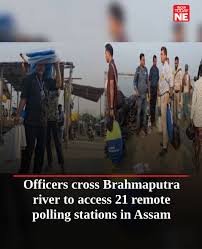
The Assam poll officers cross Brahmaputra effort highlights dedication during elections. Officials reached 21 remote polling stations despite river challenges. The move ensures inclusive and smooth voting. The Assam poll officers cross Brahmaputra story reflects commitment to democracy.
Shocking Guwahati Kamakhya Express Tragedy Kills Youth
Assam Poll Officers Cross Brahmaputra to Reach Remote Stations
The Assam poll officers cross Brahmaputra mission has captured attention as election officials traveled across the mighty river to access 21 remote polling stations. This effort highlights the determination of authorities to ensure every eligible voter can participate in the democratic process.
Moreover, the challenging journey reflects the complexities of conducting elections in geographically difficult regions.
High Stakes Dhubri Poll Battle Amid River Challenges
River Crossing Highlights Logistical Challenges
The Assam poll officers cross Brahmaputra operation showcases the significant logistical hurdles faced during elections in riverine areas. Vast water bodies and scattered settlements make transportation a major challenge.
Additionally, many polling stations remain located in isolated regions that require boats for access. Therefore, officials must carefully plan every movement to avoid delays.
Ensuring Access to Every Voter
The Assam poll officers cross Brahmaputra effort aims to guarantee that voters in remote locations do not miss their chance to vote. Authorities have prioritized inclusivity by reaching even the most inaccessible areas.
Furthermore, this approach strengthens the democratic process by ensuring equal participation. As a result, no voter gets left behind due to geographical barriers.
Coordination and Preparation by Authorities
The Assam poll officers cross Brahmaputra mission required extensive coordination among election officials, local administration, and security personnel. Teams carried essential voting equipment while ensuring safety during transit.
Moreover, advance planning helped minimize risks associated with unpredictable river conditions. Therefore, efficient coordination played a key role in the operation’s success.
Security Measures Along the Route
The Assam poll officers cross Brahmaputra journey also involved strict security arrangements. Authorities deployed personnel to safeguard both election staff and materials during transit.
In addition, officials monitored the situation closely to prevent any disruptions. Consequently, these measures ensured a smooth and secure movement of polling teams.
Dedication of Election Officials
The Assam poll officers cross Brahmaputra story reflects the dedication and commitment of election personnel. Despite difficult conditions, officials carried out their duties with determination.
Moreover, their efforts highlight the importance of ensuring free and fair elections in every part of the country.
Importance of Remote Polling Stations
The Assam poll officers cross Brahmaputra initiative underlines the significance of remote polling stations in maintaining democratic inclusivity. These stations serve communities that would otherwise face barriers to voting.
Therefore, reaching such areas remains essential for a truly representative electoral process.
Challenges of Riverine Regions in Elections
The Assam poll officers cross Brahmaputra mission also brings attention to broader challenges in riverine regions. Frequent changes in river flow and limited infrastructure complicate planning.
Additionally, weather conditions can affect transportation and scheduling. However, authorities continue to adapt strategies to overcome these issues.
Conclusion
The Assam poll officers cross Brahmaputra effort stands as a powerful example of dedication to democracy. By reaching 21 remote polling stations, officials ensured that every voter gets an opportunity to participate.
Ultimately, such efforts strengthen trust in the electoral system and highlight the resilience of election machinery in challenging conditions.
FAQs
1. Why did poll officers cross the Brahmaputra river?
They crossed the river to reach 21 remote polling stations for conducting elections.
2. What challenges do officials face in such areas?
Riverine geography, limited transport, and unpredictable conditions create logistical difficulties.
3. How do authorities ensure safety?
They deploy security personnel and plan movements carefully to avoid risks.
4. Why are remote polling stations important?
They ensure that people in isolated areas can participate in elections.
5. What does this effort highlight?
It shows the dedication of election officials and the importance of inclusive democracy.