


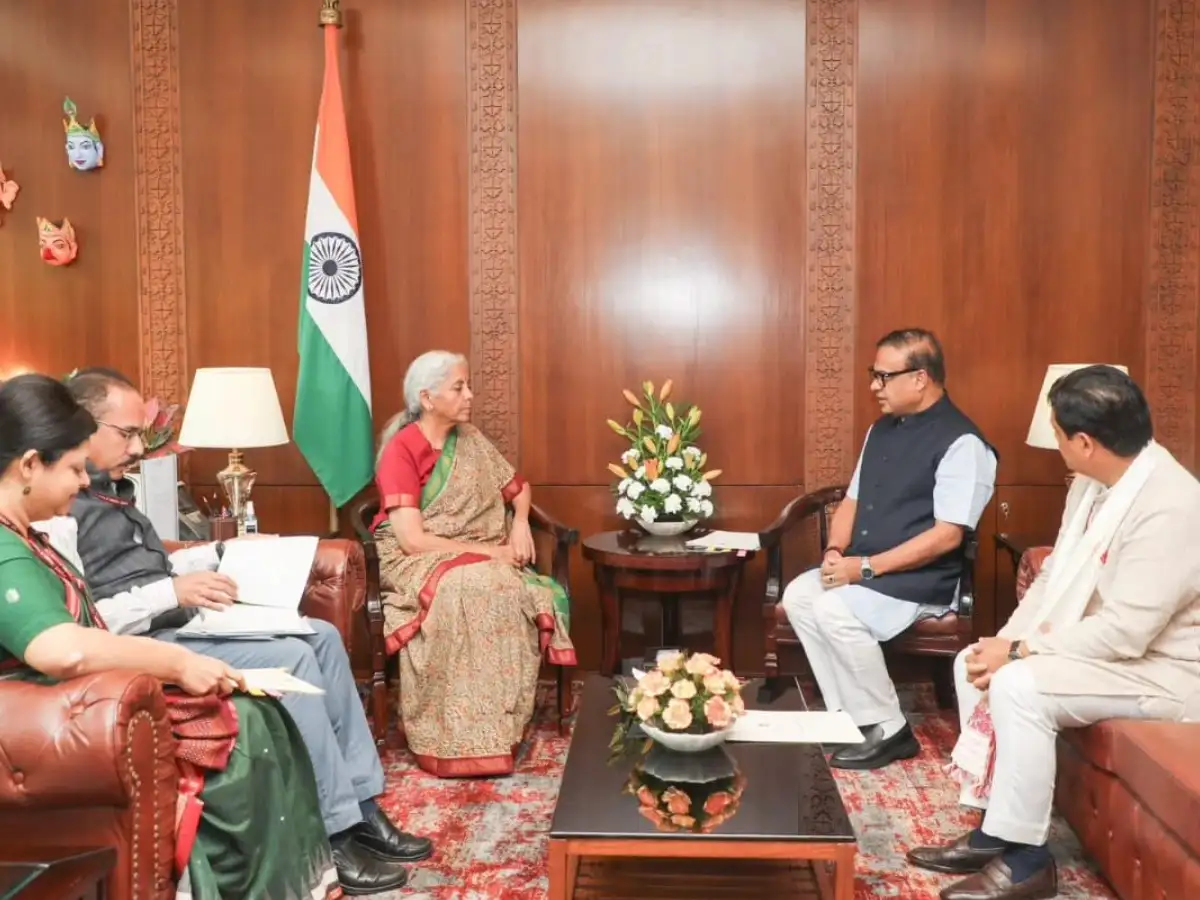
The EAP Acceleration Promised push has gained fresh momentum after Assam Chief Minister Himanta Biswa Sarma and Meghalaya Chief Minister Conrad K. Sangma met Union Finance Minister Nirmala Sitharaman in New Delhi on September 9, 2026. The chief ministers sought faster progress on Externally Aided Projects (EAPs) and greater investment opportunities for physical and social infrastructure.
Sitharaman responded positively and assured the leaders of renewed central support for advancing the development agenda, according to statements following the meeting. The discussion builds on the Centre’s wider effort to use EAPs as a development instrument for the Northeast.
Agartala flight services now get a crucial lifeline
EAP Acceleration Promised After Assam and Meghalaya Meet
The latest EAP Acceleration Promised development followed a meeting at Kartavya Bhawan in New Delhi involving Sitharaman, Sarma and Sangma. The two chief ministers sought a renewed impetus for EAP implementation in Assam and Meghalaya.
The discussions focused on increasing capital expenditure and opening additional investment channels for physical and social infrastructure. Sarma said the proposed acceleration could create new avenues for development financing in both states.
Moreover, the meeting comes only a few months after a major conference in Shillong focused specifically on leveraging EAPs across the Northeastern states. That conference brought together central and state policymakers, multilateral development banks, bilateral agencies and development practitioners.
Therefore, the September meeting represents a follow-up to a broader policy discussion rather than an isolated announcement.
Finance Ministry Signals Continued EAP Support
The Centre has increasingly positioned EAPs as more than conventional sources of development finance.
At the June 2026 Shillong conference, Sitharaman said externally aided projects should help address local socioeconomic requirements while bringing international knowledge, technologies and development practices to the region.
Furthermore, she highlighted the role of institutions such as the World Bank, Asian Development Bank, International Fund for Agricultural Development and Japan International Cooperation Agency in supporting projects through financial and technical assistance.
According to the Finance Ministry, EAP support to Northeastern states increased from approximately ₹9,000 crore during 2004–2014 to around ₹76,000 crore since 2014. Sitharaman described the increase as more than seven-fold.
The figures indicate the growing importance of externally aided financing within the region’s development strategy.
However, the latest September assurance should not be interpreted as the immediate sanction of a specific new ₹76,000-crore package. The figure represents cumulative EAP support cited by the Finance Ministry since 2014.
Assam and Meghalaya Seek Faster Project Implementation
Assam and Meghalaya have sought faster progress because EAPs can support projects requiring substantial capital and technical expertise.
Sarma said the latest meeting sought to give fresh momentum to projects in the two states while creating new investment channels for physical and social infrastructure.
Meanwhile, Meghalaya already has a substantial EAP portfolio. During Sitharaman’s June visit, Chief Minister Conrad Sangma said the state was implementing more than ₹12,466 crore worth of externally aided projects across multiple sectors.
These projects cover areas beyond conventional road construction. They include connectivity, tourism, human capital development, livelihoods and sustainable economic activities.
Consequently, faster implementation could influence several parts of the regional economy simultaneously.
For Assam, the renewed push also comes amid broader efforts to increase capital spending and strengthen infrastructure investment. The September meeting therefore places EAPs within the state’s wider development-financing strategy.
Meghalaya Projects Show Wider EAP Scope
The EAP programme in Meghalaya illustrates the range of activities that international development financing can support.
In June, Sitharaman laid foundation stones for projects worth more than ₹1,250 crore in Meghalaya. The projects focused on connectivity, human capital development, tourism, livelihoods and sustainable economic growth.
The initiatives included the Meghalaya Ecotourism Infrastructure Development Project, Meghalaya Logistics and Connectivity Improvement Project, Supporting Human Capital Development in Meghalaya Phase II and the Integrated Ecotourism and Sustainable Agri-based Livelihood Development Project.
The logistics and connectivity component alone involved several sub-projects, while tourism and livelihood initiatives sought to connect local economic activity with larger markets.
Moreover, Sitharaman emphasised the importance of improving project-management capacity, encouraging private-sector participation in tourism and logistics, strengthening last-mile connectivity and ensuring convergence among development programmes.
Therefore, the EAP model increasingly links infrastructure with broader economic development.
Northeast States Seek Stronger EAP Framework
The September meeting also follows calls from several Northeastern states for improvements in the way externally aided projects are designed and implemented.
At the June Shillong conference, Nagaland Chief Minister Neiphiu Rio called for greater flexibility, stronger institutional support and faster approval mechanisms to address the region’s specific implementation challenges.
Mizoram Chief Minister Lalduhoma similarly highlighted the technical value of EAPs, noting that international development partners can bring specialist expertise and experience alongside financial support.
Sikkim Chief Minister Prem Singh Tamang also participated in the Shillong seminar, which brought together Northeastern chief ministers, central officials and representatives of multilateral and international financial institutions.
These discussions indicate that states are seeking not only larger funding opportunities but also more effective systems for preparing, approving and implementing projects.
Consequently, capacity building remains an important part of the EAP strategy.
EAPs Can Support Infrastructure and Social Development
Externally aided projects cover a broad range of development needs.
The Finance Ministry has emphasised that EAPs can complement major infrastructure investments by addressing specific local socioeconomic requirements. They can also introduce international best practices and technologies into state-level projects.
For the Northeast, this approach can be particularly relevant because geography creates complex infrastructure requirements.
Mountainous terrain, dispersed settlements and international borders can increase the cost and complexity of connectivity projects. Additionally, states need investment in tourism, agriculture, logistics, skills and social infrastructure.
Therefore, EAPs can provide a mechanism through which states access both financing and specialised expertise.
At the same time, successful implementation depends on timely approvals, capable project-management teams and effective coordination between state governments, the Centre and development partners.
EAP Acceleration Promised Could Expand Investment Channels
The EAP Acceleration Promised commitment could create additional opportunities for states to advance projects that require substantial investment.
Sarma specifically linked the September discussions with opening new investment channels for physical and social infrastructure.
Furthermore, the Centre’s June conference highlighted the importance of stronger institutions and partnerships in unlocking the Northeast’s development potential.
This approach could help states prepare projects that are better aligned with development-partner requirements while maintaining local priorities.
However, acceleration will ultimately depend on individual project approvals and implementation processes. The September meeting itself does not constitute automatic approval for every proposed EAP in Assam or Meghalaya.
Instead, the assurance signals policy support for faster progress and continued engagement between the Centre and Northeastern states.
International Development Partners Remain Important
International development institutions remain central to the EAP model.
The Finance Ministry has identified the World Bank, ADB, IFAD and JICA among institutions whose financial resources, technical expertise and development experience can support projects in the Northeast.
These partnerships can provide states with access to international project-management practices and technical knowledge.
Moreover, the involvement of development partners can support projects in sectors where states require specialised expertise, including logistics, tourism, agriculture, human capital and environmental sustainability.
The June conference therefore sought to facilitate an exchange of experiences and best practices between states and development partners.
As a result, the latest push for acceleration is connected to a broader effort to improve both the quantity and quality of development investment in the Northeast.
Northeast Development Agenda Gains Fresh Momentum
The latest meeting between Sitharaman, Sarma and Sangma comes at a time when the Centre is giving increased attention to the Northeast’s role in India’s long-term growth.
Sitharaman said in June that the region should be viewed as a central pillar of India’s future growth, connectivity and prosperity.
The EAP approach fits within that broader vision because it combines infrastructure financing with technical cooperation and institutional strengthening.
Additionally, faster implementation could help states move projects from planning and approval stages towards construction and service delivery.
For Assam and Meghalaya, the immediate focus will likely remain on advancing existing projects while identifying additional opportunities for externally aided investments.
Therefore, the September assurance could become significant if it leads to faster project clearances, stronger implementation capacity and new development-partner engagements.
Conclusion
The EAP Acceleration Promised development marks a renewed push for faster Externally Aided Project implementation in Northeast India. Assam Chief Minister Himanta Biswa Sarma and Meghalaya Chief Minister Conrad K. Sangma sought greater momentum for EAPs during their September 9 meeting with Union Finance Minister Nirmala Sitharaman, who responded positively and assured continued central support.
The move follows the Finance Ministry’s June conference in Shillong, where the Centre highlighted the expanding role of EAPs in connectivity, infrastructure, livelihoods, tourism and human capital development.
Moreover, official figures show that EAP support to Northeastern states has increased substantially since 2014. The next challenge will be translating that financial and institutional support into faster project implementation and measurable benefits for communities across the region.
FAQs
What does the EAP Acceleration Promised development mean?
The EAP Acceleration Promised development refers to the Centre’s renewed commitment to advance Externally Aided Projects in the Northeast following discussions between Assam and Meghalaya chief ministers and Finance Minister Nirmala Sitharaman.
What are Externally Aided Projects?
Externally Aided Projects are development projects that receive assistance through international development institutions or bilateral development partners, often combining financial support with technical expertise.
Which states recently sought faster EAP implementation?
Assam and Meghalaya chief ministers Himanta Biswa Sarma and Conrad K. Sangma sought renewed momentum for EAPs during their September 9, 2026 meeting with Sitharaman.
How much EAP support has the Northeast received since 2014?
The Finance Ministry said EAP support to Northeastern states rose from around ₹9,000 crore during 2004–2014 to approximately ₹76,000 crore since 2014, representing more than a seven-fold increase.
Which sectors can EAPs support in the Northeast?
EAPs can support areas including connectivity, logistics, tourism, livelihoods, human capital development, social infrastructure and sustainable economic development.