


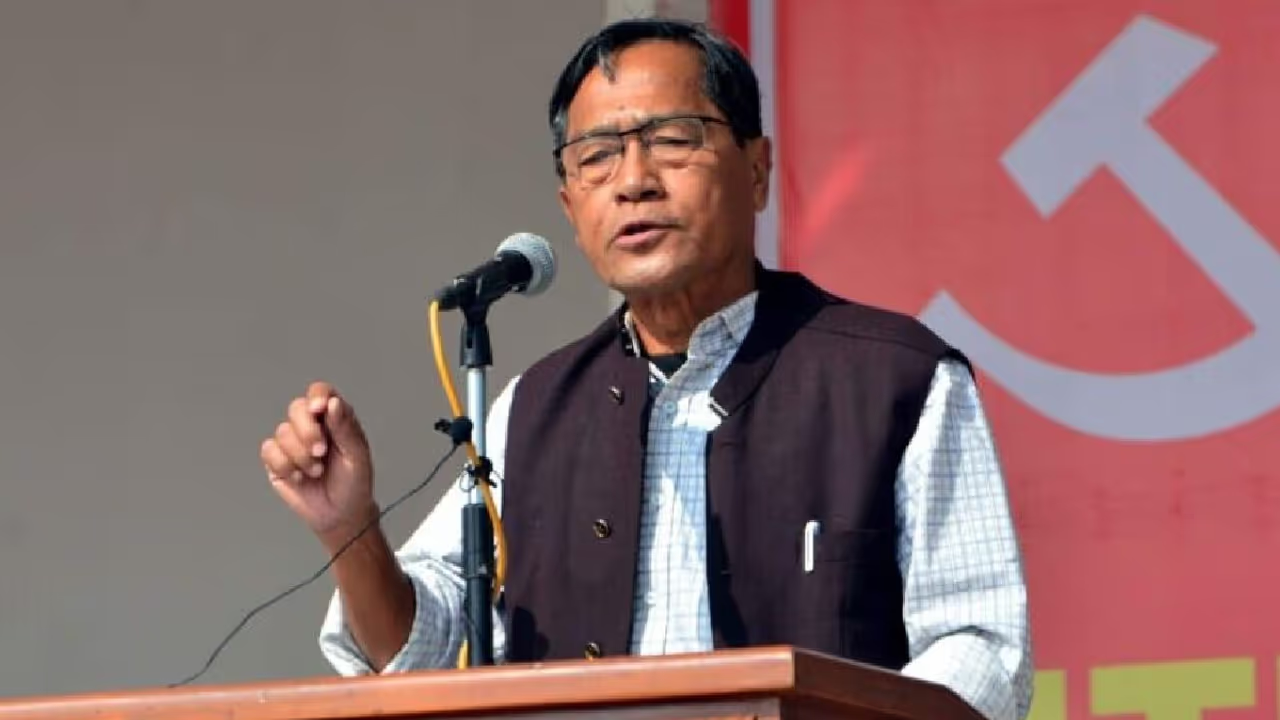
The Opposition Attacks Government Over Employee Allowances campaign has intensified in Tripura as CPI(M) State Secretary and Leader of the Opposition Jitendra Chowdhury criticised the BJP-led government over employee-related issues. Chowdhury highlighted demands for higher Dearness Allowance (DA) and Dearness Relief (DR), while also raising concerns over employment, promotions and service-related grievances affecting government employees and teachers.
Agartala flight services now get a crucial lifeline
Opposition Attacks Government Over Pending Employee Demands
The passage is already close to the Yoast targets. I’d tighten several long sentences and replace a few passive constructions while keeping the facts and neutral political framing intact.
Jitendra Chowdhury has repeatedly raised employee-related issues while criticising the BJP-led government in Tripura. At a Left-backed employees’ programme in Agartala on August 23, he highlighted demands for pending allowances and a higher DA rate. The programme took place ahead of the Tripura Assembly session.
The employee organisations at the programme demanded the release of what they described as a pending 19% DA component under the Seventh Pay Commission. They also sought an Eighth Pay Commission for Tripura. Therefore, the controversy concerns more than whether the state has released DA. It also concerns the gap between the allowance available to state employees and the rate that employee organisations say should be provided.
This distinction matters because the Tripura government announced a 5% increase in DA and DR from April 1, 2026. The increase took the total state DA and DR rate to 41%. The announcement covered regular state government employees and pensioners.
Consequently, describing the issue simply as complete “non-payment” of DA or DR would be inaccurate. The government has released DA and DR installments. However, employee organisations and the Opposition continue to demand additional amounts. The latest criticism therefore focuses on the remaining gap and the pace of further revisions.
DA and DR Gap Remains a Political Flashpoint
The Opposition Attacks Government Over Employee Allowances issue has gained political importance because DA and DR directly affect serving employees and pensioners. Employee organisations have compared state rates with Central Government rates. They have also demanded further increases.
According to Tripura Finance Department records, the state government increased DA by 3% from October 1, 2025. That increase took the total rate to 36%. The government later announced another 5% increase from April 1, 2026.
The corresponding DR rate for state government pensioners and family pensioners also reached 41% from April 1, 2026. The Comptroller and Auditor General’s treasury records list the 41% DR order among Tripura’s 2026 government orders.
However, employee organisations have argued that further increases remain necessary. At the August protest addressed by Chowdhury, participants specifically demanded payment of 19% DA. They also called for a new pay commission.
Meanwhile, the Centre’s DA revisions have added another point of comparison for state employees. Therefore, differences between Central and state allowance rates can become a recurring issue when the Union Government announces new installments.
Chowdhury and the CPI(M) have used these demands to challenge the government’s handling of employee concerns. However, these allegations represent the Opposition’s political position. They should remain separate from official assessments of state finances and employee compensation policy.
Promotion Delays Add to Employee Concerns
Alongside DA and DR, promotion and career progression have also featured in Chowdhury’s criticism of personnel policies. He has previously alleged that repeated appointments of retired officials can affect serving government officers. In July 2026, he argued that extensions and reappointments of retired IAS officers were affecting opportunities for eligible serving officials.
Promotion concerns can have wider implications for government employees. Career advancement depends on seniority, vacancies, service rules and departmental procedures. Therefore, delays can create dissatisfaction even when salaries and allowances continue to be paid.
Teachers have also remained an important part of the employee debate in Tripura. The Opposition has repeatedly raised staffing, recruitment and service-related issues affecting schools and government institutions. Moreover, recent reports have highlighted salary delays affecting some scheme-based employees. These include SSA teachers, NHM personnel and Social Welfare workers.
Those workers are distinct from regular state government employees. Therefore, officials and organisations should not automatically group their issues with the DA dispute.
The distinction between regular employees, scheme-based teachers and contractual workers remains important. Their pay structures, employment conditions and funding sources can differ substantially. Consequently, each category may face different administrative or financial issues.
At the same time, separate employee grievances have allowed the Opposition to present them as part of a broader argument about government administration. Chowdhury has called for stronger mass movements around what he describes as anti-people policies.
Government Finances and Pay Revision Remain Central
The dispute over employee allowances also needs to be viewed against Tripura’s broader financial position. DA and DR payments represent recurring expenditure because they cover large groups of employees and pensioners. The state must therefore account for these payments within its annual budget and available resources.
The 5% DA and DR increase announced from April 2026 was reported as benefiting more than 100,000 regular employees and pensioners. The size of the workforce means that even small percentage increases can create substantial additional expenditure.
Furthermore, the debate over an Eighth Pay Commission could extend beyond DA. A pay commission could examine salaries, allowances, pay structures and related service conditions. However, constituting such a commission would require a separate government decision. It should not be presented as an approved measure unless officials announce it.
Employee organisations therefore face two related but distinct issues. One concerns the immediate demand for additional DA and DR. The other involves the longer-term demand for a new pay review mechanism.
The Opposition has also linked employee concerns with wider questions about employment and governance. At his August programme, Chowdhury criticised the government over jobs. He also claimed that promises made during the 2018 Assembly election had not been fulfilled. These statements formed part of his political criticism and remain Opposition allegations.
Meanwhile, the government has continued to make appointments and spend on salaries and pensions. Therefore, the debate is likely to focus on how Tripura balances employee expectations with its fiscal capacity.
Conclusion
The Opposition Attacks Government Over Employee Allowances issue has become an important political and employee-relations debate in Tripura. Jitendra Chowdhury has criticised the BJP-led government over additional DA and DR demands. He has also raised promotion concerns and broader service issues affecting employees and teachers.
However, Tripura has already released DA and DR installments. This includes a 5% increase effective April 1, 2026, which took the state rate to 41%. The current dispute therefore concerns demands for further increases and other service-related issues. It does not represent a complete absence of DA or DR payments.
The issue may remain significant as employee organisations seek additional financial benefits and a possible new pay commission. At the same time, the government must balance these demands with its wider fiscal responsibilities.
FAQs
What has Jitendra Chowdhury criticised the Tripura government over?
Jitendra Chowdhury has criticised the BJP-led government over employee demands including additional DA, pending allowances, employment concerns and service-related issues.
Has Tripura completely stopped paying DA and DR?
No. Tripura has released DA and DR installments. The government announced a 5% increase effective April 1, 2026, taking the total state DA and DR rate to 41%.
What DA rate are employee organisations demanding?
At an August 2026 employees’ protest addressed by Chowdhury, participants demanded what they described as 19% pending DA under the Seventh Pay Commission.
Are teachers also part of the wider employee debate?
Yes. Teachers and other categories of government and scheme-based workers have faced separate service and payment-related concerns. However, their employment arrangements can differ from those of regular state government employees.
Why has the Opposition Attacks Government Over Employee Allowances issue gained attention?
The Opposition Attacks Government Over Employee Allowances issue has gained attention because DA, DR, promotions and pay revision directly affect the financial and career interests of a large number of employees and pensioners in Tripura.