


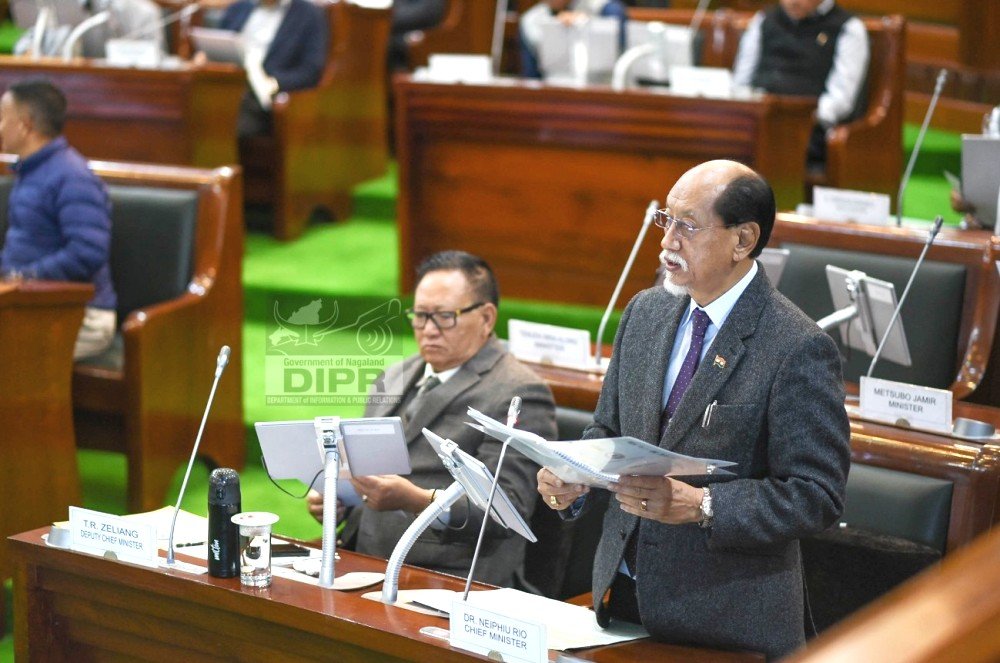
The ENPO Welcomes FNTA Bill following the unanimous passage of the Frontier Nagaland Territorial Authority (FNTA) Bill, 2026, by the Nagaland Legislative Assembly. The Eastern Nagaland Peoples’ Organisation (ENPO) welcomed the development and highlighted the proposed authority’s autonomy provisions. Moreover, the organisation pointed to the tripartite Memorandum of Agreement signed in February as the foundation for local legislative, executive and financial autonomy. The response marks an important moment in the long-running discussion over development and governance in Eastern Nagaland.
Tripura Land Rights Draft Expected Within 15 Days After New Delhi Deliberations
ENPO Welcomes FNTA Bill After Assembly Approval
The Eastern Nagaland Peoples’ Organisation welcomed the passage of the FNTA Bill after the Nagaland Legislative Assembly approved it unanimously.
Furthermore, the legislation represents a significant step toward establishing a dedicated institutional framework for Eastern Nagaland.
The ENPO has remained closely associated with demands for greater regional autonomy and focused development.
Therefore, the organisation’s positive response carries significance for the implementation of the proposed authority.
Moreover, the unanimous Assembly approval provides legislative backing for the framework outlined under the agreement between the stakeholders.
The ENPO Welcomes FNTA Bill development consequently moves the issue from political negotiations toward the next stage of institutional implementation.
ENPO Welcomes FNTA Bill and Autonomy Provisions
The ENPO highlighted that the FNTA will function with local legislative, executive and financial autonomy.
These provisions form an important part of the proposed governance structure for Eastern Nagaland.
Furthermore, legislative autonomy could provide the authority with greater responsibility in matters assigned to its institutional framework.
Executive autonomy, meanwhile, could support more direct administration of functions within the authority’s jurisdiction.
Financial autonomy could also play an important role by providing greater scope for managing resources for regional priorities.
The ENPO Welcomes FNTA Bill response therefore focuses not only on the passage of the legislation but also on the nature of the autonomy expected under the arrangement.
ENPO Welcomes FNTA Bill Under February Agreement
The organisation linked the autonomy provisions to the tripartite Memorandum of Agreement signed in February.
Moreover, the agreement provides the broader framework for the understanding between the stakeholders regarding the future administration of Eastern Nagaland.
The ENPO’s reference to the agreement highlights the importance of maintaining continuity between the commitments made during negotiations and the provisions implemented through legislation.
Furthermore, the passage of the bill creates an opportunity to translate those commitments into an operational administrative structure.
However, implementation will remain crucial because the effectiveness of any new authority depends on how its responsibilities, resources and institutional mechanisms operate in practice.
Consequently, the February agreement and the new legislation will remain closely connected as authorities move forward with the FNTA framework.
ENPO Welcomes FNTA Bill as Eastern Nagaland Enters New Phase
The passage of the FNTA Bill opens a new phase in discussions about governance and development in Eastern Nagaland.
Moreover, the proposed autonomy structure could give local institutions a stronger role in addressing regional priorities.
Eastern Nagaland has frequently featured in debates concerning development gaps, infrastructure and access to economic opportunities.
Therefore, the new authority will face expectations to deliver meaningful progress in these areas.
Additionally, effective coordination between the state government, the FNTA and local stakeholders will remain important for achieving the objectives associated with the agreement.
The ENPO Welcomes FNTA Bill response indicates that the organisation views the Assembly’s decision as a positive development.
The next stage will consequently focus on implementation and ensuring that the authority operates in accordance with the agreed framework.
Conclusion
The ENPO Welcomes FNTA Bill after the Nagaland Legislative Assembly unanimously passed the Frontier Nagaland Territorial Authority (FNTA) Bill, 2026. The Eastern Nagaland Peoples’ Organisation highlighted the authority’s proposed legislative, executive and financial autonomy under the tripartite Memorandum of Agreement signed in February. Moreover, the passage marks a significant transition from negotiations toward implementation, with the effectiveness of the new framework depending on its practical execution across Eastern Nagaland.
FAQs
1. What did the ENPO say about the FNTA Bill?
The Eastern Nagaland Peoples’ Organisation welcomed the passage and highlighted the autonomy provisions included in the framework.
2. What type of autonomy will the FNTA have?
According to the ENPO, the FNTA will have local legislative, executive and financial autonomy as outlined in the agreement.
3. What agreement provides the foundation for the FNTA framework?
The autonomy provisions stem from the tripartite Memorandum of Agreement signed in February.
4. When did the Nagaland Assembly pass the FNTA Bill?
The Nagaland Legislative Assembly unanimously passed the FNTA Bill, 2026, on September 3.
5. Why is the ENPO Welcomes FNTA Bill development significant?
It marks an important step toward implementing a new governance framework intended to address development and administrative concerns in Eastern Nagaland.