


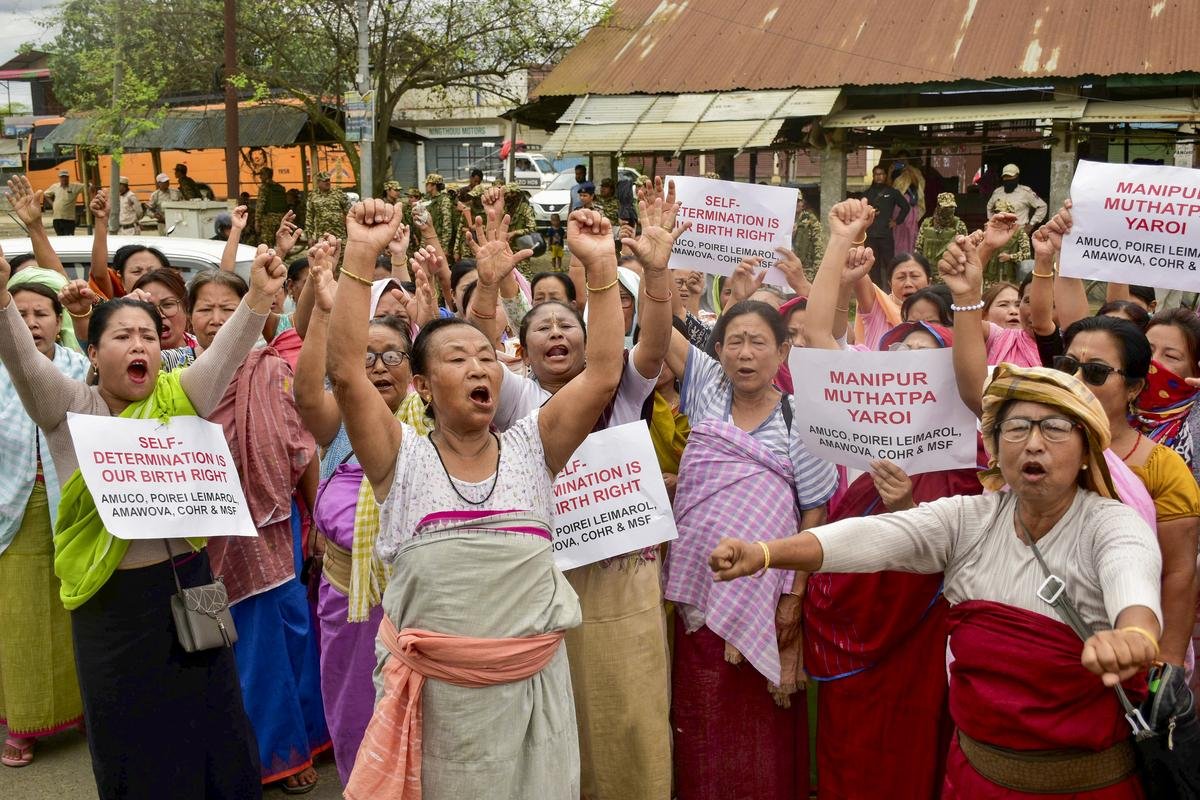
A 48-hour statewide strike in Manipur, called by the Campaign for Just and Fair Delimitation (JFD), has reportedly disrupted normal life across five valley districts. The shutdown has affected transportation, businesses, educational activities, and other aspects of daily life as protesters press their demands over the delimitation process.
The campaign has intensified pressure on authorities over concerns surrounding electoral constituency boundaries. Moreover, the scale of the shutdown demonstrates the strong public mobilisation behind the JFD’s position in the affected areas.
However, the strike’s impact may vary between locations and sectors. The available information does not provide a complete assessment of economic losses or the exact number of establishments that have closed.
Dr. Thejo Kumari Amudala Honoured at Rashtriya Gourav Awards
Manipur 48-Hour Strike Disrupts Daily Life
The Manipur 48-hour strike has reportedly brought significant parts of the state’s valley region to a standstill.
Shops and businesses have faced disruption, while transportation services have reportedly been affected. Furthermore, reduced movement can interfere with routine activities such as work, education, and access to commercial services.
The shutdown therefore represents a major interruption to normal life.
However, the precise number of closed establishments has not been provided.
Five Valley Districts Face Shutdown
The strike has reportedly had its strongest impact across five valley districts.
The valley region contains several of Manipur’s major population centres and commercial areas. Additionally, disruptions in these districts can have wider consequences because transportation and trade connect them with other parts of the state.
The scale of participation has therefore increased the visibility of the campaign.
JFD Leads Delimitation Protest
The Campaign for Just and Fair Delimitation (JFD) has called the shutdown to highlight its concerns regarding delimitation.
Delimitation involves determining or redrawing electoral constituency boundaries. Moreover, changes to constituency structures can have significant political implications because they influence electoral representation.
The JFD is using the strike as a pressure tactic to demand what it considers a fair approach to the process.
Delimitation Remains Politically Sensitive
Electoral boundary decisions can become particularly sensitive when different communities have concerns about representation.
Questions surrounding population data, constituency boundaries, geographic distribution, and political representation can all influence public reactions. Furthermore, competing interpretations of fairness can make negotiations difficult.
The current strike reflects those broader tensions.
Transport Services Affected
A major shutdown can significantly affect transportation.
Public buses, private vehicles, commercial transport, and other services may face reduced operations during a strike. Additionally, road blockades or limited commercial activity can make travel more difficult for residents.
People travelling for medical treatment or other essential purposes can face particular challenges.
Authorities therefore need to ensure that emergency movement remains possible.
Businesses Face Disruption
The shutdown has reportedly affected commercial activity across the participating districts.
Retail shops, markets, restaurants, and other establishments can lose business when transportation and public movement decline. Moreover, businesses that depend on daily customer traffic may experience immediate financial pressure.
The overall economic impact will depend on the strike’s duration and level of participation.
Education and Public Activities Affected
Educational institutions and other public activities may also experience disruption during a major shutdown.
Students and teachers can face difficulties reaching schools and colleges, while institutions may choose to suspend normal operations. Furthermore, public events and administrative activities can face delays when transportation becomes difficult.
The impact extends beyond the immediate political demand.
Emergency Services Remain Important
During any statewide strike, maintaining access to essential services remains critical.
Hospitals, ambulances, pharmacies, and emergency responders need to continue functioning even when other activities stop. Additionally, authorities may need to coordinate transportation routes to ensure that emergency vehicles can move without obstruction.
Protecting essential services can reduce the humanitarian impact of a shutdown.
Government Faces Pressure
The scale of the strike places additional pressure on the government to respond to the JFD’s concerns.
Officials may need to engage with campaign representatives and clarify the government’s position on delimitation. Moreover, dialogue can provide an opportunity to address disagreements without allowing disruptions to continue indefinitely.
A negotiated approach could help reduce tensions.
Peaceful Resolution Remains Important
Delimitation disagreements can have long-term political consequences.
Therefore, any resolution should consider constitutional procedures, electoral requirements, demographic data, and the interests of affected communities. Furthermore, transparent communication can help the public understand how decisions are made.
A peaceful and legally grounded process can strengthen confidence in the outcome.
What Happens Next?
Authorities will need to monitor the strike as the 48-hour period progresses.
The government may engage with JFD representatives to discuss their concerns and explore possible solutions. Additionally, officials will need to maintain essential services and prevent disruptions from escalating into broader law-and-order problems.
The response to the campaign could determine whether further protests occur.
Conclusion
The Manipur 48-hour strike called by the Campaign for Just and Fair Delimitation has reportedly brought significant disruption across five valley districts. The shutdown highlights strong concerns surrounding the state’s delimitation process and demands for fair electoral representation.
Moreover, the strike has affected transportation, businesses, education, and everyday activities, creating challenges for residents and authorities. At the same time, maintaining emergency services and pursuing dialogue remain essential while the dispute continues.
Overall, the JFD delimitation protest demonstrates the political sensitivity surrounding constituency boundaries in Manipur and the importance of finding a transparent, lawful, and peaceful resolution.
FAQs
1. Who called the Manipur 48-hour strike?
The Campaign for Just and Fair Delimitation (JFD) reportedly called the shutdown.
2. What is the strike about?
The campaign is protesting concerns surrounding the delimitation process and demanding what it considers fair electoral representation.
3. Which areas are affected?
The shutdown has reportedly brought five valley districts to a significant standstill.
4. What services can be disrupted during the strike?
Transportation, businesses, education, and other routine activities can face disruption, although essential services should remain accessible.
5. What could resolve the dispute?
Dialogue between authorities and campaign representatives, alongside a transparent and legally grounded delimitation process, could help address the concerns.