


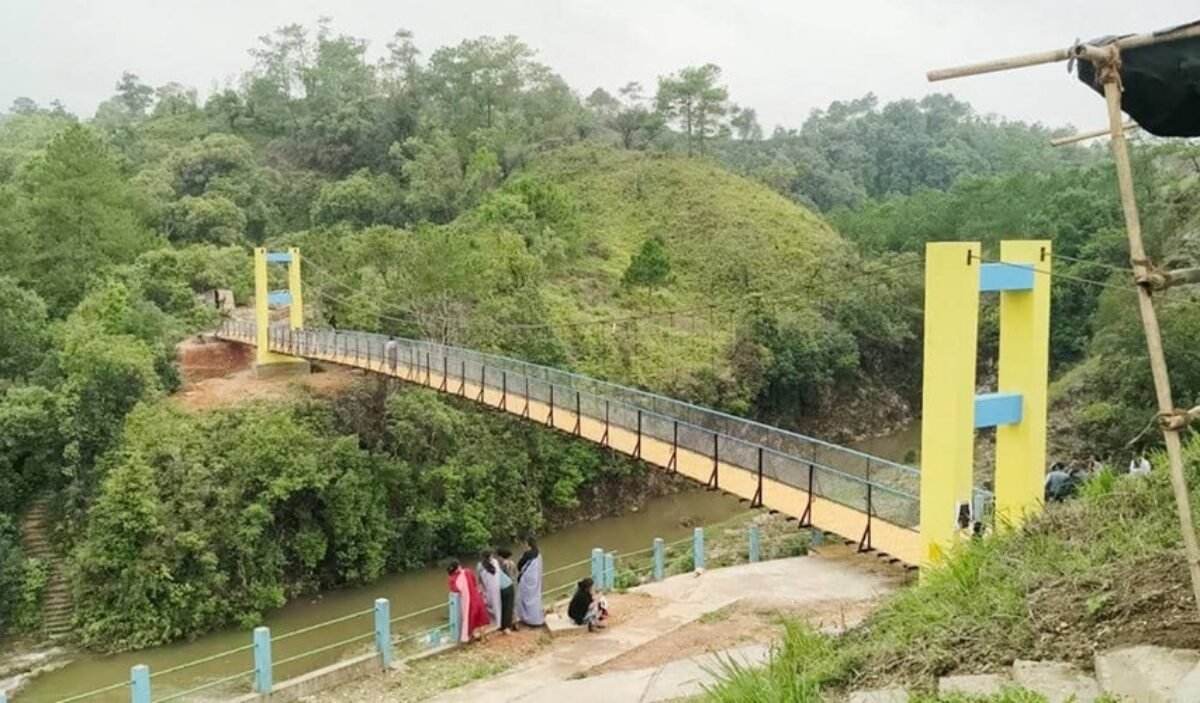
Meghalaya rural footbridge project activities gained attention after authorities inaugurated a new bridge over the Umyurem River to improve access between remote agricultural zones and nearby villages. Meanwhile, local officials stated that the infrastructure initiative aims to strengthen rural connectivity, support farming communities, and reduce transportation difficulties faced by residents during seasonal river surges. The development immediately drew positive reactions from villagers and regional administrators because the bridge is expected to improve movement of people, crops, and essential supplies across previously isolated areas. Additionally, district authorities emphasized that the project forms part of broader efforts to expand infrastructure in remote parts of Meghalaya.
The new footbridge also highlighted increasing government focus on rural development and localized connectivity projects in northeastern states. Furthermore, development experts noted that small-scale transport infrastructure often creates significant economic and social benefits in geographically difficult regions.
Assam Rural Road Expansion Accelerates Rapidly
Guwahati AI Phygital Bank Revolution Begins
New Bridge Connects Remote Agricultural Areas
Authorities formally opened the footbridge across the Umyurem River following completion of construction and safety inspections. Meghalaya rural footbridge project developments therefore quickly became a major local infrastructure milestone in the region.
Meanwhile, officials explained that farmers and villagers previously faced serious challenges while crossing the river, especially during heavy rainfall and monsoon-related flooding. Additionally, residents often depended on temporary arrangements and long alternative routes to transport agricultural produce and daily necessities.
District administrators stated that the new bridge now provides safer and more reliable access between agricultural lands and nearby settlements. Furthermore, officials argued that improved mobility may strengthen local economic activity and reduce travel-related risks for rural communities.
Earlier, residents repeatedly appealed for permanent connectivity infrastructure because seasonal river conditions frequently disrupted transportation and emergency movement. Consequently, the bridge project received strong local support during planning and implementation stages.
At the same time, authorities indicated that additional rural infrastructure proposals remain under consideration for nearby areas facing similar accessibility challenges.
Farmers Expected to Benefit Significantly
The bridge is expected to improve daily transportation and agricultural logistics for farming communities located near the Umyurem River. Meghalaya rural footbridge project outcomes therefore may directly influence local livelihoods and agricultural productivity.
Meanwhile, farmers stated that transportation of crops, fertilizers, and farming equipment had become difficult because of unreliable river crossings and long detours. Additionally, many villagers reported facing delays in accessing local markets during adverse weather conditions.
Agricultural experts observed that improved transport connectivity often helps rural producers reduce post-harvest losses and increase market participation. Furthermore, better infrastructure may strengthen access to agricultural support services, storage facilities, and supply chains.
Several development specialists emphasized that connectivity projects play a critical role in improving economic resilience in remote hill regions. Consequently, localized infrastructure investments may contribute significantly to rural income stability and regional growth.
However, residents also requested regular maintenance and long-term safety monitoring to ensure uninterrupted use of the bridge during extreme weather conditions.
Rural Infrastructure Remains Government Priority
Officials described the bridge project as part of broader rural development efforts across Meghalaya. Meghalaya rural footbridge project initiatives therefore align with ongoing state and regional infrastructure expansion strategies.
Meanwhile, authorities highlighted that remote areas often require targeted infrastructure solutions because of difficult terrain, river networks, and limited transportation access. Additionally, district administrations reportedly continue identifying vulnerable locations requiring bridges, roads, and mobility improvements.
Government representatives stated that improved connectivity supports education access, healthcare movement, emergency response, and economic development in rural communities. Furthermore, officials emphasized that transport infrastructure remains essential for reducing geographic isolation in hill districts.
Earlier, northeastern states accelerated investments in rural roads, bridges, and connectivity corridors under multiple development programs. Consequently, the Umyurem River bridge reflects a wider regional emphasis on infrastructure modernization.
At the same time, planners stressed the importance of environmentally sustainable construction practices in ecologically sensitive zones.
Local Residents Welcome Connectivity Improvement
Villagers and community organizations reportedly welcomed the completion of the new footbridge across the river. Meghalaya rural footbridge project reactions therefore reflected widespread optimism regarding transportation and daily mobility improvements.
Meanwhile, local residents stated that students, elderly villagers, and farmers may particularly benefit from safer travel routes created by the project. Additionally, community leaders noted that emergency medical access could improve significantly during monsoon seasons when river crossings become dangerous.
Several residents also highlighted the social impact of improved connectivity, arguing that easier movement may strengthen interaction between remote communities and local markets. Furthermore, improved transport access could encourage economic activity and reduce isolation in rural settlements.
Development observers noted that even relatively small infrastructure projects can produce major improvements in quality of life within geographically challenging regions. Consequently, local expectations regarding future infrastructure development increased following the bridge inauguration.
At the same time, civic groups encouraged authorities to continue prioritizing rural accessibility and maintenance planning in remote districts.
Strategic Connectivity Supports Regional Development
Infrastructure experts argued that rural transport projects contribute directly to broader regional development objectives in Meghalaya. Meghalaya rural footbridge project investments therefore carry importance beyond local transportation improvements alone.
Meanwhile, planners explained that stronger rural connectivity may support agricultural trade, tourism potential, and integration with district-level development programs. Additionally, reliable transport infrastructure often improves delivery of government services in isolated communities.
Several economists observed that connectivity gaps remain a major development challenge across many northeastern hill regions because difficult terrain complicates infrastructure expansion. Furthermore, localized bridge and road projects frequently create long-term economic and administrative benefits.
Authorities also emphasized that rural infrastructure projects help improve disaster resilience by maintaining access during floods and severe weather events. Consequently, connectivity planning increasingly forms part of broader climate adaptation and rural development strategies.
However, environmental experts urged authorities to balance infrastructure expansion with ecological conservation and river protection measures.
Future Development Plans Under Discussion
Officials indicated that additional infrastructure projects may follow in nearby rural regions facing transportation difficulties. Meghalaya rural footbridge project success therefore could influence future planning priorities across Meghalaya’s remote districts.
Meanwhile, district authorities reportedly continue assessing connectivity requirements involving bridges, rural roads, and transportation links in underserved villages. Additionally, government planners may prioritize projects improving market access and public service delivery in isolated communities.
Several policy experts recommended integrating local consultation into future infrastructure planning to ensure projects reflect community needs and environmental realities. Furthermore, sustainable maintenance systems remain essential for protecting long-term infrastructure usability in high-rainfall regions.
Observers also highlighted the importance of continued investment in digital connectivity, transportation, and public infrastructure for balanced regional growth. Consequently, rural development strategies may increasingly combine physical infrastructure with broader economic planning initiatives.
At the same time, community leaders called for faster implementation of pending infrastructure proposals in similarly isolated locations.
Conclusion
Meghalaya rural footbridge project developments gained public attention after authorities inaugurated a new bridge over the Umyurem River connecting remote agricultural areas and nearby villages. Meanwhile, residents and officials expressed optimism that the infrastructure project will improve transportation, agricultural movement, and emergency access for rural communities. The bridge also reflected broader government efforts to strengthen connectivity and development in geographically challenging regions of Meghalaya. Ultimately, the initiative may encourage additional infrastructure investment and improve long-term economic opportunities for remote communities.
FAQs
What was inaugurated in Meghalaya?
Authorities opened a new footbridge over the Umyurem River to improve rural connectivity.
Why is Meghalaya rural footbridge project important?
The bridge improves access between remote villages, agricultural lands, and local markets.
Who will benefit from the bridge?
Farmers, students, residents, and emergency service users are expected to benefit significantly.
What problems existed before the bridge?
Villagers faced difficult river crossings and transportation disruptions, especially during monsoon seasons.
Why is rural connectivity important in Meghalaya?
Improved connectivity supports economic activity, healthcare access, education, and disaster response.
Could more projects follow in the future?
Officials indicated that additional infrastructure projects may be planned for other remote regions.