


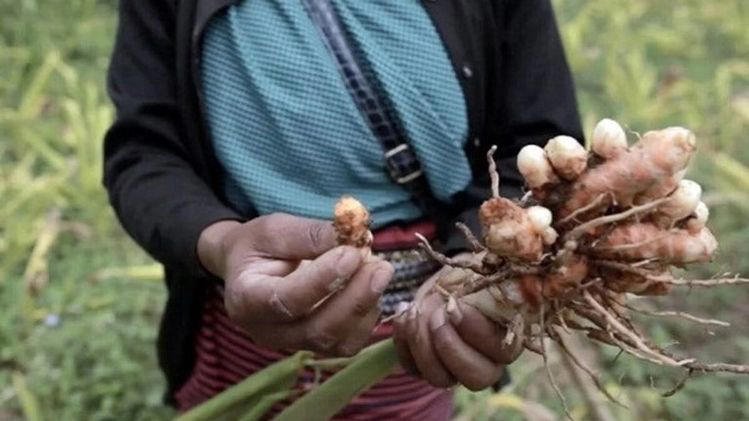
Meghalaya has taken a bold step to strengthen its agricultural economy. The state recently opened the Northeast’s first bio-curcumin extraction unit in Lashkein block, West Jaintia Hills. This facility will directly benefit Lakadong turmeric farmers by processing their produce into high-value products.
A Boost for Farmers
Lakadong turmeric stands out for its rich curcumin content. This natural compound has anti-inflammatory and antioxidant benefits, making it valuable in health, pharmaceutical, and cosmetic industries. However, farmers often sold it in raw form, earning less than its true worth.
Now, with the new bio-curcumin extraction unit, they can process turmeric locally. The facility turns raw turmeric into oleoresin, turmeric powder, curcumin, and bio-curcumin capsules. Farmers will now earn more, as the value addition happens close to home.
Read More: Arunachal Governor Calls for Inspiration from Freedom Fighters
Facility Details
The North Eastern Council funded the ₹1.50 crore project. It can process up to 200 kilograms of dry turmeric daily. The unit directly employs 12 people and works with 15 Collective Marketing Centres. These centres connect over 600 turmeric farmers to the processing line.
Over the past two years, farmers in the area have already seen income growth. Many have increased their annual earnings from ₹50,000 to ₹60,000. This is due to the ability to process over 100 metric tonnes of Lakadong turmeric each year into premium products.
Strengthening Local Value Chains
Before this unit, farmers relied on distant facilities for processing. Transporting turmeric was costly and time-consuming. Now, processing happens within the district, saving money and improving quality control.
Women-led self-help groups, which play a key role in turmeric production, also gain from the new infrastructure. They can now scale operations, meet larger orders, and maintain consistent quality. This directly strengthens rural economies and empowers women entrepreneurs.
Opening Doors to Global Markets
Demand for curcumin is rising worldwide. By producing it locally, Meghalaya can now compete in national and export markets. The facility ensures high-quality standards and efficient packaging, making products more attractive to buyers.
With multiple end products, farmers are less dependent on a single market. This diversification gives them stability, even if prices fluctuate in one sector.
Creating Sustainable Livelihoods
The bio-curcumin extraction unit is more than just a processing plant. It is a job creator, an income booster, and a community builder. Apart from factory jobs, it creates opportunities in packaging, transport, and raw material supply.
Since the turmeric is processed locally, profits stay in Meghalaya. This aligns with the state’s vision of building self-reliant rural economies where farmers and communities retain more benefits from their hard work.
Government Vision and Support
The Lakadong Mission, launched by the state government, aims to promote Lakadong turmeric from farm to market. It focuses on improving farming practices, branding, and expanding market reach. The new processing unit is a cornerstone of this mission.
The government is also pursuing organic certification and a Geographical Indication (GI) tag for Lakadong turmeric. These labels will further increase market value and protect the product’s authenticity. Plans for more processing units in other turmeric-growing areas are underway.
A Step Toward a Strong Future
The launch of this bio-curcumin extraction unit marks a turning point for Meghalaya’s agriculture sector. It combines technology, value addition, and market access to create lasting benefits for farmers.
With improved earnings, better infrastructure, and strong government backing, Lakadong turmeric farmers are set for long-term growth. This project is more than a building—it’s a pathway to a stronger, more sustainable future for rural Meghalaya.
Read More: India’s Mountain Miracle – BRO Pushes Ahead With High-Altitude Road