


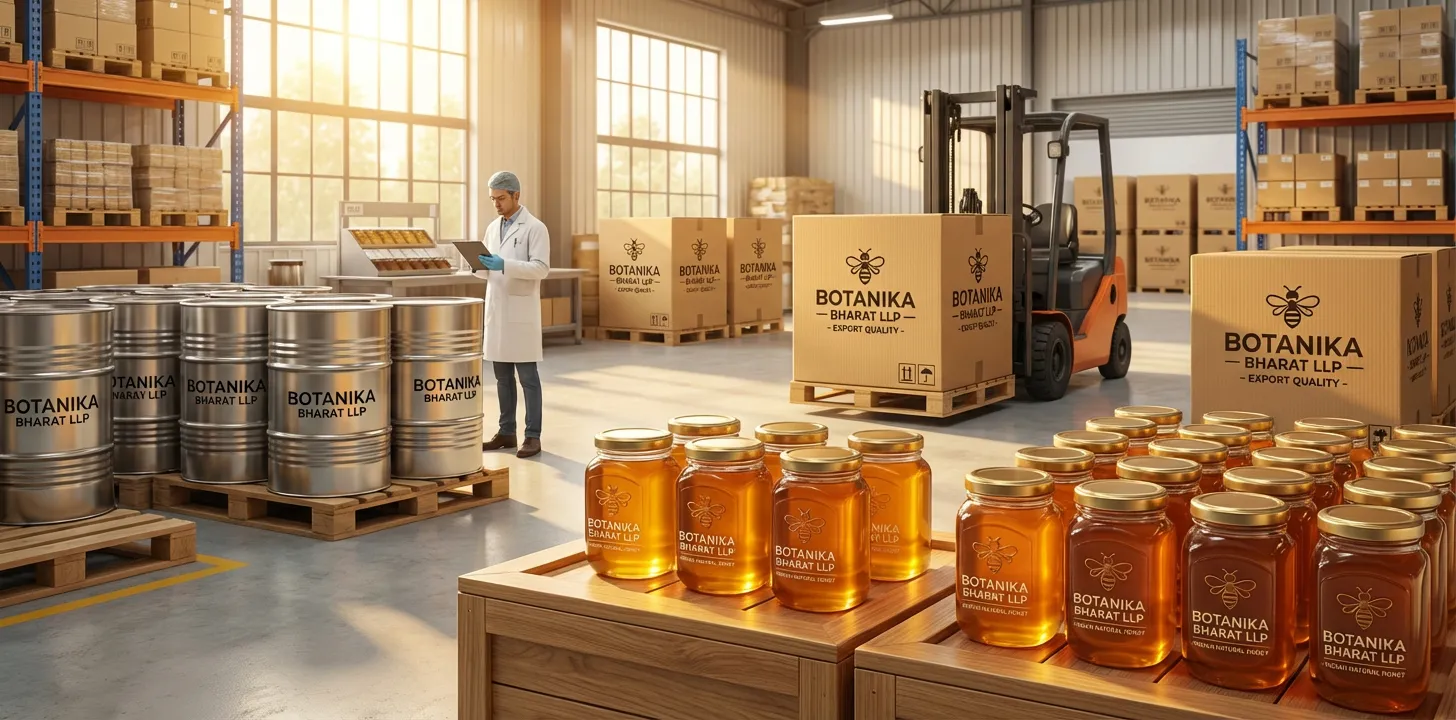
Meghalaya’s local pine honey producers have secured international export buyers through central trade portals, marking a significant boost for the state’s forest-based and rural economy. The development is expected to open wider global markets for indigenous honey brands while improving income prospects for beekeepers and self-help groups. Moreover, officials stated that digital trade platforms are playing a key role in connecting rural producers directly with international demand. The achievement highlights the growing integration of local products into global supply chains.
Joint Security Forces Recover 328 Stolen Weapons From Volatile Districts Across Manipur
National Highway-10 Blocked Completely by Sudden Mudslides Near Rangpo, Cutting Off Sikkim
Digital Platforms Connect Rural Producers to Global Markets
Meghalaya local pine honey brands find international export buyers through central trade portals, enabling producers to access overseas markets without traditional intermediaries. Consequently, small honey cooperatives are now receiving inquiries from international buyers.
Pine honey from Meghalaya is valued for its natural origin, distinct aroma, and forest-based production system. Moreover, its organic and chemical-free qualities make it attractive in premium health and wellness markets. Therefore, it is gaining recognition as a niche export commodity.
Officials emphasized that central trade portals provide visibility, authentication, and streamlined buyer-seller communication. Furthermore, digital listing systems help standardize product information for global trade. As a result, export opportunities for rural producers are expanding significantly.
Meanwhile, producers are being supported with guidance on packaging standards and export documentation. Consequently, product readiness for international markets is improving.
Boost to Rural Livelihoods and Beekeeping Economy
Meghalaya local pine honey brands find international export buyers through central trade portals, creating new income avenues for rural beekeepers. Moreover, apiculture is a key supplementary livelihood in forest-rich regions of the state. Therefore, improved market access has a direct impact on rural households.
The increased demand is expected to encourage expansion of beekeeping activities and cooperative farming models. Consequently, production capacity and employment opportunities may rise. Such developments strengthen rural economic resilience.
Furthermore, self-help groups and cooperatives are playing an important role in aggregating and marketing honey. As a result, collective bargaining power and profit margins are improving.
Meanwhile, training on scientific beekeeping practices and quality control is being expanded. Similarly, efforts to improve grading and certification systems are underway.
Strengthening Meghalaya’s Organic Product Identity
The Meghalaya local pine honey brands find international export buyers through central trade portals as part of broader efforts to promote organic and forest-based products. Moreover, Meghalaya’s rich biodiversity supports high-quality natural honey production. Therefore, the state has strong potential in global organic markets.
Officials highlighted that branding Meghalaya pine honey as a premium natural product enhances its competitiveness. Consequently, the state’s identity in organic exports is being strengthened. Such positioning supports long-term market growth.
Furthermore, sustainable harvesting practices are being promoted to protect forest ecosystems. As a result, environmental conservation and economic development are being aligned.
Meanwhile, participation in trade fairs and international exhibitions is being encouraged. Similarly, collaborations with export agencies are being strengthened.
Expanding Role of E-Commerce and Trade Infrastructure
The initiative reflects the increasing importance of digital trade infrastructure in supporting rural industries. Moreover, central trade portals reduce dependency on intermediaries and simplify export processes. Therefore, small producers can engage more directly with global markets.
Officials stated that these platforms also improve transparency, pricing efficiency, and buyer confidence. Consequently, rural enterprises can compete more effectively at an international level. Such systems support inclusive economic development.
Furthermore, integration with logistics and certification networks is being improved. As a result, export operations are becoming more efficient and scalable.
Meanwhile, more rural products are being onboarded onto digital trade systems. Similarly, awareness programs are being conducted to promote digital literacy among producers.
Conclusion
Meghalaya local pine honey brands find international export buyers through central trade portals, marking a major milestone in rural trade expansion and digital market integration. Moreover, the initiative strengthens livelihoods, enhances global visibility, and promotes sustainable forest-based products.
The development underscores the importance of digital platforms in connecting rural producers to international markets. Therefore, it represents a significant step toward economic inclusion and export growth.
As Meghalaya local pine honey brands find international export buyers through central trade portals, the achievement highlights the growing global demand for natural, organic, and sustainably produced honey.
FAQs
1. What product from Meghalaya gained international buyers?
Local pine honey brands.
2. How were export buyers found?
Through central trade portals.
3. Who benefits from this initiative?
Rural beekeepers and honey cooperatives.
4. What makes pine honey special?
It is natural, forest-based, and organic.
5. What is the key impact?
Improved rural income and global market access.