


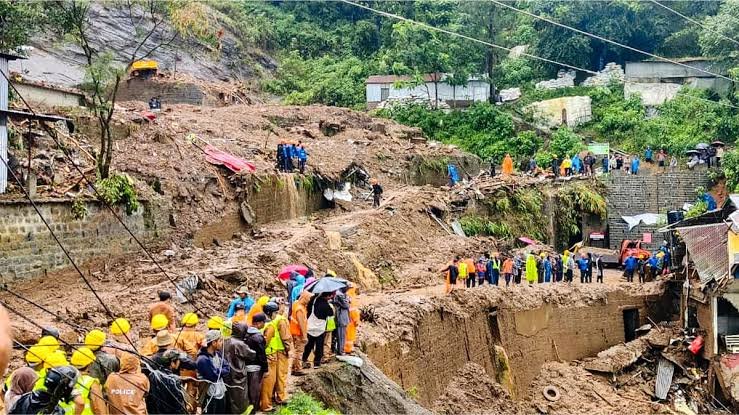
Mizoram has strengthened its emergency response system as heavy rainfall continues to trigger landslides and road disruptions across several areas. Mizoram Zonal Officers Deployed in different localities are assisting affected residents and helping authorities respond to emergencies more quickly.
Moreover, Disaster Management and Rehabilitation Minister Lalnilawma urged residents to immediately report landslides, road blockages and other emergencies. The deployment comes as authorities continue monitoring weather-related risks across the state.
Mizoram Zonal Officers Deployed Across Vulnerable Localities
The Mizoram Zonal Officers Deployed initiative forms part of the state’s local disaster-response arrangements. According to the minister, officers have been stationed in different localities to assist residents affected by the ongoing heavy rainfall.
Therefore, the arrangement gives local communities designated officials to contact when emergencies occur. Zonal Officers can also help communicate information from affected areas to district authorities.
Additionally, official district records show that Mizoram uses zonal systems for disaster management. Aizawl and other districts maintain designated Zonal Officers responsible for specific areas during disaster-related emergencies.
Meanwhile, Serchhip district is divided into multiple disaster-management zones, with each Zonal Officer responsible for assigned areas and village-level reporting during emergencies.
Mizoram Zonal Officers Deployed to Support Rapid Response
The Mizoram Zonal Officers Deployed across localities are expected to strengthen the speed of emergency coordination. Heavy rainfall can quickly lead to landslides, blocked roads and other disruptions in Mizoram’s hilly terrain.
Furthermore, the minister asked residents facing emergencies to contact authorities without delay. He also encouraged people to use the Khuarel App, which allows residents to report emergencies through smartphones.
Consequently, reports submitted by residents can reach Zonal Officers and Deputy Commissioners, allowing authorities to assess situations and determine appropriate action more quickly.
However, the deployment does not mean that every reported landslide will receive immediate physical clearance. Instead, Zonal Officers provide an important local coordination link between residents and disaster-management authorities.
Landslides and Road Blockages Raise Concerns
The Mizoram Zonal Officers Deployed response comes after heavy rainfall triggered landslides and affected road connectivity at multiple locations. Minister Lalnilawma said residents should remain calm and promptly report emergencies.
Additionally, rainfall measurements recorded across Mizoram showed significant variation during the 24-hour period ending September 9. Aizawl recorded 46.4 mm, while Mamit recorded 54 mm, according to the Aizawl Meteorological Centre of the India Meteorological Department.
Meanwhile, the rainfall has also affected essential infrastructure. A landslide blocked the Greater Aizawl Water Supply Scheme Phase III, preventing water from being pumped through the affected system. The Setlak gravity-based water supply was also affected by earthwork associated with the Aizawl Western Bypass project.
Therefore, disaster-management teams face challenges extending beyond road clearance. Water supply, transportation and local access can all require attention when landslides occur.
Disaster Committees Strengthen Local Coordination
The Mizoram Zonal Officers Deployed arrangement operates alongside disaster-management committees at village and local levels. These committees have been formed under the supervision of respective Deputy Commissioners.
Moreover, this layered system allows local officials to collect information while district administrations coordinate larger responses. Such coordination becomes particularly important when several areas face weather-related disruptions at the same time.
District administrations also maintain dedicated disaster-management contacts and zonal structures. Aizawl, for example, lists Zonal Officers and emergency contacts for different areas under its disaster-management arrangements.
Consequently, residents have multiple administrative channels through which they can communicate emergencies. The system can also help officials identify priority areas when road blockages or landslides affect several localities simultaneously.
The current deployment therefore represents a localised approach to disaster response. Rather than relying only on centralised state-level coordination, authorities can use officers positioned closer to affected communities.
Conclusion
The Mizoram Zonal Officers Deployed initiative strengthens local disaster-response coordination as heavy rainfall continues to cause landslides and road disruptions. Minister Lalnilawma has urged residents to report emergencies promptly, while Zonal Officers and disaster-management committees remain positioned across affected localities.
Furthermore, the use of local officers, district administrations and digital reporting tools such as the Khuarel App can help authorities receive information faster. Continued coordination will remain important while rainfall-related risks persist across Mizoram.
FAQs
1. Why were Mizoram Zonal Officers deployed?
They were stationed in different localities to assist residents and support responses to emergencies caused by heavy rainfall and related disruptions.
2. What emergencies are residents being asked to report?
Residents have been urged to report landslides, road blockages and other emergencies promptly.
3. What is the Khuarel App?
It is a smartphone-based emergency reporting application developed by Mizoram’s Department of Disaster Management and Rehabilitation.
4. Who supervises local disaster-management committees?
The committees at village and local levels operate under the supervision of the respective Deputy Commissioners.
5. Has heavy rainfall affected essential infrastructure in Aizawl?
Yes. A landslide affected the Greater Aizawl Water Supply Scheme Phase III, while the Setlak gravity-based water supply was also disrupted.