


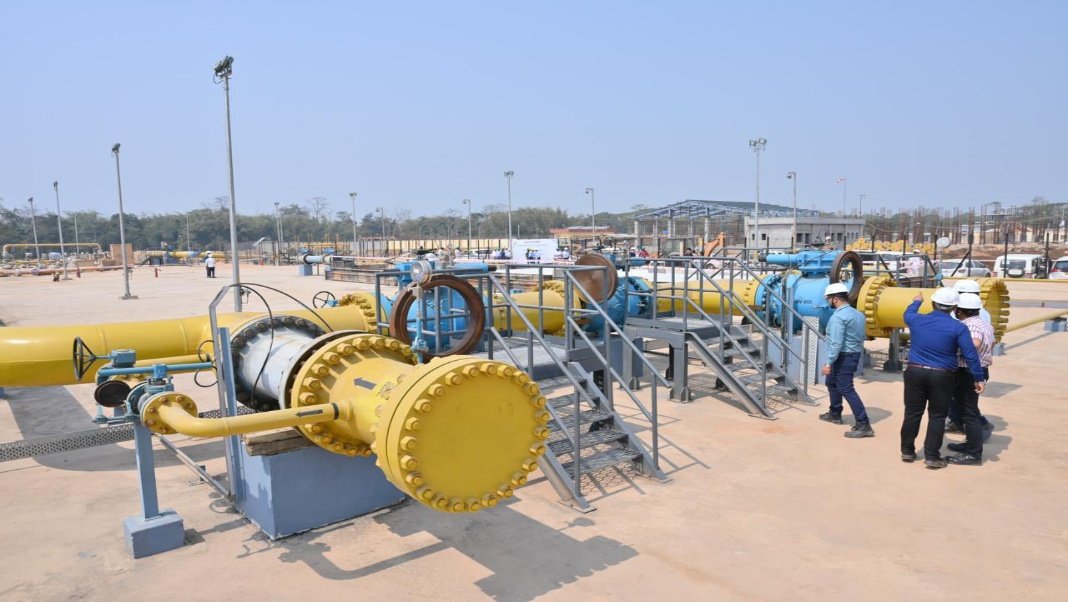
Nagaland has taken a significant step toward stronger energy connectivity with the commissioning of the Dergaon-Dimapur gas pipeline, linking the state to India’s broader natural-gas network. The project can improve access to piped natural gas and support the development of new industrial and commercial activities in the state.
The pipeline represents an important infrastructure milestone for Nagaland and the wider Northeast. Moreover, connecting Dimapur with the national gas network can create opportunities for cleaner fuel access, commercial distribution, and future industrial expansion.
The project could also strengthen the region’s integration with India’s growing gas infrastructure. However, the available information does not provide the pipeline’s exact capacity, commissioning date, or the number of consumers expected to receive gas through the network.
Manipur 48-Hour Strike Paralyzes Life: JFD Shutdown Brings Five Valley Districts to Standstill
Dergaon-Dimapur Pipeline Connects Nagaland
The Dergaon-Dimapur pipeline provides an important link between Nagaland and the wider natural-gas distribution network.
Connecting Dimapur to a larger gas grid can improve the availability of natural gas for different categories of consumers. Furthermore, reliable pipeline connectivity can reduce dependence on transportation-based fuel supply systems.
The project therefore represents an important addition to Nagaland’s energy infrastructure.
However, detailed operational information about the pipeline has not been provided.
National Gas Grid Expands Northeast Connectivity
Natural-gas infrastructure can help connect northeastern states more closely with India’s wider energy network.
Pipeline connectivity allows gas to move through dedicated infrastructure rather than relying entirely on road-based transportation. Additionally, an integrated network can create greater flexibility for supplying households, businesses, and industrial consumers.
Nagaland’s connection can therefore strengthen regional energy integration.
However, the exact scope of Nagaland’s integration with the national gas network remains dependent on future distribution infrastructure.
Dimapur Could Become an Energy Hub
Dimapur’s location makes it an important commercial centre for Nagaland.
Improved gas connectivity could support businesses and industries operating in and around the city. Moreover, dependable energy infrastructure can make industrial locations more attractive to companies considering new investments.
The pipeline could therefore contribute to Dimapur’s wider economic development.
However, no specific industrial projects have been identified as direct beneficiaries of the pipeline.
Cleaner Fuel Access Could Expand
Natural gas generally produces fewer local air pollutants than several conventional fossil fuels when used appropriately.
Greater availability can provide households and commercial establishments with another energy option. Furthermore, piped gas infrastructure can offer a more continuous supply than systems that depend entirely on individual cylinder deliveries.
This could improve convenience for consumers where distribution networks reach them.
However, natural gas remains a fossil fuel, and its environmental benefits depend on how it replaces other energy sources and how effectively the system controls leakage.
Industries Could Benefit from Reliable Supply
Energy availability plays an important role in industrial development.
Manufacturing units, food-processing businesses, hotels, hospitals, and other commercial establishments can use natural gas for heating and other applications. Additionally, reliable pipeline supply can provide businesses with greater predictability in fuel procurement.
This could support future investment around Dimapur and other connected areas.
However, the actual industrial impact will depend on the development of downstream distribution networks.
Urban Gas Distribution Could Grow
Pipeline connectivity can provide a foundation for expanding city-level gas distribution.
Once adequate networks develop, households and commercial users can potentially gain access to piped natural gas. Moreover, transportation sectors could explore compressed natural gas where appropriate infrastructure becomes available.
Such development can gradually broaden the benefits of the main pipeline.
However, the available information does not specify the current or planned number of household connections.
Northeast Energy Infrastructure Gains Momentum
The project forms part of broader efforts to improve energy connectivity across Northeast India.
The region has historically faced infrastructure challenges because of difficult terrain and long distances between population centres. Furthermore, stronger energy networks can support economic integration among northeastern states.
Nagaland’s new connection could therefore contribute to this wider infrastructure transition.
Better Connectivity Could Support Investment
Businesses often consider energy availability when evaluating potential investment locations.
A dependable gas supply can strengthen the attractiveness of industrial and commercial zones. Additionally, improved infrastructure can encourage supporting businesses such as logistics providers, equipment suppliers, maintenance companies, and service firms.
This creates the possibility of an indirect economic multiplier.
However, infrastructure connectivity alone cannot guarantee new investment.
Local Employment Could Increase
Pipeline projects can generate employment during construction, installation, maintenance, and related activities.
Long-term operations can also create demand for technical workers and service providers. Moreover, additional businesses that use the new energy infrastructure could generate further employment.
The project could therefore contribute to local economic activity.
However, no employment figures associated with the Dergaon-Dimapur pipeline have been provided.
Energy Security Gains Importance
A connected gas network can diversify the sources and routes through which consumers receive energy.
Greater connectivity can reduce dependence on isolated supply arrangements and strengthen the resilience of the regional energy system. Furthermore, integrated infrastructure can make it easier to respond to changes in demand.
This can become particularly important as energy consumption grows.
However, overall energy security will depend on gas availability, network capacity, and supply reliability.
Infrastructure Maintenance Will Remain Essential
Commissioning a pipeline marks the beginning of its operational life.
Operators need to maintain pipelines, monitor pressure, inspect infrastructure, and respond quickly to potential technical problems. Additionally, safety standards remain essential when transporting and distributing natural gas.
Strong maintenance systems will therefore determine the long-term reliability of the network.
However, the information provided does not detail the pipeline’s operating or maintenance arrangements.
Gas Connectivity Could Support Regional Growth
Nagaland’s economic growth requires reliable infrastructure across energy, transportation, telecommunications, and other sectors.
The Dergaon-Dimapur connection addresses an important part of that infrastructure requirement. Moreover, better energy access can complement investment in manufacturing, hospitality, healthcare, food processing, and other sectors.
The project’s impact could therefore extend beyond the energy industry.
What Happens Next?
The next phase will likely involve expanding downstream gas distribution and connecting additional consumers to the network.
Authorities and energy companies may need to develop city-level infrastructure, industrial connections, and other distribution systems. Furthermore, consumer awareness and safety programmes can help communities understand the use of piped natural gas.
The success of the project will ultimately depend on how widely and effectively the new connectivity reaches consumers.
Conclusion
The commissioning of the Dergaon-Dimapur gas pipeline marks an important step in connecting Nagaland to India’s wider natural-gas network. The infrastructure can improve energy connectivity, support commercial activity, and create a foundation for future industrial and urban gas distribution.
Moreover, stronger gas infrastructure could help attract investment and support economic development around Dimapur and other connected areas. At the same time, downstream distribution, maintenance, safety, and reliable gas supply will determine the project’s long-term impact.
Overall, the Dergaon-Dimapur pipeline represents a significant development in Nagaland’s energy infrastructure and its integration with the national gas network.
FAQs
1. What is the Dergaon-Dimapur pipeline?
It is a natural-gas pipeline connecting Dergaon in Assam with Dimapur in Nagaland and linking Nagaland to the wider gas network.
2. Why is the project important for Nagaland?
It can strengthen energy connectivity and provide a foundation for wider natural-gas distribution across the state.
3. Could industries benefit from the pipeline?
Yes. Industries and commercial establishments could potentially use the gas supply for suitable energy applications.
4. Could households receive piped gas?
Potentially, if downstream city-gas distribution networks expand and connect residential areas.
5. Will the pipeline affect Nagaland’s economy?
It could support economic activity by improving energy infrastructure, attracting potential investment, and enabling new commercial and industrial opportunities.