


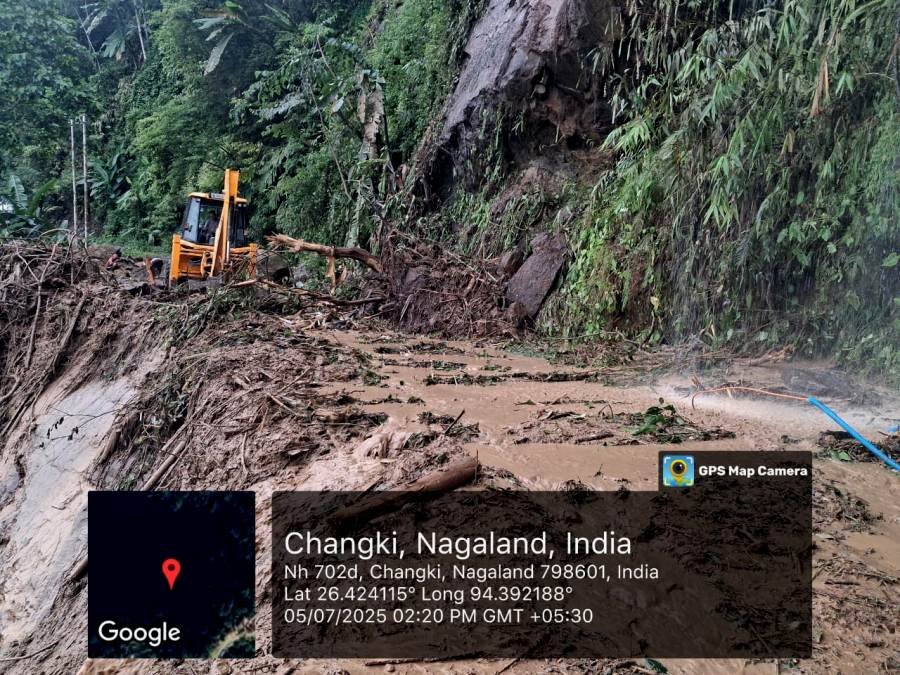
Intensifying landslides have reportedly completely blocked vehicular traffic along NH-702A at New Colony in Nagaland, disrupting an important road connection in the region. The blockage has created difficulties for commuters, transport operators, and residents who depend on the highway for daily movement.
The situation highlights the vulnerability of Nagaland’s mountainous road network during periods of unstable terrain. Moreover, continued landslide activity can make road-clearing operations difficult and increase the risk of further disruptions.
Authorities will need to assess the affected stretch, clear debris safely, and monitor surrounding slopes before restoring normal traffic.
Meghalaya Pineapples Hit Bengaluru: Premium Khasi Pineapples Reach Major Indian Metros
NH-702A Blocked by Landslides
The NH-702A landslide blockage has reportedly brought vehicular movement to a complete halt near New Colony in Nagaland.
Large quantities of soil, rocks, and other debris can make highway clearance particularly challenging in mountainous terrain. Furthermore, continued slope movement may prevent authorities from immediately reopening the affected section.
The blockage has therefore created a significant transportation disruption.
New Colony Faces Connectivity Problems
New Colony has emerged as a key location in the reported highway disruption.
Residents and road users may need to rely on alternative routes while the affected stretch remains inaccessible. Additionally, commercial vehicles can face delays when they cannot use their normal highway route.
The impact could increase if the blockage continues for an extended period.
Mountain Terrain Raises Landslide Risks
Nagaland’s hilly terrain can make roads vulnerable to landslides, particularly when slopes become unstable.
Heavy rainfall, saturated soil, natural erosion, and changes to hillside drainage can contribute to slope failures. Moreover, repeated movement can create additional hazards even after an initial landslide has been cleared.
Authorities therefore need to assess slope stability alongside removing debris.
Traffic Movement Comes to a Standstill
The complete blockage has reportedly prevented vehicles from crossing the affected section.
Such disruptions can affect passenger transport, goods carriers, private vehicles, and emergency movement. Furthermore, traffic congestion can develop on alternative roads if large numbers of vehicles attempt to divert through limited routes.
Authorities may need to establish traffic-management measures depending on the duration of the closure.
Transporters Face Additional Challenges
Commercial transport operators depend heavily on reliable highway connections.
A prolonged closure can increase travel time, fuel consumption, and operating costs when vehicles must use longer alternative routes. Additionally, delays can affect the movement of food, construction materials, and other essential commodities.
The economic impact could grow if the highway remains closed.
Emergency Access Requires Attention
Road closures can create particular difficulties for emergency services.
Ambulances, rescue teams, and other emergency vehicles may need alternative routes to reach affected communities. Moreover, authorities may need to coordinate with local agencies to ensure that critical supplies and services remain accessible.
Maintaining emergency connectivity should therefore remain a priority.
Road-Clearing Operations May Take Time
Removing landslide debris requires careful planning when slopes remain unstable.
Heavy machinery may be necessary to clear large quantities of soil and rock. Furthermore, workers need to operate safely because additional landslides can occur while clearance work continues.
Authorities may therefore need to combine debris removal with slope monitoring.
Weather Conditions Could Affect Restoration
Continued rainfall can increase the possibility of additional slope failures.
If unstable ground remains saturated, reopening a road immediately could expose motorists to further hazards. Additionally, fresh debris can return even after crews clear the original blockage.
Weather and ground conditions will therefore influence the restoration timeline.
Alternative Routes May Provide Temporary Relief
Authorities and transport operators may consider alternative routes while the highway remains blocked.
However, the availability and capacity of diversion roads can vary significantly in mountainous areas. Moreover, smaller roads may not be suitable for heavy commercial vehicles.
Officials may therefore need to manage diversions carefully.
Long-Term Slope Management Is Important
Repeated landslides can indicate broader slope-stability and drainage challenges.
Long-term measures may include improved drainage, slope stabilisation, retaining structures, vegetation management, and regular monitoring. Furthermore, identifying vulnerable sections before major failures occur can help authorities prepare contingency plans.
Such measures could reduce future disruptions.
What Happens Next?
The immediate priority will be assessing the landslide zone and safely restoring connectivity.
Authorities will likely need to remove debris, inspect the road surface, monitor nearby slopes, and determine when vehicles can safely resume movement. Additionally, officials may issue traffic advisories if alternative routes become necessary.
The reopening timeline will depend on ground conditions and the scale of the obstruction.
Conclusion
The NH-702A landslide blockage at New Colony, Nagaland, has reportedly completely cut off vehicular traffic, creating serious connectivity challenges for local residents and road users. The incident demonstrates the risks that landslides pose to transportation infrastructure in mountainous areas.
Moreover, authorities must consider both debris clearance and slope stability before restoring traffic. At the same time, maintaining emergency access and providing reliable information about alternative routes will remain important while the highway stays blocked.
Overall, the Nagaland highway disruption highlights the need for rapid disaster response alongside long-term measures to strengthen vulnerable mountain roads.
FAQs
1. Where has the highway been blocked?
The reported blockage occurred along NH-702A at New Colony in Nagaland.
2. What caused the disruption?
Intensifying landslides reportedly deposited debris across the highway and completely stopped vehicular traffic.
3. Who could be affected?
Commuters, commercial transporters, residents, emergency services, and businesses relying on the route could face disruption.
4. Why can landslide clearance take time?
Authorities must remove debris while ensuring that unstable slopes do not pose additional risks to workers and motorists.
5. What can reduce future disruptions?
Improved drainage, slope stabilisation, retaining structures, monitoring systems, and regular maintenance can help reduce landslide-related highway closures.