


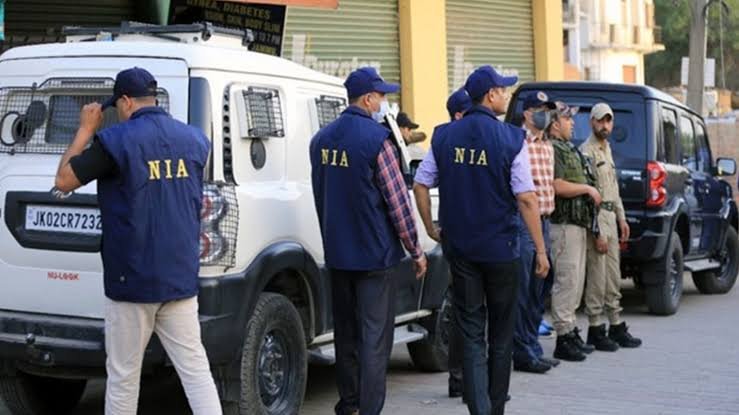
The case involving six Ukrainian nationals and one American citizen has taken a significant legal turn after the National Investigation Agency (NIA) filed a chargesheet under the Immigration and Foreigners Act, 2025. The agency did not invoke the Unlawful Activities (Prevention) Act (UAPA) in that chargesheet. However, recent reports indicate that the broader UAPA investigation has not been closed.
NIA Immigration Charges Mark Shift in Legal Approach
The seven foreign nationals were arrested in March 2026 in a case involving alleged links with Myanmar-based ethnic armed groups. The group comprises six Ukrainians and U.S. national Matthew Aaron Van Dyke.
Moreover, the NIA has now filed charges under Sections 21 and 23 of the Immigration and Foreigners Act, 2025, according to recent reporting. This represents a different legal approach from the initial case, which had been registered under the UAPA.
Therefore, describing the development simply as “terror charges being dropped” can be misleading. The agency has changed the provisions used in its chargesheet, while reports indicate that the UAPA probe remains active.
The distinction is important because a chargesheet under immigration law concerns alleged violations involving foreign nationals and their entry or stay, whereas the continuing investigation can examine broader allegations.
Seven Foreign Nationals Remain Under Investigation
The NIA has linked the seven accused to Myanmar-based ethnic armed groups. According to the agency’s findings reported by the Indian Express, Van Dyke had military connections with Myanmar-based groups and allegedly provided drone-warfare training.
However, the agency has reportedly not found conclusive evidence establishing that the seven were acting against India. Consequently, the investigation remains significant while investigators continue examining their alleged activities and connections.
The case has attracted attention because of its cross-border dimension. The accused allegedly travelled from India into Myanmar and became connected with groups operating there.
Furthermore, the NIA’s continuing investigation means that the latest chargesheet should not be treated as the final word on every allegation in the case. Additional legal developments could follow if investigators obtain further evidence.
Immigration Proceedings Become Central to Current Chargesheet
The chargesheet’s reliance on the Immigration and Foreigners Act shifts the immediate legal focus toward alleged immigration-related violations. Reports say the provisions concern offences under the 2025 law governing foreign nationals in India.
Meanwhile, the earlier UAPA angle remains under investigation. The Indian Express reported that anti-terror provisions could still become relevant depending on what the continuing investigation establishes.
Therefore, the current development does not amount to a judicial finding that the accused committed or did not commit the allegations originally made against them. The case remains subject to legal proceedings and investigation.
Additionally, the distinction between investigation and chargesheet is important. Investigators can continue examining allegations even when particular provisions are not included in an initial chargesheet.
The development consequently represents a change in the legal status of the case rather than a complete closure of the allegations.
Cross-Border Dimension Keeps Case Under Scrutiny
The case has attracted attention because it involves foreign nationals, Myanmar-based armed groups and alleged activities connected with drone technology. According to the NIA’s findings reported by the Indian Express, the agency established links between the accused and Myanmar-based ethnic armed factions but said it had not found conclusive evidence of anti-India activity.
Moreover, the case highlights the complex security environment around India’s northeastern border with Myanmar. Cross-border movement and the activities of armed groups operating in the region can create significant investigative challenges.
However, allegations made during an investigation do not constitute proof of guilt. The accused remain subject to the judicial process, and any eventual determination will depend on evidence and court proceedings.
The latest chargesheet therefore needs to be understood within that legal context. Immigration-related proceedings may now form the immediate basis of the case, while investigators continue examining the wider allegations.
Conclusion
The latest development involving the six Ukrainians and one American is more accurately described as a shift from UAPA charges in the chargesheet to provisions of the Immigration and Foreigners Act, 2025, rather than a complete abandonment of the terror-related investigation. The NIA has reportedly kept its broader probe open, meaning further legal developments remain possible.
FAQs
1. How many foreign nationals are involved in the case?
Seven people are involved: six Ukrainian nationals and one American citizen, Matthew Aaron Van Dyke.
2. Were the UAPA charges completely dropped?
The latest reports say the NIA did not invoke UAPA in its chargesheet under the Immigration and Foreigners Act. However, the broader UAPA investigation reportedly remains open.
3. What law has the NIA used in the chargesheet?
The chargesheet reportedly invokes Sections 21 and 23 of the Immigration and Foreigners Act, 2025.
4. Why were the seven foreigners arrested?
They were arrested in March 2026 in connection with allegations involving Myanmar-based ethnic armed groups and activities related to drone warfare.
5. Does the latest chargesheet mean the case is closed?
No. Recent reporting indicates that the NIA’s wider investigation continues, and further legal action remains possible.