


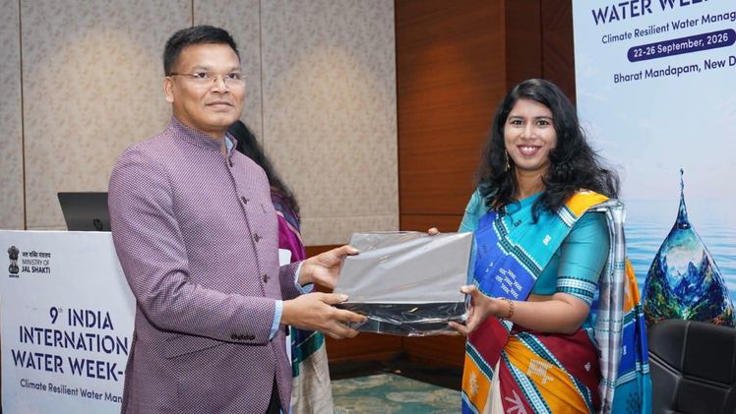
North Tripura district has highlighted its water conservation and sustainable water management initiatives at the India International Water Week (IIWW) 2026, showcasing local efforts to improve water security and strengthen community participation.
The district’s participation focused on practical approaches to water conservation, rainwater harvesting and community-led management of water resources. The initiatives demonstrated how local programmes can support broader efforts to address water challenges.
The event provided North Tripura with an opportunity to present its experiences to policymakers, experts, researchers and representatives from different parts of India and abroad.
North Tripura Highlights Local Water Initiatives
The district presented several initiatives aimed at conserving water and improving the management of available resources.
Water conservation has become increasingly important for communities facing changing rainfall patterns, growing demand and pressure on natural resources. North Tripura’s programmes focus on using local solutions to improve water availability and reduce wastage.
Officials highlighted the role of community participation in implementing these initiatives. Local residents can contribute to the construction, maintenance and monitoring of water conservation structures.
Community involvement can also improve the long-term sustainability of such projects.
Focus on Rainwater Harvesting
Rainwater harvesting forms an important part of water conservation efforts in North Tripura.
The practice involves collecting and storing rainwater for later use or allowing it to recharge groundwater resources. Such systems can help communities make better use of seasonal rainfall.
In areas where water availability varies across seasons, rainwater harvesting can provide an additional source of water.
The approach can also reduce dependence on groundwater and support groundwater recharge when authorities design systems according to local conditions.
Community Participation in Water Management
North Tripura’s presentation also highlighted the importance of community participation in water management.
Government schemes can provide infrastructure and technical support, but local communities often play a key role in maintaining water resources.
Village-level participation can help identify local water needs and ensure that conservation projects match the conditions of individual communities.
Residents can also help monitor water sources and report problems with infrastructure.
This community-based approach can strengthen accountability and encourage people to treat water as a shared resource.
India International Water Week 2026
The India International Water Week brings together government representatives, water experts, researchers, institutions and other stakeholders to discuss water-related challenges.
The event provides a platform for sharing experiences and examining approaches to water security, conservation and sustainable management.
North Tripura’s participation allowed the district to showcase initiatives developed at the local level.
It also provided an opportunity for officials to learn about water management practices being used in other parts of the country.
Linking Local Action With Water Security
Water security involves more than ensuring access to drinking water. It also includes managing water resources sustainably for agriculture, households, industry and ecosystems.
North Tripura’s conservation initiatives form part of this broader approach.
Efficient water use can help communities manage resources during periods of limited availability. Conservation structures can also support groundwater recharge and improve water retention.
Such measures become particularly relevant as communities face changing environmental conditions.
Importance of Sustainable Water Management
Sustainable water management requires careful planning and long-term maintenance.
Water conservation structures need regular monitoring to ensure that they continue to function effectively. Communities and local authorities must also work together to maintain water bodies and prevent pollution.
Protecting natural water sources can reduce the cost and effort required to provide water services.
The North Tripura initiatives underline the importance of combining infrastructure development with responsible resource management.
Water Conservation and Agriculture
Agriculture remains an important part of rural livelihoods in Tripura. Water availability directly affects crop production and farm incomes.
Water conservation can support agriculture by improving the availability of water during dry periods.
Rainwater harvesting and groundwater recharge can provide additional support for irrigation. Efficient irrigation practices can further reduce water consumption.
Better water management can therefore benefit both farmers and the wider rural economy.
Role of Technology and Data
Modern water management increasingly depends on technology and reliable data.
Authorities can use information about rainfall, groundwater levels and water demand to plan conservation measures.
Digital monitoring systems can also help track the performance of water infrastructure.
Combining traditional community knowledge with modern technology can help authorities design more effective water management strategies.
For districts such as North Tripura, local data can help identify areas that need greater investment in water conservation.
Protecting Water Resources for the Future
Water conservation efforts also contribute to environmental protection.
Healthy ponds, wetlands, streams and other water bodies support biodiversity and help maintain local ecosystems.
Protecting these resources can improve groundwater recharge and reduce the impact of water shortages.
Community awareness is important in this process. Residents can help protect water bodies by preventing waste disposal and reducing activities that cause pollution.
North Tripura’s Broader Development Approach
The district’s participation at IIWW 2026 reflects its efforts to connect local development programmes with wider discussions on water security.
The initiatives presented at the event show how district-level programmes can address practical water challenges through conservation, community participation and sustainable management.
The experience can also provide useful lessons for other regions facing similar challenges.
Focus on Long-Term Water Security
North Tripura’s showcase at India International Water Week 2026 has brought attention to the district’s efforts in water conservation and sustainable resource management.
The focus on rainwater harvesting, community participation and responsible water use highlights the importance of local action in addressing wider water challenges.
As demand for water continues to grow, conservation will remain an important part of sustainable development.
For North Tripura, continued investment in water infrastructure, community awareness, monitoring and maintenance will be essential to ensure that conservation initiatives provide long-term benefits for households, farmers and the environment.