


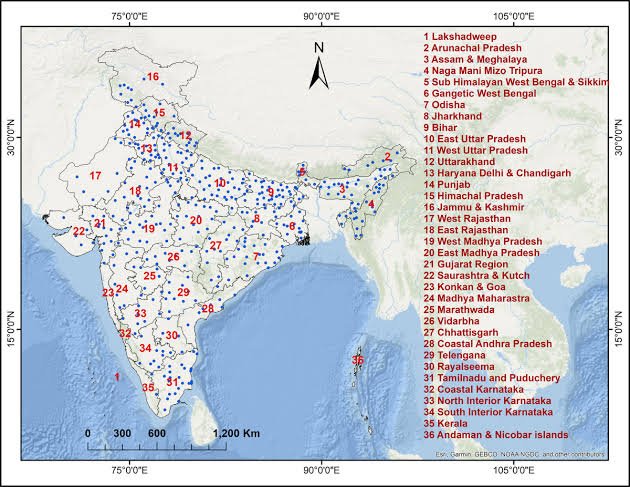
The northeast rainfall deficit paradox has emerged as a striking feature of India’s early southwest monsoon season, highlighting the contrast between devastating flash floods and an overall shortage of seasonal rainfall. Regional climate summaries indicate that Northeast India continues to record a 44% rainfall deficit despite repeated episodes of intense downpours in several districts. Meteorologists explain that highly uneven rainfall distribution has concentrated precipitation over limited areas, leaving large parts of the region significantly drier than normal. The evolving weather pattern has raised concerns for agriculture, water resources, and disaster preparedness as the monsoon progresses.
IMD Extreme Rainfall Warning Issued Nationwide
Nagpur University Students Discover Prehistoric Rock Art Heritage Site in Madhya Pradesh
Uneven Monsoon Distribution Explains Rainfall Gap
The northeast rainfall deficit paradox reflects the uneven nature of monsoon rainfall rather than a complete absence of precipitation. According to regional climate assessments, isolated districts have experienced extremely heavy rainfall that triggered flash floods, landslides, and river overflows. However, many neighbouring areas have received little or no significant rainfall during the same period, reducing the cumulative seasonal total.
Meteorologists note that monsoon systems have remained highly localized, with moisture-laden clouds producing concentrated rainfall over specific valleys and hill ranges instead of widespread showers across the region. As a result, localized flooding has occurred even while overall rainfall statistics continue to remain below the long-term average.
Weather experts also point out that short-duration cloudbursts contribute substantially to flood risks but do not necessarily improve seasonal rainfall distribution. Consequently, the contrast between flood emergencies and rainfall shortages has become increasingly evident across Northeast India during the early phase of the monsoon.
Flash Floods Continue to Affect Vulnerable Districts
The northeast rainfall deficit paradox has become more visible as several northeastern states continue to battle the effects of flash floods despite recording below-normal seasonal rainfall. Rivers have risen rapidly after intense rainfall events, inundating low-lying settlements and disrupting transportation in vulnerable districts.
Emergency response agencies have remained active in flood-prone areas, carrying out rescue operations, monitoring river levels, and providing relief to affected communities. Landslides in hilly terrain have also disrupted road connectivity, while damaged infrastructure has affected access to remote villages.
State administrations continue coordinating with disaster management authorities to strengthen preparedness as additional spells of heavy rainfall remain possible during the active monsoon season. Officials have urged residents living near rivers and unstable slopes to remain alert and follow local advisories whenever weather warnings are issued.
Experts stress that flash floods depend more on rainfall intensity over short periods than on seasonal rainfall totals. Therefore, isolated extreme weather events can produce significant damage even when the broader region experiences a substantial rainfall deficit.
Agricultural and Water Resource Concerns Grow
The northeast rainfall deficit paradox presents significant challenges for agriculture across the region. Farmers depend on consistent monsoon rainfall for sowing, irrigation, and maintaining soil moisture throughout the growing season. When rainfall remains highly uneven, some fields suffer waterlogging while others continue facing inadequate moisture.
Agricultural experts warn that prolonged rainfall deficits could affect crop establishment, reduce productivity, and delay farming operations if widespread rainfall does not improve during the coming weeks. Water availability for reservoirs, streams, and groundwater recharge may also remain below expected levels despite localized flooding.
The unusual rainfall pattern complicates planning for both farmers and local administrations. While flood-hit districts require immediate disaster relief and infrastructure restoration, deficit areas may simultaneously need irrigation support and water conservation measures. This dual challenge illustrates the complex nature of monsoon variability across Northeast India.
Climate specialists continue monitoring atmospheric conditions to determine whether upcoming monsoon systems will provide more evenly distributed rainfall across the region and gradually reduce the seasonal deficit.
Outlook for the Remaining Monsoon Season
The northeast rainfall deficit paradox underscores the importance of evaluating both rainfall intensity and overall seasonal distribution when assessing monsoon performance. Meteorologists expect additional rainfall episodes during the coming weeks, although their spatial distribution will determine whether the existing deficit narrows.
Weather agencies will continue issuing regular forecasts to help state governments prepare for both flood risks and water management challenges. Disaster management authorities remain focused on strengthening early warning systems, particularly in districts vulnerable to flash floods and landslides.
Experts emphasize that improving forecasting, enhancing drainage infrastructure, and promoting climate-resilient agricultural practices can help reduce the impact of increasingly variable monsoon conditions. Continued monitoring will remain essential as the southwest monsoon advances across Northeast India.
Conclusion
The northeast rainfall deficit paradox highlights the complex reality of this year’s early monsoon, where destructive flash floods have occurred alongside a 44% regional rainfall deficit. The contrast demonstrates that isolated extreme rainfall events do not necessarily translate into adequate seasonal precipitation. As the monsoon continues, balanced rainfall distribution will be crucial for supporting agriculture, replenishing water resources, and reducing both flood and drought-related risks across Northeast India.
FAQs
1. What does the rainfall deficit indicate?
It means the region has received significantly less cumulative rainfall than the long-term seasonal average.
2. Why can flash floods occur despite below-normal rainfall?
Short periods of extremely intense rainfall over limited areas can quickly overwhelm rivers and drainage systems.
3. What is the northeast rainfall deficit paradox?
The northeast rainfall deficit paradox describes the situation where localized flooding occurs even though the region’s overall seasonal rainfall remains well below normal.
4. How does uneven rainfall affect agriculture?
It can leave some farms flooded while others experience insufficient soil moisture for crop growth.
5. Will the rainfall deficit necessarily continue all season?
Not necessarily. Future monsoon systems could improve rainfall totals if precipitation becomes more widespread.
6. Why is rainfall distribution important?
Even distribution helps support farming, replenish water resources, and reduce both flood and drought risks.