


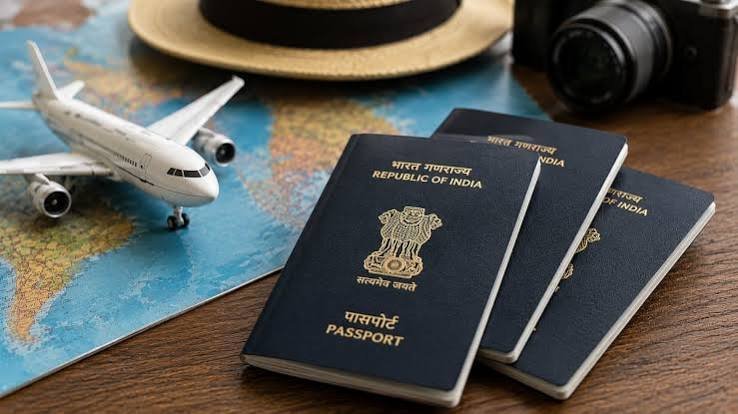
A Tripura resident has raised concerns after claiming that he encountered several Bengali-speaking Muslims in Norway who told him theyhad visited Tripura and obtained Indian passports. The Norway Indian passport allegation emerged after P.K. Acharjee, a homeopathy practitioner from Agartala, returned from a visit to Oslo and shared his account with a local news portal. A report published on October 26, 2026, described his concerns about possible illegal migration and misuse of Indian identity documents. However, the account remains an allegation, and the report does not independently establish the identities or citizenship status of the people he met.
West Tripura DM Sets November 30 Deadline for Pending Pre-Puja Ration Distribution
Norway Indian Passport Allegation Emerges After Tripura Resident’s Visit
According to the report published by Tripurainfo, P.K. Acharjee travelled to Oslo with his wife in early August 2026. The couple spent more than two months in Norway visiting their son, Sumit Acharjee, a software engineer who lives there with his family. P.K. Acharjee returned to his home in Agartala during the first week of October.
During the visit, Acharjee said he had more opportunities to travel around Oslo and interact with people than during his earlier trips. He reportedly encountered several Bengali-speaking Muslims while moving around the city and accompanying his grandchildren to school.
Acharjee told the news portal that he believed some of the people he met came from Bangladesh. He based this impression on their Bengali accents and pronunciation. He further claimed that some individuals disclosed that they had travelled through Tripura and obtained Indian passports there.
However, the report does not identify the individuals or provide copies of their passports, immigration records or other documents to substantiate the allegation. It also does not report any independent interview with the people concerned or confirmation from Norwegian or Indian authorities.
Language and pronunciation alone cannot establish a person’s nationality. Bengali is spoken by people in Bangladesh and in several parts of India, including Tripura and West Bengal. Therefore, determining citizenship requires evidence beyond linguistic impressions.
Acharjee also reportedly said that he had encountered people whom he believed were of Bangladeshi origin during earlier visits to Germany and Switzerland. He suspected that their connections with Tripura might relate to obtaining Indian travel documents. Nevertheless, the published account does not independently verify these earlier observations either.
The Norway Indian passport allegation has consequently raised questions that would require official verification before anyone could establish whether passport fraud occurred. At this stage, the available report documents Acharjee’s account, rather than a confirmed investigation or finding by law enforcement agencies.
Norway Indian Passport Allegation Raises Questions About Verification
Acharjee’s account has drawn attention to the possibility of people obtaining Indian passports through fraudulent documents or improper assistance. If authorities establish such cases, they would need to examine the circumstances of each application and determine whether applicants or officials violated the law.
The Ministry of External Affairs administers India’s Passport Seva Programme and oversees the country’s passport services through the Central Passport Organization and its network of passport offices and service centres. The ministry also administers the Passports Act, 1967, and the Passports Rules, 1980.
The passport application process includes document checks and, in most cases involving fresh passports, police verification before issuance. However, the applicable verification procedure depends on the type of application and the circumstances of the applicant.
These safeguards provide a formal framework for checking applications. Even so, any specific allegation of fraudulent passport issuance requires scrutiny of the relevant records, including identity documents, residential details and verification reports.
For example, investigators would need to establish whether the individuals mentioned in Acharjee’s account actually held Indian passports. They would also need to verify their citizenship, examine how they obtained their documents and determine whether anyone submitted false information or facilitated an unlawful application.
Authorities would need reliable evidence before attributing wrongdoing to any applicant, intermediary or government employee. A conversation reported by a traveller may provide a lead for verification, but it cannot independently prove that a person entered India illegally or obtained a passport through fraud.
Furthermore, the allegation does not establish how many people may be involved. Acharjee described encountering several individuals, but the report does not provide a verified count of passport holders or identify a broader network.
The distinction matters because passport fraud, illegal entry and citizenship are separate legal questions. Investigators must examine the evidence relevant to each issue rather than treat assumptions about a person’s origin as proof of a criminal offence.
Tripura Border Security and Document Fraud Concerns
Tripura’s location along the Bangladesh border makes cross-border movement and identity verification important public policy issues. However, the broader context of border security should remain separate from the specific claims made by Acharjee in Norway.
In May 2026, Northeast News reported that official figures showed 3,705 foreign nationals had been apprehended in Tripura since 2022 for entering India without valid documents. The report said 3,463 of those apprehended were Bangladeshi nationals, while the remaining individuals included Rohingyas and citizens of other countries.
Those figures concern people apprehended in Tripura for alleged or established entry violations, as described in the report. They do not verify the separate claim that people encountered in Norway obtained Indian passports through Tripura.
Similarly, a report from August 27, 2026, said the Central Industrial Security Force detected four people suspected of being Bangladeshi nationals at Maharaja Bir Bikram Airport in Agartala. An Indian national was also suspected of facilitating their travel. Authorities handed the group to airport police for further legal action, and the matter remained under investigation at the time of the report.
That airport case illustrates how security agencies can investigate suspected irregular travel through verification and legal procedures. However, it does not establish a connection with the people Acharjee says he encountered in Norway.
The distinction is important for accurate reporting. Similar allegations involving cross-border movement may attract public attention, but investigators must establish links through evidence rather than assumption.
In addition, the use of Indian identity documents by someone accused of being a foreign national would require a separate examination of the documents’ authenticity and the circumstances under which authorities issued them. Officials would need to verify whether the documents were genuine, altered, fraudulently obtained or misidentified.
Tripura’s border-security concerns therefore provide relevant background, but they do not independently prove the allegations described in the Norway report. Any official response should rely on verified records and established investigative procedures.
What Authorities Need to Establish About the Norway Indian Passport Allegation
The most important unanswered question is whether the individuals described by Acharjee actually obtained Indian passports in Tripura. The published report does not provide enough evidence to settle that question.
First, investigators would need identifying details and documentary evidence that could establish the individuals’ identities. They would then need to verify any claimed Indian passports against official records. Without those details, authorities may find it difficult to connect the account to a specific passport application or issuing office.
Second, officials would need to establish the individuals’ citizenship and travel histories through appropriate records. A person’s language, religion or perceived cultural background cannot independently determine citizenship. Reliable documentary evidence and lawful verification procedures must guide that assessment.
Third, investigators would need to examine whether any passport application involved false documents or deliberate misrepresentation. If evidence points to misconduct by an intermediary or official, authorities would need to establish the person’s role and any applicable legal violations.
The report does not state that Acharjee filed a formal complaint, submitted documentary evidence to police or contacted the passport authorities. It also does not report an official investigation specifically linked to his account. These gaps mean that readers cannot treat the allegations as confirmed findings.
If Acharjee or another person provides specific evidence to the relevant authorities, officials can assess whether the information warrants further inquiry. Any investigation should protect the integrity of passport records while respecting the legal rights of the people concerned.
Authorities could also clarify whether they have received complaints relating to the alleged misuse of Indian passports in this case. A formal response would help distinguish a personal account from an officially substantiated security concern.
For now, the Norway Indian passport allegation remains an unverified claim reported by a local news portal. Its significance depends on whether authorities can corroborate the account through records, interviews and other admissible evidence.
Conclusion
The Norway Indian passport allegation has emerged after Tripura resident P.K. Acharjee claimed that some Bengali-speaking Muslims he encountered in Oslo told him they had visited Tripura and obtained Indian passports. His account, published on October 26, 2026, has raised concerns about possible identity-document fraud. However, the report does not independently confirm the identities, nationality or passport histories of the people he described.
India’s passport system operates under the Ministry of External Affairs, with established procedures for document scrutiny and police verification in many applications. If credible evidence points to fraudulent passport issuance, the relevant authorities can examine the records and determine whether any legal violation occurred. Nevertheless, assumptions based on language or perceived origin cannot substitute for documentary verification.
The matter therefore requires evidence-based assessment rather than conclusions drawn from an individual account. No confirmed link has been established between the people described in Norway and any specific passport-fraud case in Tripura. Further information from the authorities or verified documents would be necessary to determine whether the allegation reflects an actual offence.
FAQs
1. What is the Norway Indian passport allegation?
It refers to a claim by Tripura resident P.K. Acharjee that some people he encountered in Norway told him they had visited Tripura and obtained Indian passports. The report has not independently verified those claims.
2. Who raised the concern about Indian passport holders in Norway?
P.K. Acharjee, a homeopathy practitioner from the Amtoli area of Agartala, raised the concern after visiting his son in Oslo.
3. Has passport fraud been confirmed in this case?
No confirmation appears in the available report. It does not provide documentary proof or report an official finding establishing passport fraud by the people Acharjee described.
4. Which authority oversees Indian passport services?
The Ministry of External Affairs administers the Passport Seva Programme and oversees passport services through the Central Passport Organization and its network of passport offices and service centres.
5. What evidence would help verify the allegation?
Authorities would need reliable identifying details, passport records, citizenship documentation and relevant application or police-verification records. They would also need to establish whether any person submitted false information or unlawfully facilitated a passport application.