


Odisha is stepping up efforts to become a major destination for chemical and petrochemical manufacturing. The state aims to attract domestic and international investors through industrial infrastructure, policy incentives and port-based facilities.
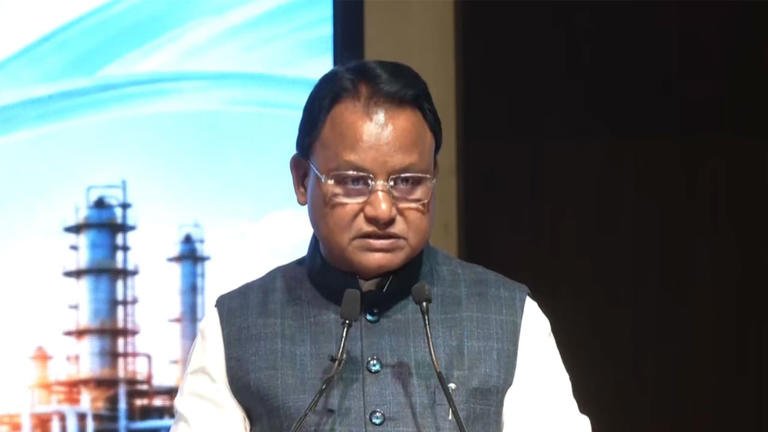
Chief Minister Mohan Charan Majhi will showcase Odisha’s investment opportunities at India Chem 2026 in Mumbai on October 22. He is scheduled to attend the inaugural session and a chief executive officers’ roundtable chaired by Union Minister J.P. Nadda.
During his two-day visit, Majhi will also hold individual meetings with representatives of more than 20 major companies. These discussions will focus on fresh investments, industrial expansion and opportunities in downstream manufacturing.
The state will highlight its strengths in resources, logistics and industrial development. It will also present plans for coal gasification and explore the possibility of establishing a dedicated, large-scale chemical industrial park. These initiatives could help Odisha expand beyond its traditional strengths in mining and metallurgy. <Cite refs={[“turn503748search1″,”turn503748search4”]}/>
India Targets a USD 1 Trillion Chemical Industry
India aims to build a chemical industry worth USD 1 trillion by 2040. The government views the sector as an important driver of manufacturing, exports, innovation and employment.
Union Minister J.P. Nadda has stressed the need for sustained investment and technological development. He has also called for stronger domestic manufacturing to improve India’s position in the global chemicals market.
The industry supplies essential materials to several sectors. These include agriculture, pharmaceuticals, textiles, electronics, packaging and consumer goods. In addition, chemical products support emerging industries linked to electric vehicles and renewable energy.
However, India faces competition from established manufacturing centres around the world. Expanding domestic production and attracting advanced technologies will be crucial to achieving the national target.
Odisha wants to benefit from this expected growth. By developing industrial clusters and attracting new manufacturers, the state hopes to become a major contributor to India’s chemical industry.
Paradip, Gopalpur and Dhamra at the Centre of Plans
Odisha plans to develop chemical and petrochemical clusters around Paradip, Gopalpur and Dhamra. These locations offer access to ports, industrial land and supporting infrastructure.
Paradip is particularly important because it already hosts Indian Oil Corporation’s refinery and petrochemical facilities. The existing industrial base can help attract companies that use petroleum-based materials as raw ingredients.
The state is also promoting opportunities near Gopalpur Port and Dhamra Port. These locations could support new chemical plants, plastics manufacturing and other related industries.
Furthermore, the government wants to encourage downstream manufacturing. Such businesses use basic chemicals and petrochemical products to create higher-value goods. These include packaging materials, specialty chemicals, adhesives and synthetic fibres.
Developing these industries could strengthen supply chains and reduce the need to transport materials over long distances. It could also create opportunities for smaller companies supplying equipment, services and other industrial inputs.
According to the state government, these clusters will combine infrastructure, incentives and access to raw materials. The broader goal is to create an integrated industrial ecosystem rather than attract isolated factories. <Cite refs={[“turn503748search0″,”turn503748search2”]}/>
Investment Proposals Show Growing Interest
Odisha has reported significant interest from companies seeking to invest in chemicals and petrochemicals. According to state government figures, 56 companies proposed investments worth ₹1,93,087.94 crore over the past two years.
These proposals have an estimated employment potential of 1,12,324 people. Of the projects, 27 have reached the groundbreaking or inauguration stage. They represent investments of ₹60,825.34 crore and could generate around 35,351 jobs.
The figures indicate growing interest in the state’s industrial potential. However, proposed investments do not automatically translate into completed factories or permanent employment.
The next challenge is to move projects from announcements to implementation. This will require timely approvals, reliable utilities, suitable industrial land and effective coordination between companies and government departments.
At India Chem 2026, Odisha will seek to turn investor interest into concrete commitments. Meetings with industry leaders are expected to explore new projects and expansions of existing facilities.
Policy Incentives Aim to Improve Competitiveness
The state is using financial incentives and industrial policies to attract chemical manufacturers. Under Odisha’s Industrial Policy Resolution 2022, chemicals and petrochemicals are designated as thrust sectors.
This classification makes eligible projects entitled to incentives under the policy. The government is also highlighting land availability, port connectivity and shared industrial infrastructure.
For investors, these factors can influence the cost of setting up and operating a factory. Chemical projects often require substantial capital, reliable power, water supplies and specialised waste treatment facilities.
Therefore, access to common infrastructure could help reduce costs for individual companies. It may also make industrial clusters more attractive to businesses considering expansion in India.
Additional Chief Secretary for Industries Hemant Sharma has highlighted the state’s efforts to engage directly with investors. He said India Chem 2026 would provide an opportunity to present Odisha’s advantages and explore partnerships for future growth.
The state is also considering a dedicated chemical industrial park. If developed, it could provide space for chemical production, petrochemicals, plastics and packaging businesses. <Cite refs={[“turn503748search2″,”turn503748search4”]}/>
Coal Gasification and Downstream Manufacturing in Focus
Coal gasification will be a key feature of Odisha’s presentation at India Chem 2026. The technology converts coal into a gas that can be used as a feedstock for industrial processes and chemical production.
The state hopes to explore opportunities that connect its natural resources with higher-value manufacturing. Such projects could help diversify the industrial economy and expand local supply chains.
Meanwhile, downstream petrochemical manufacturing offers another avenue for growth. Companies can use raw materials from refineries and chemical plants to produce plastics, fibres and other industrial products.
This approach could also create opportunities for technical textiles and packaging. As a result, investment in chemical manufacturing may benefit several connected industries.
Nevertheless, these projects require careful planning. Investors will need reliable infrastructure, environmental clearances and access to competitive feedstock supplies before committing large sums of money.
Odisha Targets Long-Term Industrial Growth
Odisha’s chemical sector ambitions form part of a broader strategy to diversify its economy. The state has traditionally relied heavily on mining, metals and mineral-based industries. It now wants to build a stronger presence in higher-value manufacturing.
Its coastal location and established industrial facilities offer a foundation for this transition. However, the state must compete with established chemical hubs, particularly Gujarat, which has a mature industrial ecosystem.
To close that gap, Odisha will need to attract major manufacturers and encourage supporting businesses to locate nearby. It must also ensure that infrastructure development keeps pace with industrial demand.
Environmental safeguards will be equally important. Chemical manufacturing requires effective pollution control, safe waste disposal and responsible use of water and energy.
India Chem 2026 offers Odisha an opportunity to present its plans to domestic and international investors. The state hopes that direct engagement will lead to fresh projects, new technologies and employment opportunities.
Ultimately, Odisha’s ambition is to become a leading chemical and petrochemical hub by combining its resource base with investment-friendly policies and modern infrastructure. Turning that ambition into reality will depend on how quickly proposed projects become operational and how successfully the state builds a competitive, sustainable industrial ecosystem.