


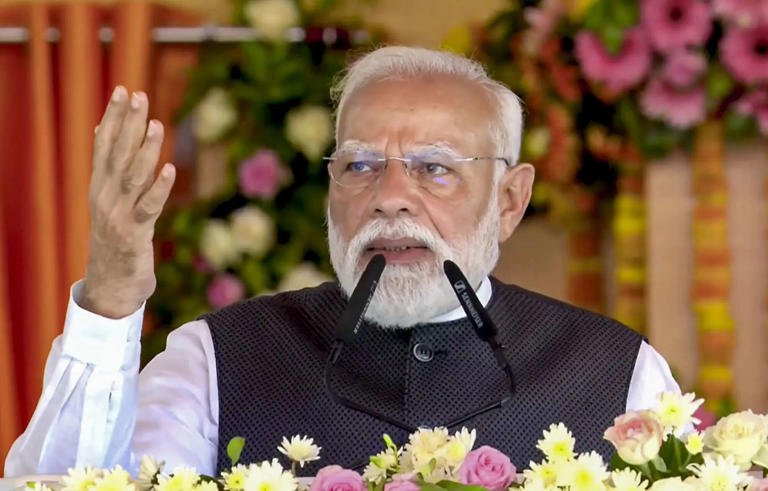
Minister of State for Finance Pankaj Chaudhary has stated that Prime Minister Narendra Modi has empowered the Enforcement Directorate (ED) to combat financial crimes effectively. He emphasized that the agency’s role focuses on eliminating economic offences rather than targeting individuals.
The ED financial crimes crackdown has become a central aspect of the government’s efforts to strengthen economic integrity. According to Chaudhary, the agency operates within a legal framework and follows due process in its investigations.
Moreover, he highlighted that financial crimes pose a serious threat to the economy. Therefore, strong enforcement mechanisms are necessary to address such challenges.
Read More: Storms Lash Tripura, Two Killed and Four Injured Amid Widespread Damage
Government’s Stand on ED’s Role
Pankaj Chaudhary clarified that the ED acts as an independent investigative body. He stated that its primary objective is to detect and prevent financial irregularities.
He also stressed that the government has not empowered the agency to act against individuals without evidence. Instead, the focus remains on identifying illegal financial activities.
Furthermore, Chaudhary noted that the ED’s actions are guided by laws such as the Prevention of Money Laundering Act (PMLA). These laws provide a structured framework for investigations.
The government’s stance aims to counter allegations that enforcement agencies are used for political purposes. By emphasizing legality and transparency, officials seek to reinforce public trust.
Importance of Tackling Financial Crimes
Financial crimes, including money laundering and fraud, can have far-reaching consequences. They affect economic stability and undermine public confidence in institutions.
The ED financial crimes crackdown aims to address these issues by identifying and prosecuting offenders. This approach helps protect the financial system and ensures accountability.
In addition, strong enforcement can deter future offences. When individuals and organizations face consequences, it discourages illegal activities.
Moreover, tackling financial crimes contributes to economic growth. A transparent and secure financial environment attracts investment and promotes development.
ED’s Investigative Process
The Enforcement Directorate follows a structured process while conducting investigations. It collects evidence, examines financial records, and collaborates with other agencies.
Authorities initiate cases based on credible information and legal provisions. They ensure that investigations comply with established procedures.
In addition, the agency operates under judicial oversight. Courts review its actions, which helps maintain accountability.
The ED financial crimes crackdown therefore relies on a combination of legal authority and investigative expertise. This approach ensures that cases are handled systematically.
Political Debate Around ED Actions
The role of the ED has been a subject of political debate. Opposition parties have raised concerns about the agency’s actions in certain cases.
However, Pankaj Chaudhary rejected these allegations. He reiterated that the agency targets financial crimes, not individuals or political groups.
Supporters of the government argue that strong enforcement is necessary to combat corruption. They believe that agencies must act decisively to maintain economic integrity.
At the same time, critics emphasize the need for transparency and accountability. They argue that enforcement actions should remain free from political influence.
This debate reflects the broader challenge of balancing enforcement with public perception.
Strengthening Institutional Framework
The government has taken steps to strengthen institutions involved in financial oversight. These measures include improving legal frameworks and enhancing coordination between agencies.
Pankaj Chaudhary highlighted the importance of institutional capacity. Strong institutions can effectively address complex financial crimes.
Moreover, collaboration between different agencies improves efficiency. Sharing information and resources helps in identifying and prosecuting offences.
The ED financial crimes crackdown is part of this broader strategy. It aims to create a robust system capable of handling emerging challenges.
Public Confidence and Transparency
Maintaining public confidence is essential for the success of enforcement efforts. Citizens must trust that agencies operate fairly and impartially.
The government has emphasized transparency in investigations. By following due process, authorities aim to build credibility.
In addition, clear communication plays a key role. Explaining the purpose and scope of actions can address concerns and reduce misunderstandings.
Moreover, judicial oversight ensures that agencies remain accountable. Courts act as a check on investigative powers, protecting individual rights.
Broader Implications for Governance
The ED financial crimes crackdown has broader implications for governance. It reflects the government’s commitment to combating corruption and strengthening economic systems.
Effective enforcement can improve India’s global reputation. It demonstrates the country’s ability to maintain a transparent and secure financial environment.
Furthermore, addressing financial crimes supports long-term development. It ensures that resources are used efficiently and benefits reach intended recipients.
The initiative also highlights the importance of policy and regulation. Strong laws and effective implementation are essential for achieving desired outcomes.
Way Forward
Looking ahead, the government is expected to continue its focus on financial crime prevention. Strengthening legal frameworks and improving investigative capabilities will remain priorities.
In addition, authorities may invest in technology to enhance detection and analysis. Advanced tools can help identify complex financial patterns.
Collaboration with international agencies will also play a role. Financial crimes often cross borders, requiring coordinated efforts.
Moreover, awareness campaigns can educate citizens about financial integrity. Preventing crimes at the source is as important as enforcement.
Conclusion
Pankaj Chaudhary’s statement underscores the government’s approach to empowering the Enforcement Directorate. By focusing on financial crimes rather than individuals, the agency aims to maintain economic integrity.
The ED financial crimes crackdown reflects a broader commitment to transparency, accountability, and development. While political debates continue, the emphasis remains on strengthening institutions and enforcing laws.
As India moves forward, effective measures against financial crimes will play a crucial role in ensuring a stable and prosperous economy.
Read More: Historic Victory for Assam Temporary Tea Workers on May Day