

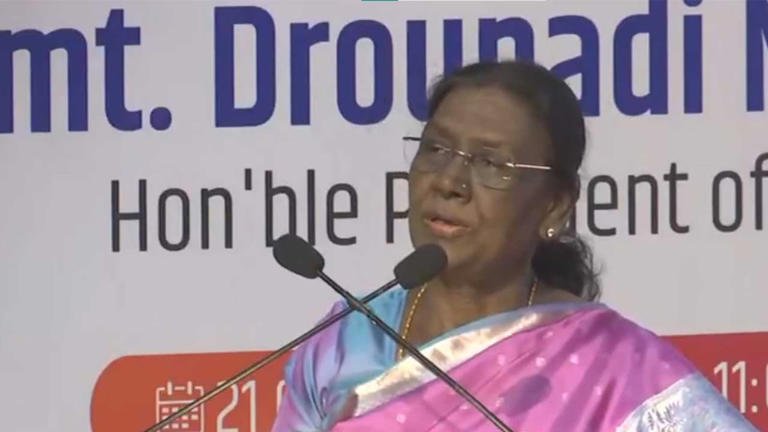
President Droupadi Murmu has called for better training and greater financial independence for traditional artists. She stressed the need to support artists from rural and tribal communities. Many of them struggle to access professional training and wider markets. The President shared her views at the 65th National Exhibition of Art in New Delhi on October 21, 2026.
She highlighted the importance of preserving India’s rich artistic heritage. She also urged institutions to help traditional artists adapt to changing times. Better training and financial support could help them showcase their work on national and international platforms.
President Murmu Highlights Challenges Faced by Traditional Artists
During her address, President Murmu discussed the difficulties faced by traditional artists. She referred to art forms such as Sohrai, Madhubani and Gond painting. These styles reflect India’s cultural diversity and carry the knowledge of generations.
However, many artists live in remote areas. They often lack access to professional art institutions and specialised training. Geographical barriers also make it difficult for them to participate in major exhibitions and competitions.
The President stressed the need to bridge this gap. She called for greater institutional support and wider recognition of traditional artists. Their talent deserves opportunities beyond their local communities. Such support could also encourage younger generations to preserve these art forms.
Modern Training Can Help Artists Develop Their Skills
President Murmu emphasised the importance of professional training for traditional artists. She said they need access to modern technologies and contemporary artistic techniques. These resources can help them improve their work and explore new creative possibilities.
Training does not mean abandoning traditional methods. Instead, artists can combine their cultural knowledge with modern approaches. This balance can help them preserve the identity of their art while reaching new audiences.
Art institutions can organise workshops and practical training programmes. They can also connect experienced artists with younger learners. Such initiatives would help traditional knowledge pass from one generation to the next.
Artists from remote communities need special attention in this process. Better access to training can help them develop their abilities without leaving behind their cultural roots.
Financial Independence Is Essential for Artists
Financial independence remains a major concern for many traditional artists. Their income often depends on irregular sales and limited local demand. These challenges can make it difficult to sustain an artistic career.
President Murmu called for greater financial autonomy and support. She highlighted the need to help artists pursue their work with confidence. Financial security can allow them to invest in materials, improve their skills and explore new opportunities.
Government bodies and cultural organisations can play an important role. They can provide access to suitable assistance and professional networks. They can also help artists find opportunities to display and sell their work.
Such measures could improve livelihoods and protect traditional art forms. They would also help artists gain greater control over their creative careers.
Wider Markets Can Create New Opportunities
President Murmu also stressed the importance of connecting artists with wider markets. Many traditional artists struggle to reach buyers outside their immediate regions. As a result, their work may receive limited commercial recognition.
Exhibitions and cultural events can help address this problem. They allow artists to meet collectors and introduce their work to new audiences. Online platforms can also help them reach buyers across India and abroad.
The Lalit Kala Akademi and the Ministry of Culture have worked to promote artistic expression and create opportunities for artists. Continued efforts to connect creators with buyers could strengthen this support.
Better market access can bring economic benefits to artists and their communities. It can also increase public appreciation for India’s traditional art forms. However, artists need fair opportunities to benefit from the demand for their work.
Lalit Kala Akademi Celebrates India’s Artistic Diversity
President Murmu delivered her message at the 65th National Exhibition of Art in New Delhi. She presented awards to selected artists during the ceremony. She also honoured Grand Prize winners and recipients of Honourable Mentions at the 3rd Print Biennale India, 2026.
The President described art as an expression of a society’s memories, experiences and aspirations. She highlighted its role in preserving cultural heritage and encouraging contemporary creativity.
The exhibition received around 2,495 entries from 27 states and union territories. These submissions included more than 6,175 individual artworks. The organisers selected 270 outstanding works for recognition.
The exhibition reflected the diversity of India’s artistic community. It also provided a platform for artists to share their creative ideas and achievements.
Art Should Reach Schools and Public Spaces
President Murmu called for art to become more accessible to the public. She said it should not remain limited to galleries and specialised exhibitions. Schools, colleges, universities and public spaces can also promote artistic appreciation.
Educational institutions can organise workshops and student exhibitions. They can invite traditional artists to demonstrate their skills and share their experiences. These activities can introduce young people to different art forms.
Public art programmes can also bring communities closer to their cultural heritage. They can help people appreciate regional traditions and understand their significance.
Greater exposure can inspire young people to explore their own creative interests. It can also encourage them to respect and preserve traditional artistic practices.
Supporting Traditional Artists Will Protect India’s Heritage
President Murmu’s appeal highlights the need for practical support for traditional artists. Better training, financial independence and wider market access can help them build sustainable careers.
India must preserve its traditional art forms while allowing them to grow. Modern techniques and new platforms can support this goal. However, artists also need fair opportunities and access to essential resources.
Schools, cultural organisations and government institutions can work together to achieve these objectives. Their efforts can help traditional artists reach wider audiences and improve their livelihoods.
Supporting these artists means protecting more than paintings and craft techniques. It also means preserving the stories, knowledge and cultural identities they represent. With the right opportunities, India’s traditional artists can carry this heritage forward while shaping the country’s creative future.