


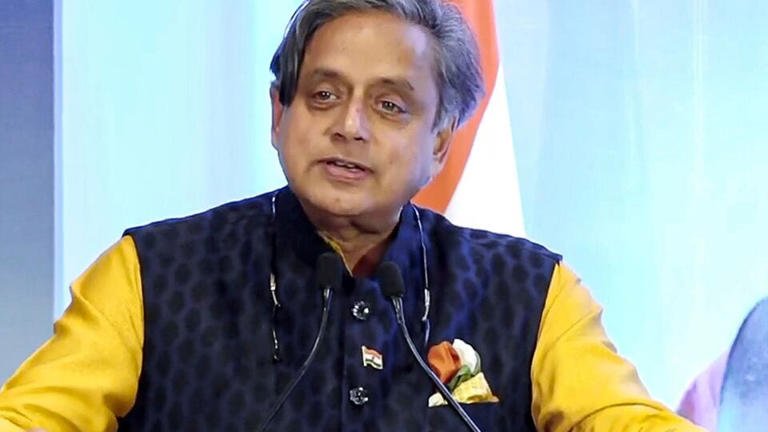
Senior Congress leader Shashi Tharoor has drawn attention for his remarks praising the organisational capabilities of Prime Minister Narendra Modi and Union Home Minister Amit Shah following the Bharatiya Janata Party’s performance in West Bengal. In a statement that has sparked political discussion, Tharoor acknowledged the effectiveness of the BJP’s strategy, noting that “all of us can learn” from their approach.
His comments came in the aftermath of the election results, which have been widely analysed for their implications on national politics. While political rivalry remains intense, Tharoor’s statement stood out for its candid tone and recognition of organisational strength across party lines.
Moreover, the remarks have opened up a broader conversation about campaign strategies, leadership, and adaptability in India’s evolving political landscape.
Read More: Historic Victory for Assam Temporary Tea Workers on May Day
Recognition of organisational efficiency and planning
Shashi Tharoor highlighted the BJP’s organisational structure as a key factor behind its success in West Bengal. He pointed out that the party’s ability to coordinate efforts across different levels played a crucial role in mobilising support.
According to him, the leadership of Narendra Modi and Amit Shah demonstrated a high degree of planning and execution. He noted that their campaign strategy effectively combined grassroots outreach with strong central messaging.
Furthermore, Tharoor emphasized that such organisational discipline is not easy to achieve. He suggested that it requires consistent effort, clear communication, and a well-defined vision. As a result, he argued that other political parties should study and learn from these aspects.
Statement sparks reactions within political circles
Tharoor’s remarks have triggered varied reactions within political circles, particularly within the Congress. While some leaders appreciated his candid assessment, others expressed discomfort with the praise directed at political opponents.
Critics within the party argued that acknowledging the BJP’s strengths should not overshadow ideological differences. They maintained that political competition must remain rooted in policy debates and contrasting visions.
On the other hand, several observers viewed Tharoor’s statement as a sign of maturity in political discourse. They noted that recognising strengths in opponents can lead to constructive learning and improvement.
This divergence of opinions reflects the broader debate on how political parties should respond to electoral outcomes.
BJP welcomes Tharoor’s comments
Leaders from the Bharatiya Janata Party welcomed Shashi Tharoor’s remarks, describing them as an honest acknowledgment of their efforts. Party representatives stated that the BJP’s organisational model has consistently delivered results across states.
They credited the leadership of Narendra Modi and Amit Shah for building a strong and efficient party structure. According to them, the emphasis on grassroots engagement and disciplined execution has been central to their success.
Additionally, BJP leaders argued that such recognition from opposition figures validates their approach. They expressed confidence that their model will continue to influence political strategies in the future.
Focus on evolving campaign strategies
Tharoor’s statement has also brought attention to the changing nature of political campaigns in India. Elections are no longer driven solely by traditional methods. Instead, they involve a combination of data-driven strategies, targeted outreach, and strong organisational networks.
He pointed out that adapting to these changes is essential for political parties. According to him, understanding voter behaviour and responding effectively can make a significant difference in election outcomes.
Moreover, Tharoor suggested that innovation in campaign techniques is becoming increasingly important. Parties that fail to evolve may struggle to remain competitive in the long run.
Broader implications for Congress and opposition parties
The remarks by Shashi Tharoor have sparked discussions about the future strategy of the Congress and other opposition parties. Many analysts believe that acknowledging the strengths of opponents can serve as a starting point for introspection.
Tharoor’s comments indicate a willingness to evaluate organisational gaps and identify areas for improvement. This approach, experts say, could help the Congress refine its strategies and strengthen its presence.
At the same time, opposition parties are expected to focus on building cohesive structures and enhancing coordination. By doing so, they can better compete with well-organised political rivals.
Political messaging and leadership dynamics
Another key aspect highlighted by Tharoor’s statement is the role of leadership in shaping electoral success. The BJP’s campaign in West Bengal showcased a strong leadership-driven approach, with clear messaging and direction.
He noted that effective leadership can unify party workers and create a sense of purpose. This, in turn, enhances the overall efficiency of the campaign.
Additionally, Tharoor emphasized that leadership is not just about visibility but also about strategy and execution. This perspective underscores the importance of combining vision with organisational strength.
Public discourse and democratic engagement
The reaction to Tharoor’s remarks has extended beyond political circles to the public domain. Many citizens have engaged with the discussion, reflecting on the importance of acknowledging merit in a competitive political environment.
Such conversations contribute to a more nuanced understanding of politics. They encourage debates that go beyond partisan lines and focus on performance and effectiveness.
However, the discussion also highlights the challenges of balancing political rivalry with constructive criticism. Maintaining this balance is crucial for a healthy democratic system.
Conclusion
Shashi Tharoor’s praise for the organisational skills of Narendra Modi and Amit Shah following the BJP’s performance in West Bengal has added an interesting dimension to the political discourse. By stating that “all of us can learn,” he has emphasised the importance of adaptability and continuous improvement.
His remarks highlight key themes such as organisational efficiency, leadership, and evolving campaign strategies. At the same time, they have sparked debates within political circles about how parties should respond to electoral outcomes.
As India’s political landscape continues to evolve, such discussions are likely to play a significant role in shaping future strategies. The focus on learning and adaptation may ultimately influence how parties prepare for upcoming electoral challenges.
Read More: Tipra Motha Chief Hails BJP Win in West Bengal, Sees Wider Political Shift