


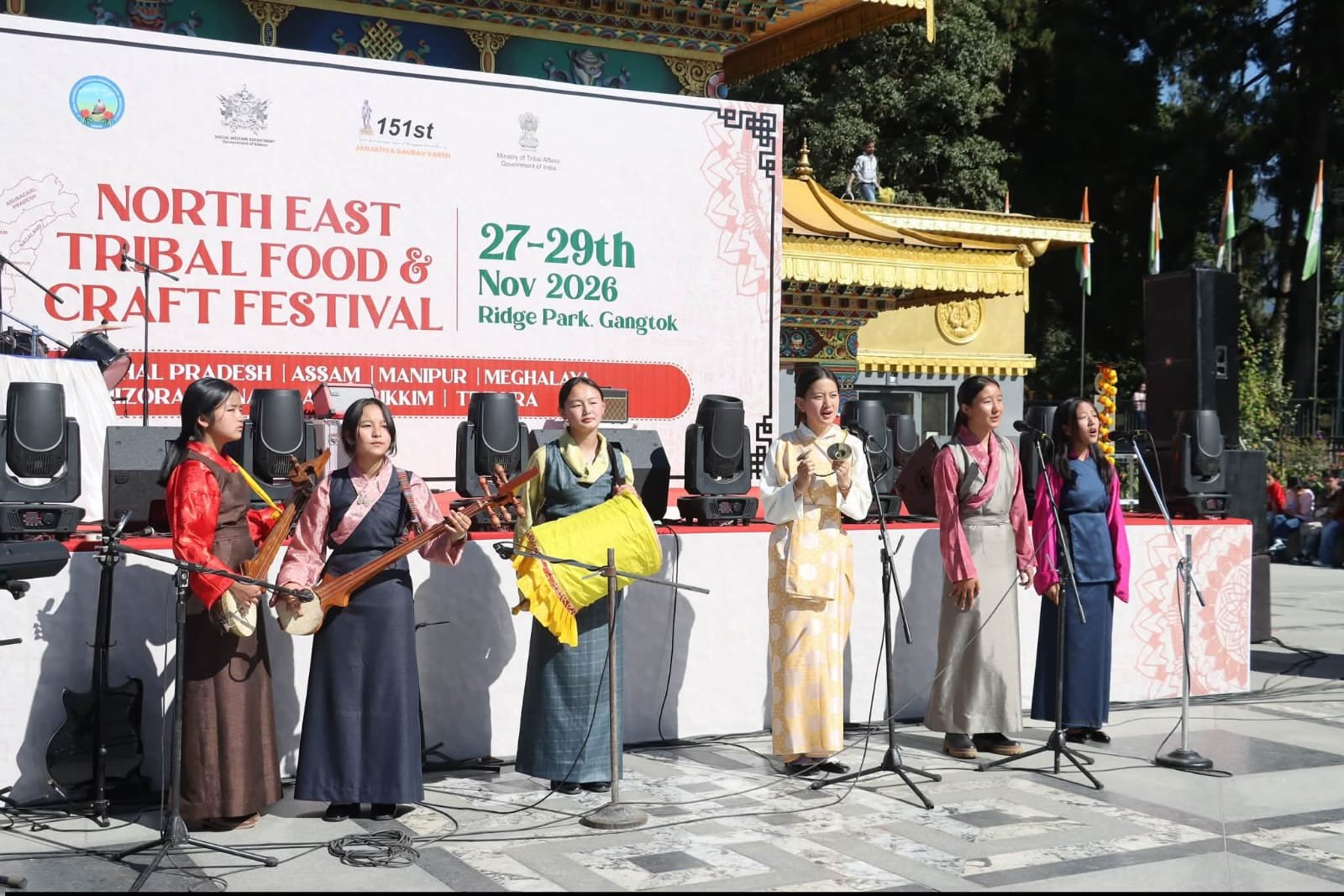
Sikkim is hosting the first-ever Northeast Tribal Food and Craft Festival, bringing together traditional cuisines, handwoven textiles and indigenous handicrafts from across all eight Northeastern states. The three-day festival runs until November 29, 2026, at Ridge Park in Gangtok, celebrating the region’s rich cultural diversity and traditional craftsmanship.
Kokrajhar to Become a Horn-Free City from January 2027
Northeast Tribal Food and Craft Festival Brings Eight States Together
Gangtok has become a showcase of Northeast India’s cultural diversity with the inauguration of the first-ever Northeast Tribal Food and Craft Festival in Sikkim. The three-day event brings together traditional food, indigenous crafts and handwoven textiles from communities across the region.
The festival runs through November 29, 2026, at Ridge Park, one of Gangtok’s prominent public spaces. Moreover, it provides visitors with an opportunity to explore the distinctive cultural traditions of all eight Northeastern states under one roof.
The event highlights the connection between food, craftsmanship and community identity. Additionally, it creates a platform for artisans, traditional food producers and cultural representatives to showcase their heritage to a wider audience.
By bringing different communities together, the festival also highlights the cultural richness that makes Northeast India unique.
Traditional Northeast Indian Cuisines Take Centre Stage
Traditional cuisine forms one of the major attractions of the Northeast Tribal Food and Craft Festival.
Each Northeastern state has distinctive culinary traditions shaped by its geography, local ingredients, agricultural practices and community customs. Therefore, the festival offers visitors an opportunity to discover the region’s diverse food culture.
From traditional rice-based preparations to locally sourced vegetables, fermented foods and indigenous cooking techniques, Northeast Indian cuisine reflects generations of cultural knowledge.
Moreover, traditional food often carries deeper social and cultural significance. Many recipes connect communities with their ancestral practices, local environments and seasonal celebrations.
The festival’s culinary showcase helps introduce these traditions to visitors who may not have experienced the region’s indigenous food culture.
Additionally, it offers an opportunity to recognise traditional food preparation as an important part of Northeast India’s cultural heritage.
Handwoven Textiles Highlight the Region’s Indigenous Heritage
Handwoven textiles are another important attraction at the three-day festival.
Northeast India has a strong tradition of weaving, with different communities maintaining distinctive patterns, techniques and designs. These textiles often reflect cultural identity, traditional knowledge and community history.
The region’s weaving heritage includes colourful fabrics, traditional garments and intricate patterns created using skills passed down through generations.
Furthermore, handloom products represent more than clothing. They reflect the creativity, craftsmanship and cultural expressions of indigenous communities.
By showcasing traditional textiles, the festival provides greater visibility to the region’s weaving traditions.
It also creates an opportunity for visitors to appreciate the work involved in producing handmade fabrics and preserving traditional weaving techniques.
Indigenous Crafts Showcase Northeast India’s Traditional Skills
The festival also features traditional handicrafts from across the Northeastern states.
Indigenous artisans have preserved various craft traditions through generations. These skills include working with locally available materials and creating products that reflect the natural environment and cultural practices of their communities.
Handicrafts also play an important role in the region’s cultural economy. Moreover, traditional craft production provides opportunities for artisans to maintain their skills and introduce their products to wider markets.
The festival’s focus on indigenous craftsmanship helps highlight the importance of preserving these traditional occupations.
Additionally, such platforms can encourage greater appreciation for handmade products and the communities behind them.
Eight Northeastern States Share Their Cultural Diversity
One of the defining features of the Northeast Tribal Food and Craft Festival is its regional representation.
The event showcases cultural traditions from all eight Northeastern states:
- Arunachal Pradesh: Known for its diverse tribal communities, traditional textiles and indigenous crafts.
- Assam: Recognised for its handloom heritage, traditional cuisine and distinctive cultural traditions.
- Manipur: Celebrated for its traditional weaving, food culture and indigenous craftsmanship.
- Meghalaya: Known for its community traditions, indigenous foods and bamboo-based crafts.
- Mizoram: Recognised for its colourful handwoven textiles and traditional cultural practices.
- Nagaland: Celebrated for its tribal food traditions, distinctive textiles and traditional crafts.
- Sikkim: Known for its diverse cultural influences, traditional cuisine and local handicrafts.
- Tripura: Recognised for its handloom products, bamboo crafts and indigenous traditions.
Although these states share a geographical region, each has its own cultural identity. Consequently, the festival offers a valuable opportunity to understand both their differences and shared heritage.
Gangtok Provides a Platform for Cultural Exchange
Gangtok’s Ridge Park provides the setting for this three-day celebration of Northeast India’s cultural heritage.
The festival brings traditional food and craft traditions into a shared public space. As a result, residents, tourists and cultural enthusiasts can explore different aspects of the region’s indigenous heritage.
Moreover, the event encourages cultural exchange among communities from different Northeastern states.
Visitors can discover traditional cuisines, appreciate handwoven products and learn about the craftsmanship that shapes local cultural identities.
Such gatherings can also strengthen connections between artisans and potential customers. Furthermore, they can encourage greater interest in traditional products among younger generations.
Why the Northeast Tribal Food and Craft Festival Matters
The first-ever Northeast Tribal Food and Craft Festival carries significance beyond its cultural attractions.
Traditional food, textiles and handicrafts represent valuable forms of indigenous knowledge. However, changing lifestyles and market preferences can create challenges for traditional occupations and cultural practices.
Therefore, platforms that showcase these traditions can help increase public awareness and appreciation.
The festival also highlights the importance of supporting local artisans and preserving traditional skills. Greater visibility can create opportunities for cultural enterprises and help traditional products reach new audiences.
Additionally, the event strengthens the cultural identity of Northeast India by bringing communities together through their shared heritage.
For Sikkim, hosting this regional festival also provides an opportunity to showcase Gangtok as a destination for cultural tourism.
Conclusion
The first-ever Northeast Tribal Food and Craft Festival in Gangtok marks an important celebration of the region’s indigenous heritage.
By bringing traditional cuisines, handwoven textiles and handicrafts from all eight Northeastern states to Ridge Park, the three-day event offers a platform for cultural exchange and appreciation.
Moreover, the festival highlights the importance of preserving traditional knowledge while creating greater visibility for indigenous artisans and their work.
As the event concludes on November 29, 2026, it leaves a broader message about the value of cultural diversity, traditional craftsmanship and the shared heritage of Northeast India.
Frequently Asked Questions (FAQs)
1. What is the Northeast Tribal Food and Craft Festival?
The Northeast Tribal Food and Craft Festival is a regional cultural event showcasing traditional cuisines, handwoven textiles and indigenous handicrafts from all eight Northeastern states.
2. Where is the Northeast Tribal Food and Craft Festival taking place?
The festival is taking place at Ridge Park in Gangtok, Sikkim.
3. When will the Sikkim tribal food and craft festival end?
The three-day festival runs through November 29, 2026.
4. Which states are participating in the Northeast Tribal Food and Craft Festival?
The festival showcases cultural traditions from Arunachal Pradesh, Assam, Manipur, Meghalaya, Mizoram, Nagaland, Sikkim and Tripura.
5. What are the main attractions of the festival?
The main attractions include traditional Northeastern cuisines, handwoven textiles and indigenous handicrafts representing different communities across the region.
6. Why is the Northeast Tribal Food and Craft Festival important?
The festival promotes Northeast India’s cultural diversity, supports the visibility of indigenous craftsmanship and encourages the preservation of traditional food, weaving and craft practices.