


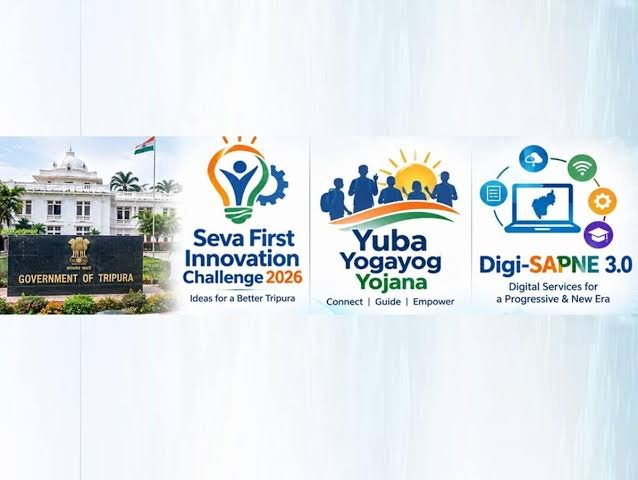
The Tripura digital literacy initiatives gained fresh momentum on October 1, 2026, when Chief Minister Dr Manik Saha launched the Mukhyamantri Yuba Yogayog Yojana for the 2025–26 academic year and inaugurated Digi-SAPNE 3.0 in Agartala. The initiatives aim to improve students’ access to digital technology and strengthen support for technology-driven startups. The programme took place at Women’s College, Agartala, alongside the launch of the Seva First Innovation Challenge 2026. Together, these measures reflect the state government’s focus on digital inclusion, entrepreneurship and youth development.
Tripura Education Department Distributes Scooties to Meritorious Female Students
Tripura Digital Literacy Initiatives Expand Access to Technology
Chief Minister Manik Saha launched the initiatives at a programme organised by the Directorate of Information Technology, Government of Tripura. The event also marked the opening of the renovated Matangini Pritilata Sabhagriha at Women’s College, Agartala.
The Mukhyamantri Yuba Yogayog Yojana and Digi-SAPNE 3.0 address different aspects of digital development. The first focuses on helping eligible students access digital devices. Meanwhile, the second aims to support technology-driven startups across the northeastern region.
The government has placed youth empowerment at the centre of its broader development strategy. Students need digital access to participate in online learning, research and skill development. Similarly, emerging businesses need mentorship, professional networks and institutional support to develop their ideas.
During the event, the Chief Minister highlighted the role of young people in shaping the country’s future. He stressed the importance of combining formal education with modern technology, practical learning and ethical values.
Furthermore, he emphasised the growing importance of technology and innovation in Tripura’s economic development. The government has also highlighted artificial intelligence and improvements in educational infrastructure as important areas of focus.
These priorities connect education with employment opportunities and entrepreneurship. However, digital access alone cannot resolve every challenge. Students also need reliable connectivity, digital skills and suitable learning resources to benefit fully from technology.
Mukhyamantri Yuba Yogayog Yojana Supports Student Digital Access
The Mukhyamantri Yuba Yogayog Yojana is a key component of the Tripura digital literacy initiatives. The scheme aims to reduce the digital divide by helping eligible students obtain smartphones for educational purposes.
The state introduced the scheme during the 2019–20 academic year. Since its introduction, it has benefited more than 63,000 students, according to information released by the Directorate of Information Technology. The government has spent more than ₹31.62 crore on the initiative.
For the 2025–26 academic year, the programme continues its focus on supporting students as they pursue higher education. The scheme provides a one-time financial grant of ₹5,000 to eligible final-year undergraduate students in state government colleges to purchase smartphones.
Access to a smartphone can help students use online educational platforms, access study materials and receive academic updates. Moreover, digital devices can support research, online applications and preparation for competitive examinations.
Students increasingly use digital platforms to explore career opportunities and develop practical skills. Therefore, improved access to smartphones can help them participate more effectively in technology-based learning.
Nevertheless, students should check the official eligibility conditions and application instructions before applying. The scheme’s benefits depend on meeting the prescribed requirements and completing the necessary process.
The initiative also highlights the importance of making digital education more inclusive. Students who face financial barriers may find it difficult to purchase devices independently. Targeted assistance can help eligible beneficiaries overcome part of that challenge.
At the same time, effective digital learning requires more than a smartphone. Reliable internet access, appropriate educational content and responsible technology use remain important. These factors will influence how effectively students use their devices for academic and professional development.
Digi-SAPNE 3.0 Strengthens Startup Support Across Northeast India
Digi-SAPNE 3.0 represents another major part of the Tripura digital literacy initiatives, with a focus on entrepreneurship and technology-led business development. The programme’s full name is the Digital Startup Accelerator Program for North East.
AIC-SMUTBI implements the programme in collaboration with the Ministry of Electronics and Information Technology, Government of India. It aims to support technology-driven startups across the northeastern region through structured assistance and business development opportunities.
The programme offers support mechanisms such as mentorship, business acceleration, investor connections, networking and wider startup ecosystem engagement. These services can help entrepreneurs strengthen their business models and assess opportunities for growth.
For an early-stage startup, developing a promising idea is only the first step. Founders must also understand customer needs, refine their products, build sustainable operations and identify suitable markets. Expert guidance can help them navigate these challenges.
Investor connections and professional networks can also introduce startups to potential funding opportunities and business partnerships. However, participation in an accelerator does not guarantee investment or commercial success. Outcomes depend on each startup’s readiness, market demand and ability to execute its plans.
Tripura has already seen participation in earlier editions of Digi-SAPNE. Three startups from the state—Cubo Bots, Acuvea Healthcare Technologies and HN Technovations LLP—were selected under previous editions of the programme.
During the October 1 launch event, organisers also felicitated eight startups selected under Digi-SAPNE 2.0 for their achievements. Their recognition highlighted the programme’s continuing engagement with emerging businesses.
The third edition could further connect entrepreneurs from Tripura and other northeastern states with mentors, investors and industry networks. In addition, such platforms may help promising businesses improve their products and explore wider markets.
Tripura Digital Literacy Initiatives Connect Education and Entrepreneurship
The launch of the Mukhyamantri Yuba Yogayog Yojana and Digi-SAPNE 3.0 reflects two connected priorities: expanding access to digital technology and supporting innovation-led economic activity.
Students need digital tools to access information, learn new skills and prepare for future employment. At the same time, entrepreneurs need technological knowledge and business support to convert ideas into useful products and services.
These priorities can complement each other. Educational institutions can help students develop technical knowledge, while startup programmes can provide opportunities to apply that knowledge to real-world challenges.
The launch of the Seva First Innovation Challenge 2026 at the same event added another dimension to this approach. The challenge encourages innovators to develop solutions to problems identified by government departments and public institutions.
Together, the three initiatives cover student digital access, startup acceleration and innovation for public services. This approach seeks to connect education, technology and entrepreneurship within the state’s development agenda.
However, the long-term impact will depend on implementation. Authorities will need to ensure that eligible students can access scheme benefits and that startup participants receive meaningful support. Regular monitoring can also help assess whether these programmes achieve their intended objectives.
Furthermore, students and entrepreneurs will need opportunities to develop practical skills alongside access to technology. Digital literacy involves using devices confidently, evaluating information, protecting personal data and applying digital tools responsibly.
By addressing these requirements, the state can strengthen the potential benefits of its digital programmes. Continued collaboration among government departments, educational institutions and startup support organisations will also remain important.
Conclusion
The Tripura digital literacy initiatives received a significant boost with the launch of the Mukhyamantri Yuba Yogayog Yojana for the 2025–26 academic year and Digi-SAPNE 3.0 on October 1, 2026. Chief Minister Manik Saha launched the programmes at Women’s College in Agartala, highlighting the role of technology and young people in the state’s development.
The student scheme provides a one-time grant of ₹5,000 to eligible final-year undergraduate students in state government colleges to purchase smartphones. Meanwhile, Digi-SAPNE 3.0 supports technology-driven startups through mentorship, business acceleration, investor connections and networking opportunities. The two initiatives address different needs while promoting broader digital inclusion and entrepreneurship.
Their success will depend on effective implementation, accessibility and continued institutional support. Students can benefit from improved access to digital learning, while entrepreneurs may gain opportunities to strengthen their businesses. Together with the Seva First Innovation Challenge 2026, these initiatives aim to encourage a more digitally empowered and innovation-focused future for Tripura.
FAQs
1. What are the Tripura digital literacy initiatives launched in October 2026?
The initiatives include the Mukhyamantri Yuba Yogayog Yojana for the 2025–26 academic year and Digi-SAPNE 3.0. The government also launched the Seva First Innovation Challenge 2026 at the same event.
2. Who launched the Mukhyamantri Yuba Yogayog Yojana and Digi-SAPNE 3.0?
Tripura Chief Minister Dr Manik Saha launched the initiatives on October 1, 2026, at Women’s College in Agartala.
3. How much financial assistance does the Mukhyamantri Yuba Yogayog Yojana provide?
The scheme provides a one-time grant of ₹5,000 to eligible final-year undergraduate students in state government colleges to purchase smartphones.
4. What is Digi-SAPNE 3.0?
Digi-SAPNE 3.0 stands for the Digital Startup Accelerator Program for North East. AIC-SMUTBI implements the programme in collaboration with the Ministry of Electronics and Information Technology to support technology-driven startups.
5. How can these initiatives benefit young people in Tripura?
The student scheme can improve access to digital learning, while Digi-SAPNE 3.0 can help entrepreneurs access mentorship, business development support and professional networks. The innovation challenge also encourages solutions to public-service problems.