


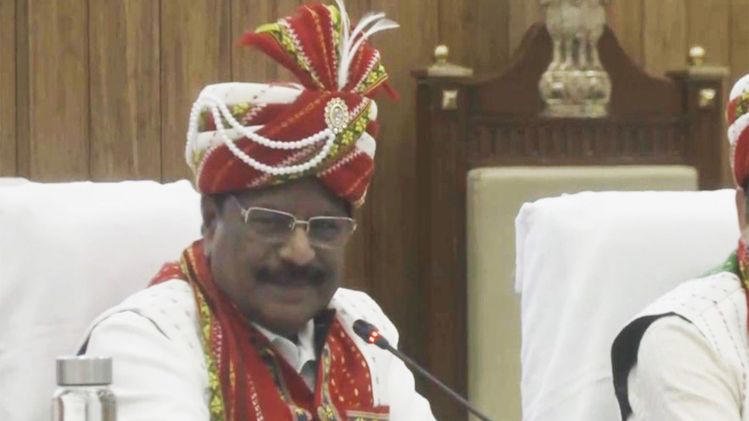
Tripura Governor N. Indrasena Reddy on May 28 launched the Northeast’s first Digital Forest Rights Act (FRA) Atlas and a Tribal Development Atlas during the inauguration of “Janjatiya Garima Utsav 2026 — Birsa Lives in New Bharat Week.” The landmark initiative aims to strengthen tribal rights, improve forest governance, and promote data-driven planning through the use of technology.
The launch marks a significant milestone in Tripura’s efforts to safeguard the rights of indigenous communities while enhancing transparency in the implementation of the Forest Rights Act. Developed with support from the Tripura Space Application Centre, the Digital FRA Atlas will help authorities monitor and implement individual and community forest rights more effectively.
The Tribal Welfare Department also released an FRA Atlas booklet during the event, providing an additional resource for policymakers, officials, and stakeholders involved in forest rights implementation.
Read More: Education Minister Admits ‘Some Discrepancies’ in CBSE Class 12 Revaluation
Governor Highlights Importance of Technology in Tribal Development
Speaking at the inaugural ceremony, Governor N. Indrasena Reddy emphasized the need to combine technology with welfare initiatives to ensure the protection of tribal communities.
He said the state would use scientific planning, digital tools, and modern technology to strengthen the dignity, rights, and development of tribal populations. According to the Governor, the Digital FRA Atlas represents a major step toward achieving these objectives.
Reddy also paid tribute to tribal icon Birsa Munda, whose legacy inspired the week-long festival. He noted that Birsa Munda’s ideals concerning tribal identity, forest rights, and social justice remain relevant even in the 21st century.
“Birsa Munda’s ideals on tribal rights, forests and identity remain relevant in the 21st century,” the Governor said.
He described the Janjatiya Garima Utsav as more than a commemorative event and highlighted Tripura’s achievements in recognizing individual forest rights. According to him, the state has emerged as a model for effective implementation of provisions under the Forest Rights Act.
Digital FRA Atlas to Improve Forest Rights Monitoring
The newly launched Digital FRA Atlas aims to strengthen monitoring and implementation of rights granted under the Forest Rights Act. Officials believe the platform will improve decision-making, enable better record management, and provide accurate information regarding forest rights claims.
The digital platform will assist authorities in tracking individual forest rights, community rights, and community forest resource rights. It will also support field-level officials in assessing the status of claims and identifying areas requiring attention.
By integrating geospatial technology and mapping tools, the atlas is expected to enhance transparency and accountability. Furthermore, policymakers will be able to use real-time information for planning development programmes in tribal regions.
Officials said the initiative aligns with the broader goal of using technology to empower communities while ensuring efficient governance.
Tribal Development Atlas Released
Alongside the Digital FRA Atlas, the Governor also launched the Tribal Development Atlas. The resource seeks to provide a comprehensive overview of development indicators, welfare schemes, infrastructure, and socio-economic conditions in tribal areas.
The atlas is expected to serve as an important planning tool for government departments and development agencies. It will help authorities identify gaps in service delivery and formulate targeted interventions for tribal communities.
Officials believe the initiative will contribute to evidence-based policymaking and improve the effectiveness of welfare programmes.
The release of both atlases underscores the state’s commitment to using data and technology to accelerate development in tribal regions.
Welfare, Education and Skills Remain Key Priorities
Tripura Tribal Welfare Minister Bikash Debbarma highlighted the government’s continued focus on welfare, education, and skill development in remote tribal areas.
He stated that the department remains committed to ensuring that tribal communities receive quality education, healthcare, and employment opportunities. According to Debbarma, development initiatives must reach even the most remote villages to ensure inclusive growth.
The minister emphasized that skill development programmes play a crucial role in empowering tribal youth. Therefore, the department continues to expand training initiatives that can improve livelihoods and create new economic opportunities.
He also noted that technology-driven governance tools such as the Digital FRA Atlas can strengthen the delivery of welfare services and improve administrative efficiency.
Senior officials present at the event included Tribal Welfare Department Secretary Dr. K. Shashi Kumar, Governor’s Secretary U. K. Chakma, and Tribal Welfare Department Director Subhashish Das.
Part of National Digitalisation Efforts
The launch of the Digital FRA Atlas aligns with a broader national initiative led by the Ministry of Tribal Affairs to digitize Forest Rights Act processes across India.
As part of this effort, the ministry issued a problem statement under the Smart India Hackathon 2025. The challenge sought the development of an Artificial Intelligence-powered FRA Atlas and a WebGIS-based decision support system capable of monitoring individual and community forest rights.
The initiative attracted participation from student teams across the country. Teams from Pune, Kurnool, and Indore conducted field visits to villages where FRA implementation has taken place. During these visits, students collected ground-level data and interacted with local communities.
Officials are currently using this data to refine a national FRA Digital Platform. The final design and development work is being coordinated at the National Tribal Research Institute in New Delhi under the supervision of the Ministry of Tribal Affairs.
The Tripura initiative is therefore seen as an important contribution to the national effort to modernize forest rights governance through digital technology.
PM Modi Meets Janjati Suraksha Manch Representatives
The focus on tribal empowerment also received national attention this week. Prime Minister Narendra Modi met representatives of the Janjati Suraksha Manch in New Delhi on Thursday to discuss issues related to tribal development and empowerment.
Following the meeting, the Prime Minister praised the organization’s work and described its commitment to tribal communities as “truly commendable.”
The interaction highlighted the growing emphasis on tribal welfare, rights protection, and inclusive development at both state and national levels.
Looking Ahead
The launch of the Northeast’s first Digital FRA Atlas marks a significant achievement for Tripura’s tribal welfare and governance initiatives. By combining technology with policy implementation, the state aims to improve the protection of forest rights while promoting transparency and accountability.
The Digital FRA Atlas and Tribal Development Atlas are expected to strengthen planning, monitoring, and service delivery in tribal regions. At the same time, they reinforce the state’s commitment to ensuring dignity, development, and justice for indigenous communities.
As Tripura continues to adopt innovative governance solutions, the initiative could serve as a model for other states seeking to modernize forest rights administration and tribal development programmes through technology-driven approaches.
Read More: PM Modi Likely to Join Yoga Day 2026 Celebrations in Kolkata