


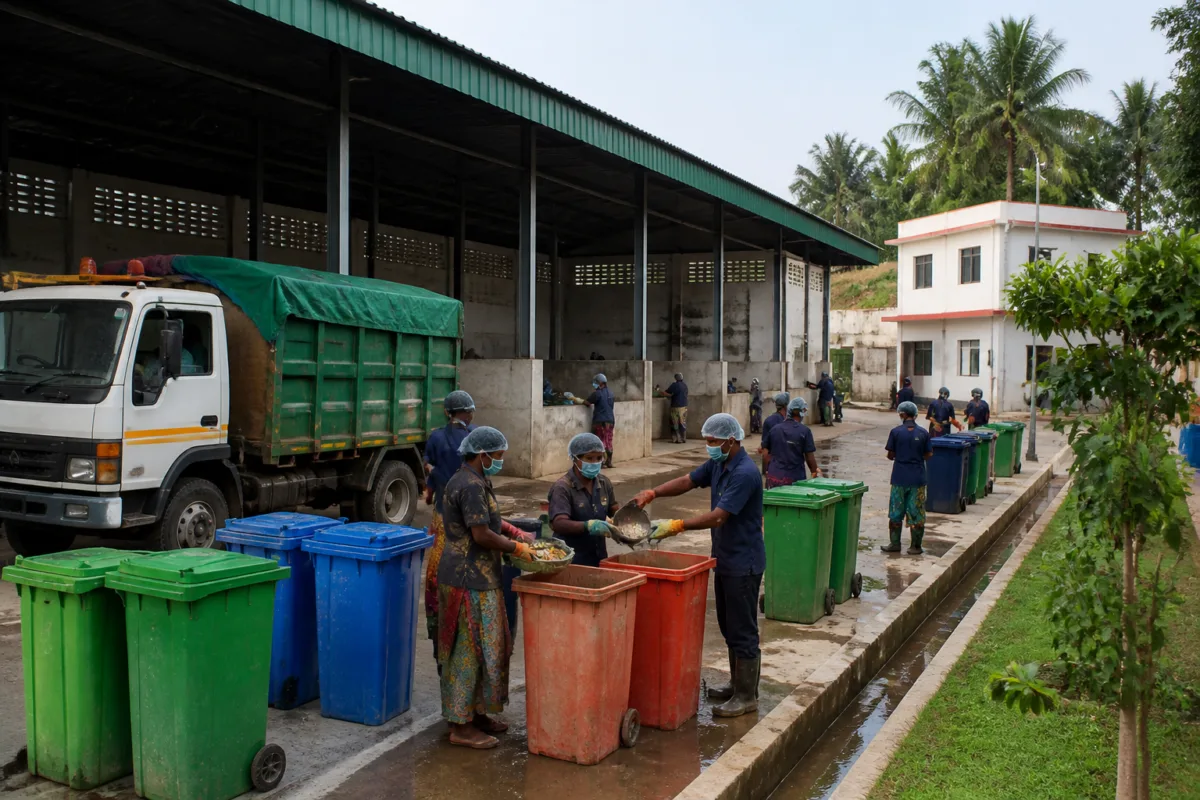
The Tripura High Court has directed the state government to submit compliance and action-taken reports every three months on the implementation of the Solid Waste Management Rules, 2026. The first report must reach the court by March 2, 2027, as part of continued judicial monitoring of waste management across the state.
Assam Announces New Hostel for Indigenous Students in Biswanath
Tripura High Court Seeks Regular Waste Management Updates
The Tripura High Court issued the direction on November 25, 2026, while hearing a public interest litigation concerning the implementation of environmental and waste management requirements.
A Division Bench comprising Chief Justice M. S. Ramachandra Rao and Justice S. Datta Purkayastha passed the order in a case filed by Ankan Tilak Paul.
The court wants the state government to provide regular updates on the steps taken to implement the Solid Waste Management Rules, 2026. These reports must explain the progress made by different departments and authorities, along with any action taken to address implementation gaps.
The first compliance report is due on March 2, 2027. The matter will also come up for further hearing on that date.
The quarterly reporting requirement will allow the court to monitor implementation continuously rather than relying only on occasional updates from the government.
Government Informs Court About Waste Management Committees
During the hearing, the Bench considered an affidavit filed by the state government on November 23. The affidavit outlined several administrative measures taken to implement the new waste management rules.
According to the government’s submission, Tripura constituted a State Level Committee on July 24, 2026, under the chairmanship of the Chief Secretary.
The committee is responsible for monitoring implementation and ensuring coordination among the departments concerned.
The state also formed a State Level Steering Committee under the Environment Department. Its responsibilities include promoting a circular economy in solid waste processing and coordinating activities among implementing agencies.
These committees are expected to strengthen monitoring and improve cooperation between government departments.
Solid Waste Management Rules Circulated Across Tripura
The state government informed the High Court that it had circulated the Solid Waste Management Rules, 2026, among relevant departments and administrative authorities.
The distribution included:
- State government departments concerned with implementation
- District Magistrates and District Collectors
- Urban Local Bodies
- Rural Development Blocks
The government also stated that the rules had been translated into the local language to improve public understanding and support wider implementation.
Furthermore, stakeholder departments had submitted action-taken reports to the Tripura State Pollution Control Board.
The state informed the court that it was also submitting regular reports to the Union Ministry of Environment, Forest and Climate Change and the Central Pollution Control Board. The latest report mentioned in the affidavit was submitted on September 30, 2026.
District Collectors Given Powers to Monitor Implementation
Another important measure concerns the role of district administration in enforcing the waste management rules.
The government informed the court that it had delegated powers under Section 5 of the Environment (Protection) Act, 1986, to District Collectors through a notification dated May 18, 2026.
The delegation remains effective for one year. It empowers collectors to supervise and ensure implementation within their respective jurisdictions.
This arrangement gives district administrations a more direct role in monitoring compliance. It also allows authorities to coordinate with local bodies and other departments when addressing implementation problems.
The quarterly reports will help the High Court assess how effectively these administrative arrangements are working across Tripura.
State Committee Formed to Monitor Slaughterhouses
The High Court also took note of the government’s efforts to strengthen oversight of slaughterhouses.
According to the affidavit, the state constituted a State Committee for Slaughter House on November 12, 2026. The Secretary of the Urban Development Department chairs the committee.
Its responsibilities include reviewing compliance, identifying deficiencies and recommending corrective measures to the authorities concerned.
The committee is expected to monitor the implementation of applicable requirements and help address shortcomings in slaughterhouse management.
This issue forms part of the wider environmental and regulatory concerns being examined in the public interest litigation.
Durga Chowmuhani Bazar Slaughterhouse Yet to Become Operational
The government also provided an update on the proposed slaughterhouse at Durga Chowmuhani Bazar in Agartala.
According to the affidavit, civil construction of the facility had been completed by the District Legal Services Authority, West Tripura, Agartala.
However, mechanical and electrical installations were still pending when the government submitted its report.
The facility will begin operations after the remaining work is completed and the necessary requirements are met.
The High Court recorded the government’s submission regarding the project’s progress. The pending installations remain necessary before the slaughterhouse can become operational in accordance with applicable rules.
Why Quarterly Reporting Matters for Waste Management
Solid waste management requires regular coordination between government departments, municipal bodies, district administrations and other implementing agencies.
The rules cover several aspects of waste handling, including collection, segregation, processing and disposal. Effective implementation therefore depends on consistent monitoring and action at different administrative levels.
Quarterly reports can help identify delays and gaps in implementation. They can also provide the court with a clearer picture of the progress made by individual departments and local authorities.
For Tripura, the reporting arrangement places greater emphasis on accountability. Departments and district authorities will need to document their actions and demonstrate progress during each reporting period.
The High Court’s direction also ensures that the state government’s commitments remain subject to continuing judicial review.
Next Hearing Scheduled for March 2, 2027
The Tripura High Court has scheduled the next hearing for March 2, 2027. The state government must submit its first compliance and action-taken report by that date.
The report is expected to provide updates on the implementation of the Solid Waste Management Rules, 2026, and the measures undertaken by the committees and authorities concerned.
The court will be able to examine the government’s progress during the next hearing and consider any further directions required.
Until then, the state administration will have to continue its monitoring and reporting activities at regular intervals.
Conclusion
The Tripura High Court’s direction for quarterly compliance reports places the implementation of the Solid Waste Management Rules, 2026, under regular judicial monitoring. The state government must submit its first report by March 2, 2027, and continue filing updates every three months.
The court has taken note of several measures, including state-level committees, powers delegated to District Collectors and a separate committee for slaughterhouse monitoring. The next hearing will provide an opportunity to review the progress of these initiatives and the government’s compliance with the rules.
Frequently Asked Questions (FAQs)
1. What has the Tripura High Court ordered regarding waste management?
The High Court has directed the state government to submit compliance and action-taken reports every three months on the implementation of the Solid Waste Management Rules, 2026.
2. When is Tripura’s first compliance report due?
The first report must be submitted to the High Court by March 2, 2027.
3. Which judges issued the direction?
A Division Bench comprising Chief Justice M. S. Ramachandra Rao and Justice S. Datta Purkayastha issued the direction on November 25, 2026.
4. Who filed the public interest litigation?
The public interest litigation was filed by Ankan Tilak Paul.
5. What committees has the Tripura government formed?
The government informed the court about a State Level Committee headed by the Chief Secretary, a State Level Steering Committee under the Environment Department and a State Committee for Slaughter House.
6. What powers have been given to District Collectors?
The government delegated powers under Section 5 of the Environment (Protection) Act, 1986, to District Collectors for one year to supervise implementation of the waste management rules.
7. What is the status of the Durga Chowmuhani Bazar slaughterhouse?
Civil construction has been completed, but mechanical and electrical installations were still pending according to the government’s affidavit.
8. When will the Tripura High Court hear the matter again?
The next hearing is scheduled for March 2, 2027, when the first compliance report is also due.