


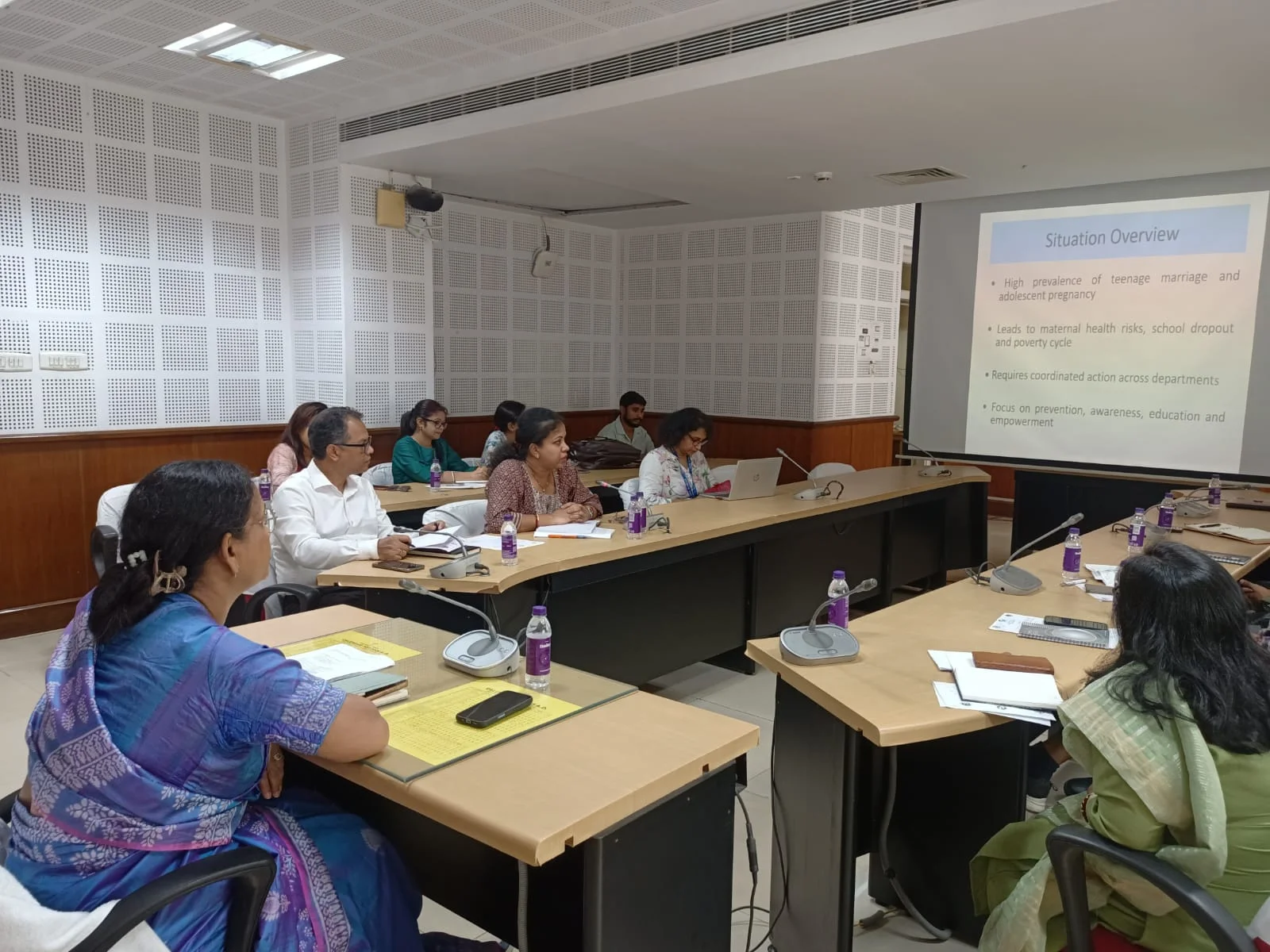
Agartala, May 29, 2026: The Tripura Government held a high-level Task Force meeting at the State Secretariat to strengthen efforts against child marriage and teenage motherhood. Chaired by National Health Mission (NHM) Mission Director Dr. Nupur Debbarma, the meeting brought together officials from multiple departments to improve coordination and implementation of the Reproductive and Child Health (RCH) programme.
Furthermore, participants discussed the need to prevent school dropouts among adolescent girls and expand awareness on reproductive health and nutrition. Officials also emphasized stronger collaboration among departments to address social and health challenges. Additionally, the meeting considered establishing a special monitoring cell to improve field-level supervision and programme implementation.
Read More: Tripura Highlights Digital Governance at Tech Saksham
Key Facts
- Event: High-Level Task Force Meeting on Child Marriage and Adolescent Health
- Date: May 29, 2026
- Location: State Secretariat, Agartala, Tripura
- Chairperson: Dr. Nupur Debbarma, Mission Director, NHM
- Focus Areas: Child marriage, teenage motherhood, adolescent health, RCH programme
- Participating Departments: Health, Education, Youth Affairs, Social Welfare, ICA, PRI, TRLM, TULM, ICMR
- Key Proposal: Creation of a special monitoring cell
- Objective: Strengthen inter-departmental coordination and outreach
Tripura Intensifies Efforts to Tackle Child Marriage
The Tripura Government has intensified efforts to address the challenges of child marriage and teenage motherhood across the state.
To achieve this goal, senior officials from various departments met at the State Secretariat in Agartala on May 29. The meeting focused on improving coordination and ensuring effective implementation of programmes related to adolescent health and welfare.
NHM Leads Multi-Department Initiative
Dr. Nupur Debbarma, Mission Director of the National Health Mission, chaired the meeting.
Furthermore, representatives from the Health Department, Higher Education Department, Secondary Education Department, Youth Affairs and Sports Department, Information and Cultural Affairs Department, Panchayati Raj Institutions, Tripura Rural Livelihoods Mission, Tripura Urban Livelihoods Mission, and the Indian Council of Medical Research participated in the discussions.
As a result, the meeting provided a platform for various departments to develop a coordinated strategy.
Child Marriage Remains a Major Concern
During the discussions, officials noted that child marriage continues to affect many communities despite improvements in education.
Moreover, participants observed that incidents of early marriage occur even among girls who have completed ten or more years of schooling. Therefore, officials identified the prevention of school dropouts among adolescent girls as a critical priority.
They stressed that keeping girls in school can significantly reduce the risk of early marriage and improve future opportunities.
Need for Stronger Inter-Departmental Coordination
Dr. Debbarma emphasized that no single department can eliminate child marriage and teenage motherhood alone.
Instead, she called for stronger cooperation among government agencies. Furthermore, she urged departments to work collectively to address the social, educational, and health-related factors that contribute to these issues.
Consequently, officials agreed that a coordinated approach would improve the effectiveness of government interventions.
Focus on Awareness and Adolescent Health
The meeting highlighted the importance of expanding awareness campaigns at the grassroots level.
Officials recommended increasing education on reproductive health, nutrition, adolescent well-being, and the harmful effects of child marriage.
In addition, participants stressed the need to ensure that information reaches vulnerable communities across both rural and urban areas.
As a result, awareness programmes can help families make informed decisions and protect adolescent girls from early marriage and motherhood.
Expanding Reach of RCH Programmes
The Task Force also reviewed the implementation of programmes under the Reproductive and Child Health (RCH) umbrella.
Officials emphasized that every eligible beneficiary should receive access to health services and welfare schemes. Therefore, departments will focus on improving outreach and service delivery in underserved areas.
Furthermore, they discussed ways to strengthen monitoring and evaluation mechanisms.
Proposal for Special Monitoring Cell
A major proposal discussed during the meeting involved establishing a dedicated monitoring cell.
The proposed unit would supervise field-level activities and assess programme performance across districts. Additionally, it would help identify implementation gaps and recommend corrective measures.
Consequently, the monitoring mechanism could improve accountability and ensure that government initiatives achieve their intended outcomes.
Government Aims for Long-Term Social Change
Officials concluded that sustained awareness, education, and coordinated action are essential for reducing child marriage and teenage motherhood.
Moreover, they emphasized that empowering adolescent girls through education and health services remains one of the most effective strategies for long-term social development.
Therefore, the government plans to strengthen partnerships among departments and community organizations to address these challenges more effectively.
Location Context
Tripura is one of the key states in Northeast India and has been actively implementing health, education, and social welfare programmes. Therefore, coordinated efforts to reduce child marriage and improve adolescent health are important for achieving inclusive development and improving the quality of life across the state.
Question and Answer Section
What was the purpose of the Task Force meeting?
The meeting focused on addressing child marriage, teenage motherhood, and strengthening the implementation of the Reproductive and Child Health programme.
Who chaired the meeting?
Dr. Nupur Debbarma, Mission Director of the National Health Mission, chaired the meeting.
Why is preventing school dropouts important?
Officials believe that keeping girls in school can reduce child marriage and improve educational and economic opportunities.
What issues did officials discuss?
Participants discussed child marriage, adolescent health, reproductive health awareness, nutrition, and programme implementation.
What new proposal was considered?
Officials discussed creating a special monitoring cell to supervise field-level activities and improve programme outcomes.
Also Read: TTripura Post Flood Relief Package Approved – Prime 24 Seven