


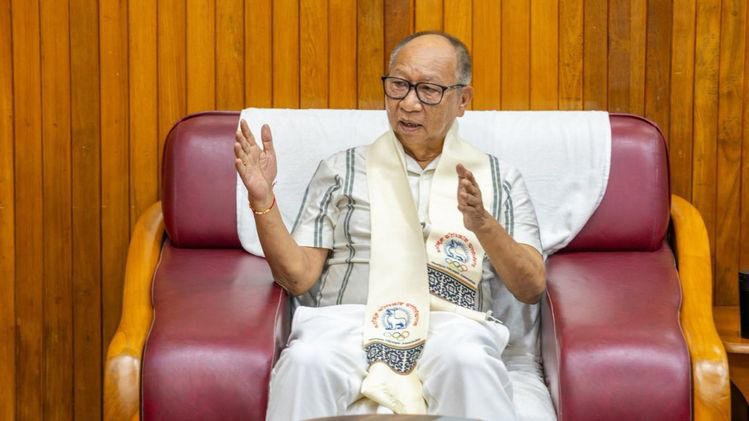
Manipur Chief Minister Yumnam Khemchand Singh has said that the BJP did not create the crisis in the state. He made the statement while defending the government’s efforts to restore peace and normalcy in Manipur.
Khemchand said the BJP government inherited a difficult situation and now faces the responsibility of bringing communities closer together.
His comments come as the state continues its efforts to recover from prolonged ethnic violence and displacement.
The Chief Minister stressed that restoring peace requires patience and cooperation. He also highlighted the need for reconciliation between communities.
The government has placed peacebuilding and normalcy among its key priorities.
BJP Government Focuses on Restoring Peace
Khemchand said the BJP remains committed to restoring peace in Manipur.
The government has been working to improve the security situation and create conditions for normal life to return.
Restoring peace remains a complicated task. The conflict has affected communities across the state and created deep mistrust.
The government must therefore address security concerns while also encouraging dialogue.
Khemchand has emphasised the importance of bringing people together.
The administration also needs to ensure that displaced families receive adequate support while efforts continue to create conditions for their eventual rehabilitation.
Reconciliation Remains Central to the Recovery
Reconciliation will play a major role in Manipur’s recovery.
The conflict has created divisions between communities that previously interacted through social, economic and cultural networks.
Rebuilding those connections will take time.
Community leaders, civil society groups and political representatives can all contribute to the process.
The government can provide platforms for dialogue and encourage communities to discuss their concerns.
Local-level engagement can prove particularly important. Communities often understand their own challenges better than outside organisations.
The administration can work with local representatives to identify practical solutions.
Restoring Normal Life Across Manipur
Peace efforts must eventually lead to the restoration of everyday life.
People need to travel safely between different areas. Children need to attend schools. Businesses need to reopen. Farmers need access to markets.
Healthcare facilities also require safe access for patients and staff.
Restoring normal movement can help communities reconnect.
It can also support economic recovery.
The government faces the challenge of improving security while allowing people to resume their normal activities.
A gradual return to normal life can help rebuild public confidence.
Support for Displaced Families
The conflict has forced many families to leave their homes.
Displaced people require food, healthcare, education and financial assistance.
The government and relief agencies need to maintain these services while the wider peace process continues.
Long-term rehabilitation will require more than temporary relief.
Families who want to return home need security and confidence that they can rebuild their lives safely.
Authorities will also need to restore houses, schools, roads and other infrastructure in affected areas.
A successful rehabilitation process can become an important part of reconciliation.
Security Remains an Important Concern
Security continues to play a major role in Manipur’s recovery.
The government must protect civilians and prevent further violence.
Security forces also need to maintain peace in sensitive areas.
At the same time, authorities must ensure that security measures support the broader objective of restoring normal life.
Improved coordination between security agencies and civil administration can help.
Local officials can provide information about emerging tensions and potential flashpoints.
Early intervention can prevent smaller disputes from escalating.
Dialogue Can Help Rebuild Trust
Political leaders cannot resolve the crisis alone.
Community representatives need to participate in discussions about the future of the state.
Dialogue can help communities understand each other’s concerns.
It can also reduce misinformation and misunderstandings.
The government can support structured discussions involving different groups.
Such conversations may not immediately resolve every disagreement. However, they can create channels for communication.
Regular dialogue can gradually rebuild trust.
Development Can Support the Peace Process
Economic development can complement peacebuilding efforts.
Communities need jobs and stable livelihoods to recover from prolonged disruption.
Young people need opportunities for education and employment.
Infrastructure projects can reconnect areas that have experienced prolonged isolation.
Improved roads and communication networks can support trade and access to essential services.
The government can therefore combine development programmes with reconciliation efforts.
Economic recovery can give people greater confidence about the future.
BJP Faces Political Pressure
Khemchand’s remarks also come amid political debate over the government’s handling of the crisis.
Opposition parties and civil society organisations have raised questions about security and the pace of reconciliation.
The BJP government will therefore face pressure to demonstrate tangible progress.
Statements about peace will need to accompany visible improvements on the ground.
People affected by the conflict will judge the government by changes in security, movement and access to services.
The administration will need to maintain consistent communication with communities.
A Long Road Ahead
The Manipur crisis will not have a quick solution.
Deep mistrust and displacement have created complicated social and political challenges.
The government will need to maintain peace efforts over the long term.
Reconciliation requires participation from communities as well as political institutions.
Security, rehabilitation, dialogue and development must move together.
The government can also learn from local initiatives that encourage interaction between communities.
A flexible approach may help address different concerns across the state.
Looking Ahead
Chief Minister Yumnam Khemchand Singh’s statement that the BJP did not create the crisis reflects the political debate surrounding Manipur’s ongoing conflict.
His government has positioned peace and reconciliation as major priorities.
The immediate challenge remains restoring security and normal life. The longer-term challenge involves rebuilding trust between communities.
The government must support displaced families and create conditions for safe rehabilitation. It must also encourage dialogue and improve connectivity between affected areas.
Development can provide another foundation for recovery.
For Manipur, lasting peace will require sustained cooperation among the government, communities, civil society organisations and political parties.
Khemchand’s message is clear: the BJP government says it inherited the crisis but now accepts the responsibility of working towards peace, reconciliation and the restoration of normal life across Manipur.