


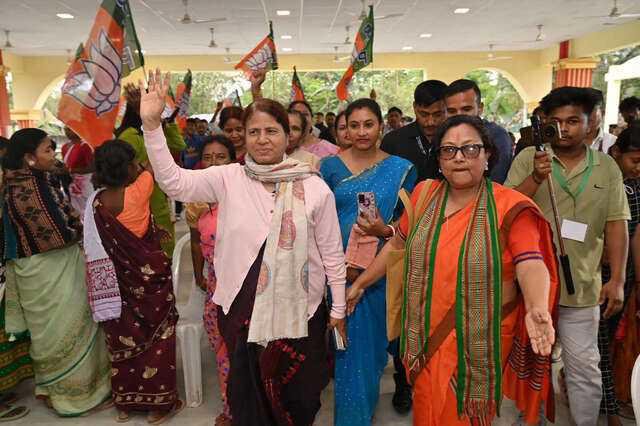
Assam has consistently recorded impressive voter participation among women, often matching or even surpassing male turnout in recent elections. However, this enthusiasm at the ballot box has not translated into proportional representation in the state legislature. The gap between participation and representation continues to raise important questions about gender equity in politics.
Data from recent elections shows that women voters have played a decisive role in shaping outcomes. Yet, the number of women elected to the Assam Assembly remains relatively low. This discrepancy highlights a structural imbalance that persists despite progress in voter engagement.
Read More: Rahul Gandhi Alleges BJP ‘Stole’ Assam, Bengal Polls With EC Help
Moreover, the issue has gained attention among political observers and civil society groups. They argue that representation should reflect participation, especially in a democratic system where every voice matters.
Historical trends in women’s representation
Historically, women’s representation in the Assam Assembly has remained limited. Although there have been incremental improvements over the years, the overall numbers continue to fall short of expectations.
In several election cycles, only a small percentage of candidates fielded by major parties have been women. Consequently, the chances of increasing representation remain constrained from the outset. Even when women candidates contest, they often face challenges such as limited resources and organisational support.
Additionally, the political landscape has traditionally been dominated by male leaders. This has created barriers for women aspiring to enter politics, making it difficult to achieve parity.
High participation of women voters
One of the most striking aspects of Assam’s electoral process is the high participation of women voters. In many constituencies, women have turned out in large numbers, demonstrating strong engagement with the democratic process.
This trend reflects increased awareness, education, and empowerment among women. Government initiatives and civil society efforts have also played a role in encouraging voter participation.
Furthermore, women voters have shown the ability to influence electoral outcomes. Their preferences often shape the success of candidates and parties. Despite this, their representation in decision-making bodies remains limited.
This contrast between participation and representation underscores the need for systemic change.
Factors contributing to the representation gap
Several factors contribute to the low representation of women in the Assam Assembly. One key issue is the limited number of tickets given to women by political parties. Without adequate opportunities to contest, representation cannot improve significantly.
Another factor is societal attitudes and gender norms. In many cases, women face additional challenges in balancing political careers with personal responsibilities. These barriers can discourage potential candidates from entering the field.
Moreover, financial constraints and lack of access to resources further limit opportunities. Campaigning requires significant investment, which may not always be accessible to women candidates.
Institutional factors also play a role. The absence of mandatory quotas for women in state assemblies means that progress depends largely on party decisions.
Role of political parties in addressing the issue
Political parties play a crucial role in shaping representation. Their decisions on candidate selection directly influence the number of women in the Assembly.
Some parties have taken steps to increase the number of women candidates. However, these efforts remain inconsistent and often fall short of achieving meaningful change.
Experts suggest that parties need to adopt more inclusive policies. This includes setting targets for women’s representation and providing support for candidates.
Additionally, mentorship and training programs can help women navigate the complexities of political participation. By investing in such initiatives, parties can create a more balanced political environment.
Impact of low representation on governance
The underrepresentation of women in the Assam Assembly has implications for governance. Diverse representation is essential for addressing the needs of all sections of society.
Women leaders often bring unique perspectives on issues such as healthcare, education, and social welfare. Their participation can lead to more inclusive policies and better decision-making.
Moreover, representation serves as an inspiration for future generations. When women see leaders who reflect their experiences, it encourages greater participation in public life.
The current gap, therefore, is not just a statistical issue but a broader concern affecting democratic inclusivity.
Efforts to improve gender balance in politics
Various initiatives have been undertaken to improve women’s representation in politics. These include awareness campaigns, leadership training, and advocacy for policy changes.
Civil society organisations have been actively working to empower women and encourage political participation. They have highlighted the importance of equal representation in strengthening democracy.
At the national level, discussions around reserving seats for women in legislatures have gained momentum. While progress has been made in some areas, implementation remains uneven.
In Assam, similar efforts are needed to address the existing gap. Collaboration between government, political parties, and civil society can play a key role.
Public perception and evolving expectations
Public perception of women in politics is gradually changing. Voters are increasingly recognising the importance of gender diversity in leadership.
Many citizens believe that greater representation of women can lead to more balanced governance. This shift in mindset is encouraging but needs to be supported by concrete actions.
At the same time, women voters continue to play a significant role in elections. Their participation reflects a desire to be part of the decision-making process.
Bridging the gap between participation and representation will require sustained efforts from all stakeholders.
Conclusion
The discrepancy between strong women voter turnout and low representation in the Assam Assembly highlights a critical challenge in the state’s political landscape. While progress has been made in encouraging participation, representation remains an area of concern.
Addressing this gap will require a multi-faceted approach, including greater commitment from political parties, supportive policies, and societal change. Ensuring that women have equal opportunities to participate in governance is essential for a truly inclusive democracy.
As Assam continues to evolve politically, the focus must remain on translating voter participation into meaningful representation. Only then can the democratic process fully reflect the voices of all its citizens.
Read More: Bengal Has Got Freedom: Tripura CM Hails BJP Victory in West Bengal