


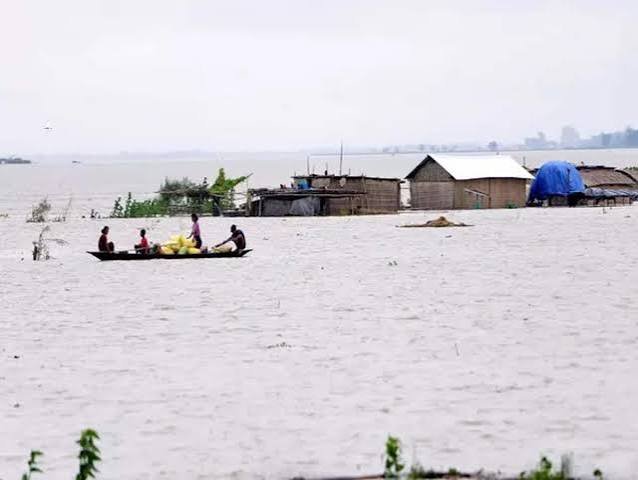
The Assam floods are slowly easing in some areas as water levels begin to recede, but the crisis continues to affect more than 77,542 people across seven districts. Despite signs of improvement, thousands of residents still face displacement, damaged homes, disrupted livelihoods, and difficult access to essential services.
The gradual decline in floodwaters offers some relief to affected communities. However, authorities must continue rescue, relief, and rehabilitation efforts while vulnerable areas remain inundated.
Meghalaya Pineapples Hit Bengaluru: Premium Khasi Pineapples Reach Major Indian Metros
Assam Floods Begin to Recede Gradually
The Assam floods are easing slowly in parts of the state as water levels begin to fall.
The decline can allow residents and authorities to assess damage and begin initial cleanup operations. Furthermore, receding water can gradually reopen roads and improve access to communities that previously remained isolated.
However, falling water levels do not immediately end the crisis.
Some areas may continue to experience severe flooding even as conditions improve elsewhere.
More Than 77,542 People Remain Affected
Despite the gradual improvement, 77,542 people across seven districts reportedly remain severely affected.
Many residents may still require temporary shelter, food, drinking water, medical assistance, and other essential services. Moreover, families who have lost homes or livelihoods may need support even after they leave relief camps.
The humanitarian response therefore remains necessary.
Displaced Families Face Difficult Recovery
Floodwaters can leave behind extensive damage once they recede.
Families may return to homes that require cleaning, repairs, or structural assessment. Additionally, people whose agricultural land remains submerged may face further income losses.
Recovery can therefore take considerably longer than the initial flood response.
Agriculture Remains Under Pressure
Flooding has affected agricultural land across parts of Assam.
Standing crops can suffer damage when fields remain underwater, while soil and farm infrastructure may require rehabilitation afterward. Furthermore, farmers may need seeds and other agricultural inputs before restarting cultivation.
Timely assistance could help affected farming communities recover more quickly.
Relief Camps Continue to Provide Shelter
Residents who cannot safely return home may continue to depend on relief camps.
Authorities need to maintain adequate supplies of food, clean water, sanitation facilities, and healthcare. Moreover, camp managers must monitor changing occupancy levels as some families return while others continue to require shelter.
The transition from emergency accommodation to permanent rehabilitation will require careful planning.
Infrastructure Damage Could Delay Recovery
Flooding can damage roads, bridges, drainage systems, electricity networks, and other public infrastructure.
Even when water levels fall, damaged infrastructure can prevent communities from returning to normal routines. Additionally, authorities may need to inspect roads and bridges before allowing regular traffic.
Restoring connectivity will therefore remain a major recovery priority.
Health Monitoring Remains Essential
Flood conditions can create health risks even after waters begin to recede.
Contaminated water, standing pools, poor sanitation, and overcrowded shelters can increase the risk of illness. Furthermore, medical teams may need to continue monitoring vulnerable communities during the recovery phase.
Preventive healthcare will remain important as residents return home.
Seven Districts Continue to Face Impact
The reported seven affected districts continue to require government attention despite the broader improvement in flood conditions.
Authorities may need to assess each district separately because water levels, infrastructure damage, and displacement can vary significantly. Moreover, remote communities may require additional logistical support when roads remain damaged.
A district-specific response can help direct assistance where it is most needed.
Relief Operations Continue
Emergency agencies and local administrations must continue supporting affected residents until conditions stabilise.
Relief distribution can include food, water, medicines, sanitation supplies, and temporary shelter. Additionally, officials may need to assist residents with transportation and access to essential services.
The scale of the remaining affected population means that the response cannot end immediately.
Recovery Will Take Longer Than Receding Waters
Floodwaters can disappear faster than the consequences they leave behind.
Families may need weeks or months to repair homes, replace belongings, restore farmland, and rebuild livelihoods. Furthermore, authorities must assess infrastructure damage and identify areas that require long-term investment.
The recovery phase will therefore remain important even as the immediate flood threat declines.
What Happens Next?
Authorities will continue monitoring water levels across the affected districts while maintaining relief operations.
As conditions improve, officials can begin detailed damage assessments and support safe returns to affected communities. Moreover, agricultural rehabilitation and infrastructure repairs will become increasingly important.
The number of affected people should gradually decline if floodwaters continue to recede and communities regain access to essential services.
Conclusion
The Assam floods are slowly easing, providing some relief to communities as water levels decline in parts of the state. Nevertheless, more than 77,542 people across seven districts remain severely affected, demonstrating that the humanitarian crisis is far from over.
Moreover, authorities must continue providing shelter, food, healthcare, and other essential assistance while beginning the transition toward rehabilitation. At the same time, damaged homes, agricultural land, roads, and livelihoods will require sustained recovery efforts.
Overall, the Assam flood situation is showing gradual improvement, but continued government support remains essential until affected communities can safely return to normal life.
FAQs
1. Are the Assam floods receding?
Yes. Floodwaters have reportedly begun to recede in some areas, although several locations remain severely affected.
2. How many people remain affected?
More than 77,542 people across seven districts reportedly remain affected.
3. Are relief camps still necessary?
Yes. Some displaced families may still be unable to safely return home and continue to require temporary shelter and essential services.
4. What challenges remain after floodwaters recede?
Communities may face damaged homes, agricultural losses, infrastructure problems, health risks, and disrupted livelihoods.
5. What will authorities focus on next?
Authorities will need to continue relief operations while assessing damage, supporting safe resettlement, restoring infrastructure, and helping affected communities rebuild.