


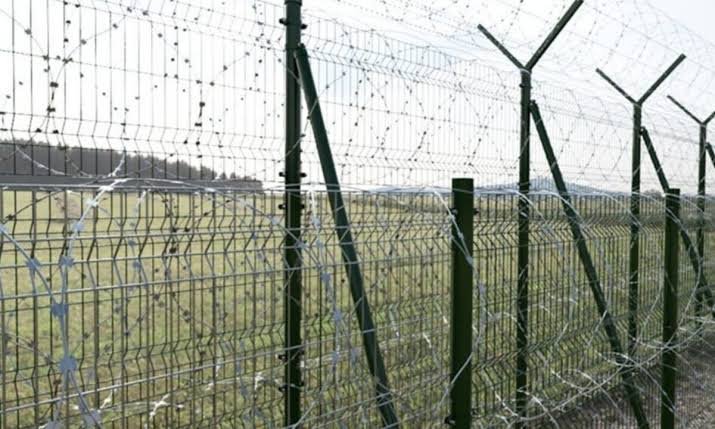
Tripura Border Fencing Progress has come under renewed scrutiny after the state Home Department placed the latest status before the Tripura Legislative Assembly. The state has completed 805.99 kilometres of fencing along its 856-kilometre international boundary with Bangladesh. However, several stretches remain unfinished because of difficult terrain, waterways, objections from the Border Guard Bangladesh and delays involving executing agencies.
The update came through a written response to a question raised by Tipra Motha MLA Ranjit Debbarma. Moreover, the government said it has repeatedly taken up the unfinished stretches with the Centre and sought intervention to accelerate the remaining work. Consequently, the focus has shifted toward completing the difficult sections while maintaining effective border management.
PM Modi Turns 76: Himanta Credits Him for Assam’s Growth and Development
Tripura Border Fencing Progress Reaches 805.99 Kilometres
Tripura shares an international boundary of approximately 856 kilometres with Bangladesh. According to the latest Home Department information presented in the Assembly, 805.99 kilometres of that boundary have received barbed-wire fencing. Therefore, nearly 50 kilometres remain without completed fencing.
The figure represents substantial progress across a border that surrounds much of the state. Tripura’s international boundary runs along its northern, western and southern sides, making border infrastructure an important part of the state’s security and administrative planning. Furthermore, the remaining sections are not uniformly easy to construct.
The Assembly response identified several locations where fencing work remains incomplete. These include Belonia in South Tripura, Longtharai Valley, Kamalpur, Ambassa and Gandacherra in Dhalai district, Kanchanpur in North Tripura, Khowai and Sonamura in Sepahijala district.
Accordingly, the government’s latest position does not indicate that fencing has stopped across the state. Instead, the available information shows that most of the boundary has already been covered while specific stretches continue to require additional work and coordination.
The remaining distance is relatively small compared with the completed portion. Nevertheless, these sections can create disproportionate construction difficulties because fencing must follow the physical conditions of each location. Therefore, completion of the final stretches remains a separate challenge from achieving the broader kilometre-based progress.
Difficult Terrain Slows Construction Along Border Stretches
The Home Department attributed delays to several geographical and operational factors. Difficult and elevated terrain has affected construction in some areas, while rivers and streams cross proposed fencing routes in other locations. Consequently, construction agencies cannot approach every section using the same engineering method.
Hilly stretches can require additional planning because the alignment of fencing must account for slopes, access routes and local terrain. Similarly, water bodies and streams can complicate the placement of foundations and connected border infrastructure.
The government also cited objections raised by the Border Guard Bangladesh, or BGB, as one factor affecting progress. Moreover, delays by executing agencies have contributed to the slower pace of work in some areas. These factors demonstrate that the project involves coordination beyond the state government alone.
However, the presence of these challenges does not mean that construction has been abandoned in the affected areas. Rather, authorities continue to seek ways to address the outstanding sections. The state has approached the Centre on multiple occasions for necessary intervention and faster completion.
This coordination remains important because international-border infrastructure operates within a wider security and diplomatic framework. Therefore, resolving physical obstacles, construction delays and cross-border objections can require different authorities to work together.
The Border Infrastructure and Management framework of the Union Home Ministry includes border fencing, roads, floodlights, Border Out Posts, helipads and foot tracks. It also provides for technological solutions in locations where physical fencing may not be feasible.
Pending Areas Keep Border Management in Focus
The unfinished portions of the Tripura border remain important for border management because physical fencing can support surveillance and help authorities regulate movement along vulnerable stretches. Consequently, completing the remaining sections remains a significant administrative objective.
At the same time, fencing alone does not represent the entire border-management system. Security agencies also depend on personnel, patrol infrastructure, roads, communication networks and surveillance arrangements. Furthermore, difficult terrain can require additional measures when conventional fencing becomes technically complicated.
The Union government’s Border Infrastructure and Management scheme specifically recognizes that some border areas may not be suitable for physical fencing. In such locations, the framework allows technological solutions to strengthen surveillance.
For Tripura, however, the immediate issue remains the completion of the identified pending stretches. The state has already communicated its concerns to the Centre, indicating that the government wants the remaining work to move forward more quickly.
The latest Assembly response also provides greater clarity about where the delays persist. Rather than describing the entire international boundary as facing slow construction, the department identified specific areas where work remains incomplete. This distinction is important because the overall project has already reached more than 805 kilometres.
Moreover, the unfinished sections include both plains and difficult hill areas. Therefore, the reasons for delay can vary from one location to another. Authorities must consequently address each section according to its physical and operational conditions.
The progress also highlights the importance of coordination between the state government, central authorities, executing agencies and border forces. Each institution has a different role, and delays in one area can affect the completion timeline of the overall project.
Government Seeks Faster Completion of Remaining Fence
The Tripura government has repeatedly raised the pending fencing issue with the Centre. According to the Home Department’s Assembly response, the state has sought necessary intervention to expedite construction of the remaining portions.
This approach reflects the division of responsibilities involved in international-border infrastructure. While the state government monitors local conditions and communicates problems, the broader border-management framework comes under the Union government. Therefore, completing difficult stretches requires coordination between state and central institutions.
Additionally, construction agencies must respond to technical and geographical obstacles. Where rivers or streams intersect proposed fencing routes, authorities may need appropriate engineering solutions. Similarly, elevated terrain can require more complicated access and construction arrangements.
The BGB-related objections cited by the Home Department add another layer to the process. Since the boundary separates India and Bangladesh, construction activity near the international boundary can involve bilateral sensitivities. Consequently, authorities must address such concerns through established channels rather than treating the issue solely as a local construction problem.
Meanwhile, completed fencing provides an established physical barrier across most of Tripura’s international boundary. The remaining sections therefore represent a comparatively limited but operationally important part of the overall project.
The government’s latest update also demonstrates why kilometre-based completion figures need to be viewed alongside ground-level conditions. A project can reach a high overall completion percentage while a smaller number of technically difficult locations continue to require substantial attention.
As a result, the next stage of Tripura Border Fencing Progress will depend not only on construction capacity but also on resolving terrain-related challenges, agency delays and coordination issues. Faster completion of these sections could strengthen the continuity of the existing border infrastructure.
Conclusion
Tripura Border Fencing Progress has reached 805.99 kilometres out of the state’s approximately 856-kilometre international boundary with Bangladesh. The latest status was presented by the Home Department in the Tripura Assembly, with nearly 50 kilometres still awaiting completion.
The remaining work covers several locations, including Belonia, parts of Dhalai, Kanchanpur, Khowai and Sonamura. Moreover, difficult terrain, rivers and streams, BGB objections and executing-agency delays have affected construction.
Therefore, the government’s immediate focus remains on addressing the unfinished stretches and securing central intervention where necessary. While most of the border has already been fenced, completing the remaining difficult sections will remain an important part of Tripura’s broader border-management efforts.
FAQs
What is the latest Tripura Border Fencing Progress?
Tripura has completed 805.99 kilometres of fencing along its approximately 856-kilometre India-Bangladesh international boundary.
How much of the Tripura border remains to be fenced?
Nearly 50 kilometres remain without completed fencing, based on the latest figures presented by the state Home Department.
Which areas still have incomplete fencing?
Pending stretches include Belonia, Longtharai Valley, Kamalpur, Ambassa, Gandacherra, Kanchanpur, Khowai and Sonamura.
Why has border fencing been delayed?
The government cited difficult and elevated terrain, rivers and streams, objections from the Border Guard Bangladesh and delays by executing agencies.
What is the government doing to complete the remaining sections?
The state government has repeatedly raised the matter with the Centre and requested intervention to accelerate construction of the unfinished stretches.