


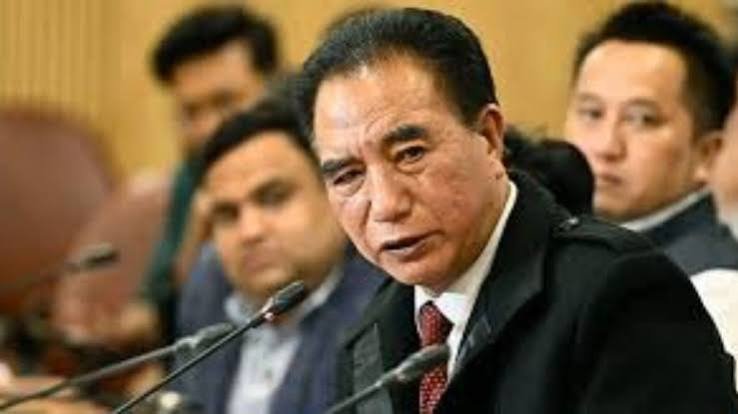
Mizoram Chief Minister Lalduhoma is facing strong criticism from the opposition Mizo National Front (MNF) over remarks concerning the Mizo Peace Accord history and the Inner Line Permit (ILP) system. The MNF has accused the Chief Minister of misrepresenting important aspects of Mizoram’s political history and has demanded a public apology and withdrawal of the remarks.
The controversy centres on Lalduhoma’s reported comments about the 1986 Peace Accord and the role of the parties involved in the settlement. Moreover, the MNF views the accord as a defining part of its political history and has strongly rejected what it considers an inaccurate interpretation.
The dispute has consequently created another point of confrontation between the ruling Zoram People’s Movement (ZPM) and the MNF.
Biren Singh Audio Controversy: NFSU Analysis Clears Former Manipur CM
Mizo Peace Accord History Sparks MNF Criticism
The Mizo Peace Accord history has become the centre of the latest political dispute in Mizoram.
The 1986 agreement ended the long-running Mizo insurgency and established a framework for peace and political settlement. Furthermore, the accord remains an important part of Mizoram’s modern political history.
MNF leaders have argued that Lalduhoma’s remarks do not accurately reflect the significance or political background of the settlement.
However, the allegation of distortion represents the MNF’s political position and should not be treated as an independently established finding.
Mizo Peace Accord History Draws Zoramthanga’s Response
The Mizo Peace Accord history dispute has prompted a direct response from former Chief Minister and MNF president Zoramthanga.
Zoramthanga has accused Lalduhoma of distorting Mizoram’s political history and demanded that the Chief Minister apologise to the people of the state. Additionally, the MNF has called for the disputed remarks to be withdrawn.
The response demonstrates the importance that the MNF attaches to the historical interpretation of the peace settlement.
At the same time, Lalduhoma’s political career also intersects with the period surrounding the peace negotiations, adding another layer to the dispute.
Mizo Peace Accord History and ILP Remarks
The Mizo Peace Accord history controversy also involves comments concerning the Inner Line Permit system.
The ILP remains an important administrative mechanism in Mizoram. Moreover, questions involving migration, indigenous interests, and safeguards have strong political relevance in the state.
The MNF has linked Lalduhoma’s remarks on the ILP with its broader criticism of his understanding of Mizoram’s political safeguards.
However, the Peace Accord and the ILP represent distinct subjects, even though political parties may discuss them together.
Mizo Peace Accord History Becomes Political Flashpoint
The Mizo Peace Accord history dispute has become another flashpoint between the MNF and the ZPM government.
The ZPM won the 2023 Assembly election and formed the state government under Lalduhoma. Meanwhile, the MNF remains a major opposition force under Zoramthanga.
Consequently, disagreements over historical issues can quickly develop into broader political confrontations.
The latest controversy demonstrates how historical events continue to influence contemporary politics in Mizoram.
Mizo Peace Accord History Fuels Demand for Apology
The Mizo Peace Accord history controversy has prompted the MNF to seek a public apology from Lalduhoma.
According to reports, the opposition party has demanded that the Chief Minister apologise and withdraw or correct his remarks before August 15.
The demand gives the dispute a specific political deadline.
However, the August 15 date represents an MNF demand rather than a statutory or constitutional deadline imposed on the Chief Minister.
Mizo Peace Accord History Raises Questions of Political Legacy
The Mizo Peace Accord history dispute also touches on questions of political legacy.
The peace settlement remains closely associated with the MNF’s transformation from an insurgent movement into a mainstream political party. Furthermore, the accord represents a major turning point in Mizoram’s transition toward lasting electoral politics.
The MNF therefore regards its historical interpretation as particularly significant.
However, political parties can differ over how historical events should be understood and presented.
Mizo Peace Accord History Shapes Opposition Strategy
The Mizo Peace Accord history issue could provide the MNF with another opportunity to challenge the ZPM government.
The opposition has already called for Lalduhoma to retract his comments. Additionally, youth groups have reportedly staged protests over the controversy, indicating that criticism has extended beyond the MNF leadership.
The issue could consequently remain active in public and political discussions.
However, its longer-term electoral impact remains uncertain.
Mizo Peace Accord History Keeps Historical Debate Alive
The Mizo Peace Accord history remains relevant because the 1986 settlement fundamentally changed Mizoram’s political trajectory.
The agreement helped establish the conditions for the return of the MNF to constitutional politics and the end of armed conflict. Moreover, the settlement continues to serve as a reference point in discussions about peace, political reconciliation, and Mizo identity.
Political disagreements over its interpretation therefore carry considerable symbolic significance.
However, historical debates should distinguish documented events from competing political narratives.
Mizo Peace Accord History and Lalduhoma’s Political Record
The Mizo Peace Accord history debate has also drawn attention to Lalduhoma’s own role during the period surrounding the peace process.
Lalduhoma participated in political efforts connected with negotiations during the 1980s. His political history therefore adds complexity to the current disagreement over how the peace process should be remembered.
Furthermore, the present dispute involves two senior figures whose political careers developed during different phases of Mizoram’s modern history.
The controversy consequently carries both historical and contemporary political dimensions.
Mizo Peace Accord History Could Deepen MNF-ZPM Rivalry
The Mizo Peace Accord history controversy could further deepen the rivalry between the MNF and ZPM.
The MNF can use the issue to emphasise its historical role, while the ZPM government can respond to the opposition’s interpretation of Lalduhoma’s remarks. Additionally, the dispute may encourage further public discussion about the state’s political transition.
The confrontation could therefore continue beyond the immediate controversy.
However, neither party’s long-term political position can be determined from this dispute alone.
Mizo Peace Accord History Remains Central to Mizoram Politics
The Mizo Peace Accord history continues to occupy an important place in Mizoram’s political discourse.
The latest dispute shows that the 1986 settlement remains more than a historical event. It continues to influence political identity, party narratives, and debates about the state’s relationship with the Union Government.
Moreover, disagreements over the accord can quickly attract strong reactions because of its importance to Mizoram’s peace process.
Conclusion
The Mizo Peace Accord history has become the focus of a fresh political confrontation after the MNF accused Chief Minister Lalduhoma of misrepresenting aspects of the 1986 peace settlement and the ILP system. MNF president Zoramthanga has demanded an apology and withdrawal of the disputed remarks, while the opposition has set August 15 as its deadline.
Moreover, the controversy reflects a deeper struggle over Mizoram’s political history and the competing legacies of the MNF and ZPM. However, claims that Lalduhoma definitively “distorted” history remain an allegation made by his political opponents rather than an independently established conclusion.
Overall, the Mizo Peace Accord history dispute demonstrates the continuing political importance of the 1986 settlement. Lalduhoma’s response and the MNF’s next steps will determine whether the controversy remains a short-term political clash or develops into a wider debate over Mizoram’s historical and political legacy.
FAQs
1. Why is the Mizo Peace Accord history controversial?
The Mizo Peace Accord history has become controversial because the MNF disputes Lalduhoma’s reported interpretation of the 1986 settlement and related political safeguards.
2. What does the MNF want from Lalduhoma?
The MNF has demanded a public apology and withdrawal or correction of the remarks it considers inaccurate.
3. Who is Zoramthanga?
Zoramthanga is the MNF president and a former Mizoram Chief Minister. He has strongly criticised Lalduhoma over the disputed remarks.
4. What is the 1986 Mizo Peace Accord?
The 1986 agreement marked the end of the Mizo insurgency and established a framework for peace and constitutional political participation.
5. Does the controversy prove that Lalduhoma distorted history?
No. The claim comes from the MNF and its leaders. The characterisation should be distinguished from an independently established historical finding.