


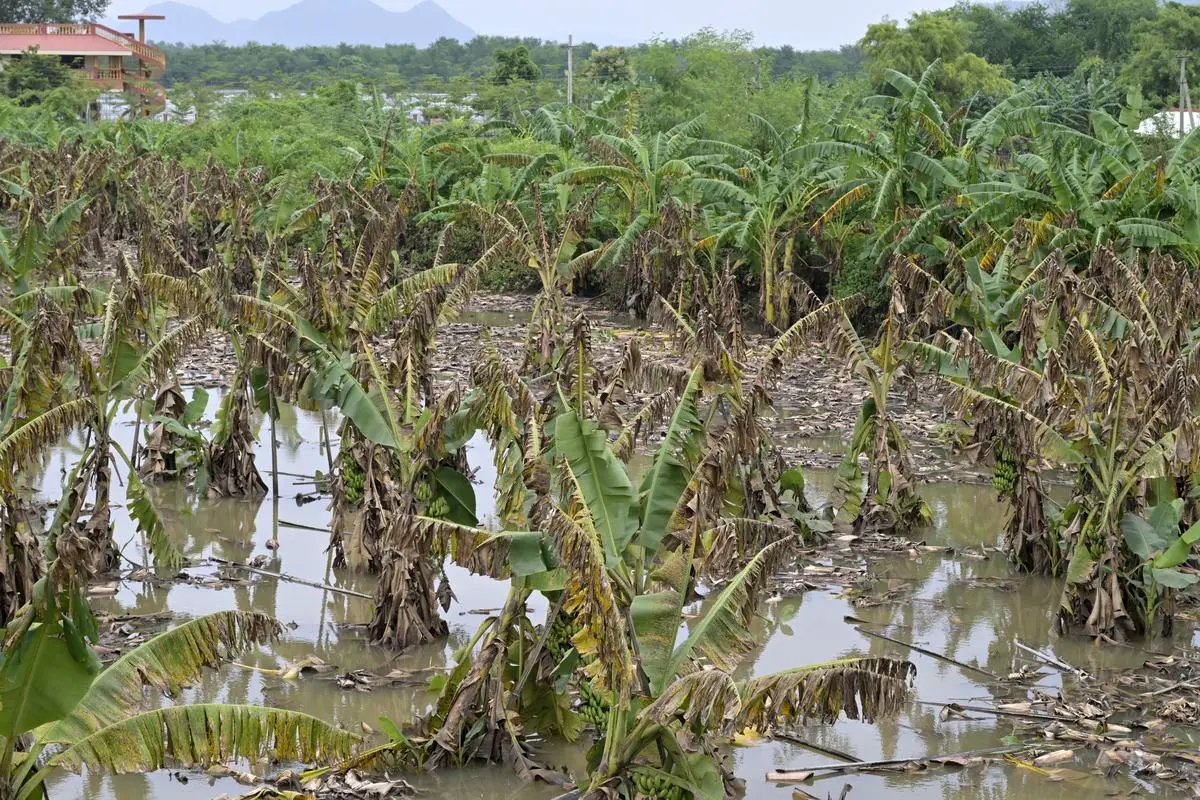
More than 9,981 hectares of agricultural and crop land remain submerged following widespread flooding, highlighting the severe impact of the disaster on farming communities. The extensive inundation has placed crops and agricultural livelihoods under significant pressure.
The affected farmland represents more than a temporary loss of cultivated area. Moreover, prolonged waterlogging can delay the next planting cycle, damage soil conditions, and increase the financial burden on farmers who depend on seasonal harvests.
Authorities will need to assess crop losses and provide appropriate agricultural assistance as floodwaters recede.
Meghalaya Pineapples Hit Bengaluru: Premium Khasi Pineapples Reach Major Indian Metros
9,981 Hectares Remain Underwater
The 9,981 hectares of submerged agricultural land represent a substantial area of farmland affected by the flooding.
Farmers depend on timely cultivation and harvesting cycles to maintain household incomes. Furthermore, prolonged inundation can prevent farmers from accessing their fields and carrying out essential agricultural activities.
The continuing presence of floodwater therefore creates immediate and longer-term challenges.
Crops Face Extensive Damage
Standing crops can suffer significant damage when floodwater remains over fields for extended periods.
The severity of losses can vary depending on the crop, growth stage, water depth, and duration of inundation. Additionally, farmers may face difficulties recovering seeds, equipment, and other agricultural inputs after floodwaters recede.
A detailed crop-loss assessment will be important for determining the scale of assistance required.
Farmers Face Livelihood Pressure
Agricultural losses can directly affect household income.
Farmers who lose a seasonal crop may need additional financial support to purchase seeds, fertilisers, equipment, and other inputs for the next cultivation cycle. Moreover, reduced agricultural income can affect local businesses that depend on farming communities.
The consequences can therefore extend beyond individual farms.
Floodwater Could Delay Cultivation
Even after water levels decline, farmers may not immediately resume cultivation.
Waterlogged soil can require time to drain and recover before farmers can prepare fields for the next crop. Furthermore, damaged irrigation systems, roads, and agricultural infrastructure can create additional delays.
Authorities may therefore need to support both immediate recovery and the next planting season.
Soil Recovery Becomes Important
Flooding can alter soil conditions in affected agricultural areas.
Sediment deposition may sometimes improve soil fertility, while excessive erosion or prolonged waterlogging can create challenges. Additionally, farmers may need technical guidance to determine when fields are suitable for cultivation again.
Agricultural extension services can play an important role during this recovery phase.
Agricultural Infrastructure May Also Suffer
The damage can extend beyond crops and cultivated fields.
Flooding can affect irrigation channels, farm roads, storage facilities, pumps, and other agricultural infrastructure. Moreover, damaged infrastructure can make it harder for farmers to resume production even after fields become accessible.
Restoration efforts will therefore need to consider the wider agricultural system.
Food Supply Concerns Could Emerge
Large-scale crop losses can affect local food availability.
If farmers lose significant portions of their harvest, markets may experience changes in supply and prices. Furthermore, households that normally produce part of their own food may need to purchase additional supplies.
Monitoring agricultural markets can help authorities identify emerging food-security pressures.
Government Assistance May Become Necessary
Farmers affected by extensive flooding may require targeted support.
Possible assistance can include crop-loss compensation, agricultural inputs, credit support, and technical guidance. Additionally, authorities can prioritise the restoration of agricultural roads and irrigation infrastructure.
The precise support available will depend on government assessments and relief policies.
Recovery Will Take Time
Agricultural recovery often continues well after floodwaters disappear.
Farmers must restore fields, replace damaged inputs, and prepare for another cultivation cycle. Moreover, households that depend primarily on farming may need temporary livelihood assistance during the recovery period.
Long-term support can help affected communities return to stable agricultural production.
Flood-Resilient Farming Could Gain Attention
The scale of the inundation could encourage renewed attention to flood-resilient agriculture.
Farmers and authorities may examine drainage improvements, flood-tolerant crop varieties, improved warning systems, and adjustments to planting schedules. Furthermore, better local water-management infrastructure could reduce future agricultural losses.
Such measures could strengthen resilience against recurring floods.
What Happens Next?
Authorities will need to conduct detailed assessments once floodwaters begin to recede.
Officials can document crop losses, identify affected farmers, inspect agricultural infrastructure, and determine recovery requirements. Additionally, timely assistance will be important if farmers need to prepare fields for the next cultivation season.
The recovery process will depend heavily on how quickly affected farmland becomes accessible.
Conclusion
The 9,981 hectares of submerged agricultural land represent a major challenge for farming communities affected by the floods. Prolonged inundation threatens crops, disrupts cultivation cycles, and places additional financial pressure on farmers.
Moreover, recovery will require more than removing floodwater. Authorities will need to assess crop losses, restore agricultural infrastructure, support affected farmers, and help communities prepare for the next planting season.
Overall, the massive agricultural inundation underscores the significant economic and livelihood consequences of the ongoing flooding and the need for sustained agricultural recovery support.
FAQs
1. How much agricultural land remains submerged?
More than 9,981 hectares of agricultural and crop land reportedly remain underwater.
2. How can prolonged flooding affect crops?
Extended inundation can damage standing crops, prevent field access, and disrupt normal cultivation cycles.
3. Will farmers need support after the floods?
Many affected farmers may require assistance with crop losses, agricultural inputs, infrastructure repairs, and restarting cultivation.
4. Can farmland recover after flooding?
Yes, although recovery depends on factors such as soil conditions, erosion, sediment deposition, drainage, and the duration of inundation.
5. What can reduce future agricultural flood losses?
Improved drainage, flood-resilient crops, early-warning systems, water-management infrastructure, and appropriate planting strategies can strengthen agricultural resilience.