


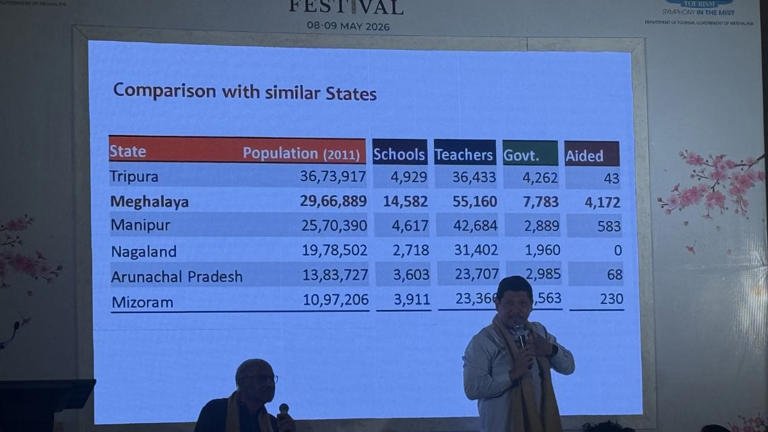
Conrad K Sangma has said that Meghalaya does not want “samosa tourists” and instead aims to promote slow, phased, and sustainable tourism development across the state. His remarks highlighted the government’s growing focus on quality tourism, environmental protection, and community-based economic growth.
Speaking about the future of tourism in Meghalaya, Sangma stressed that the state should avoid uncontrolled mass tourism that puts pressure on natural resources and local communities. According to him, Meghalaya’s tourism strategy should prioritise sustainability, cultural preservation, and long-term benefits for residents.
The chief minister’s comments have sparked discussions about the future of tourism models in ecologically sensitive regions of Northeast India.
Read More: Meghalaya Sets Up Judicial Panel To Probe Garo Hills ADC Poll Nomination Unrest
Conrad Sangma Explains ‘Samosa Tourists’ Remark
Conrad Sangma used the phrase “samosa tourists” to describe visitors who travel briefly, spend very little, and leave without contributing significantly to the local economy or cultural ecosystem.
According to the chief minister, Meghalaya does not want tourism that creates overcrowding but delivers limited long-term value to local communities.
Instead, he said the government wants to attract travellers who stay longer, explore responsibly, and contribute meaningfully to the local economy through hotels, transport, handicrafts, food, and cultural experiences.
Sangma emphasised that tourism growth should remain carefully planned and phased to protect Meghalaya’s ecological balance.
His remarks reflect a broader shift toward sustainable tourism policies in environmentally sensitive destinations.
Focus On Sustainable Tourism
The Meghalaya government has increasingly focused on sustainable tourism over the past few years. Officials believe the state’s natural beauty, waterfalls, caves, forests, and cultural heritage require careful management.
Tourism experts have repeatedly warned that uncontrolled visitor growth can damage fragile ecosystems and create waste management challenges.
Conrad Sangma stated that Meghalaya wants development that preserves nature while generating income opportunities for local residents.
The government has therefore promoted eco-tourism projects, homestays, adventure tourism, and community-driven tourism initiatives.
Officials say these models encourage responsible travel and support local livelihoods at the grassroots level.
The state administration also aims to reduce environmental pressure on heavily visited tourist destinations.
Meghalaya’s Tourism Potential
Meghalaya has emerged as one of the most popular travel destinations in Northeast India. Locations such as Shillong, Cherrapunji, and Dawki attract thousands of visitors every year.
The state’s landscapes, living root bridges, waterfalls, and caves have gained national and international attention through tourism campaigns and social media.
However, rising tourist numbers have also increased concerns regarding overcrowding, pollution, traffic congestion, and environmental degradation.
Experts believe Meghalaya now faces the challenge of balancing tourism growth with ecological protection.
Conrad Sangma’s remarks therefore align with growing global discussions around sustainable and slow tourism models.
Importance Of Slow Tourism
Slow tourism encourages travellers to spend more time in destinations, interact with local communities, and experience regional culture more deeply.
Unlike short-duration tourism, slow tourism focuses on sustainability, local engagement, and lower environmental impact.
Tourism experts say such models often generate better economic benefits for local communities because visitors spend more on accommodation, food, transport, and local products.
Conrad Sangma stated that Meghalaya wants tourism that creates long-term value instead of temporary commercial activity.
Officials believe slower and phased development can help maintain the state’s cultural and environmental identity.
The approach may also improve visitor experiences by reducing overcrowding and preserving natural attractions.
Protecting Ecologically Sensitive Areas
Meghalaya contains several ecologically sensitive regions that require careful conservation. Environmental experts have warned that uncontrolled infrastructure expansion and tourism pressure could damage forests, rivers, and cave systems.
The government has therefore introduced measures to regulate tourism activities in certain locations.
Officials also encourage responsible waste management and eco-friendly tourism practices.
Conrad Sangma stressed that preserving nature remains essential for Meghalaya’s future tourism economy.
According to him, short-term commercial gains should not come at the cost of environmental sustainability.
Experts say many global tourist destinations now face serious ecological challenges because authorities failed to regulate tourism growth early.
Meghalaya aims to avoid similar problems through planned and phased development.
Community Participation Remains Important
The Meghalaya government has repeatedly highlighted the importance of involving local communities in tourism development.
Community-led tourism initiatives have expanded in several parts of the state in recent years. Homestays, cultural tourism projects, and eco-tourism ventures have created new livelihood opportunities for rural residents.
Conrad Sangma said local people should remain central stakeholders in tourism growth.
Experts believe community participation helps ensure that tourism benefits reach grassroots populations instead of remaining concentrated among a few businesses.
Local involvement can also strengthen cultural preservation and environmental protection efforts.
The government has therefore promoted tourism models that encourage direct community engagement.
Infrastructure Development Underway
Although the government supports controlled tourism growth, officials continue investing in infrastructure projects to improve connectivity and visitor experiences.
Road upgrades, digital connectivity, tourism facilities, and airport development remain key focus areas.
However, Sangma clarified that infrastructure expansion should happen in a balanced and sustainable manner.
The government aims to improve accessibility without encouraging uncontrolled commercialisation.
Officials believe phased development allows authorities to monitor tourism impact more effectively.
Experts say such strategies can help maintain long-term sustainability in tourist destinations.
Tourism And Economic Growth
Tourism remains an important economic sector for Meghalaya. It supports hotels, transport services, local markets, food businesses, and handicraft industries.
The government believes sustainable tourism can generate employment while preserving cultural and environmental assets.
Conrad Sangma said Meghalaya wants visitors who value nature, culture, and responsible travel experiences.
Tourism experts argue that high-quality tourism often creates stronger economic benefits than large-scale short-duration tourism.
The state therefore appears focused on attracting travellers interested in immersive and eco-conscious experiences.
Meghalaya’s Long-Term Tourism Vision
The chief minister’s remarks reflect Meghalaya’s broader long-term tourism vision. The state aims to build a tourism model that combines economic growth with environmental conservation and community welfare.
Officials believe slow tourism can help preserve Meghalaya’s identity while supporting sustainable development.
The government also hopes to position the state as a premium eco-tourism destination in India.
Political observers say Sangma’s comments underline the administration’s attempt to promote responsible tourism policies instead of rapid commercial expansion.
Debate On Future Tourism Models
Conrad Sangma’s “samosa tourists” remark has sparked wider discussions on tourism strategies across India’s ecologically sensitive regions.
Experts increasingly argue that destinations must focus on sustainability rather than simply increasing visitor numbers.
Meghalaya’s approach reflects growing awareness about the risks of overtourism and environmental degradation.
As tourist arrivals continue rising in the Northeast, policymakers may increasingly adopt phased and eco-conscious tourism models.
For Meghalaya, the challenge now lies in balancing economic opportunities with environmental responsibility and cultural preservation in the years ahead.
Read More: Arunachal CM Seeks Local CUET Centres For Students