


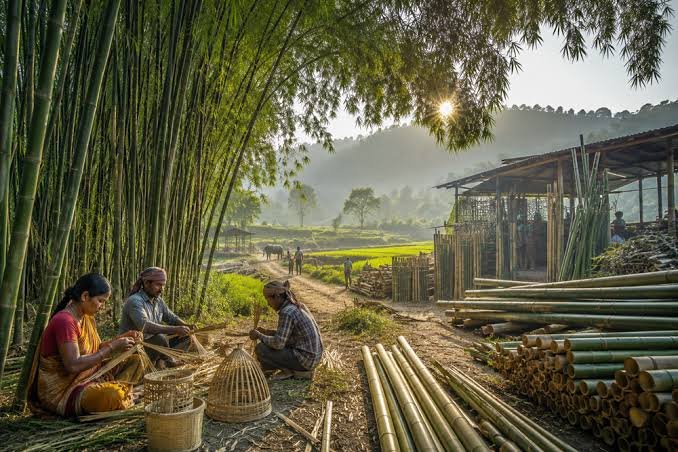
Mizoram bamboo upcycling is creating new opportunities for rural entrepreneurs as they secure institutional credit to develop and export eco-friendly bamboo building materials. The initiative connects the state’s abundant bamboo resources with growing demand for sustainable construction products. Moreover, access to formal credit can help small enterprises expand production, improve processing and reach international markets. The development could also strengthen rural livelihoods while promoting environmentally responsible manufacturing.
Soummodeep Dey Takes on National Youth Leadership Role in Janata Congress Party
Mizoram Bamboo Upcycling Creates Rural Business Opportunities
Mizoram has significant bamboo resources, making the sector an important part of the state’s rural economy. Rural entrepreneurs can turn this natural resource into value-added products instead of selling raw bamboo alone.
Furthermore, bamboo can support the production of construction materials, panels, boards and other building components. These products can generate greater economic value when entrepreneurs process and manufacture them locally.
Institutional credit can provide businesses with the capital they need to purchase equipment, improve processing facilities and increase production capacity. Consequently, small enterprises can move beyond local markets and explore opportunities in larger domestic and international markets.
The growing focus on bamboo upcycling also demonstrates how rural entrepreneurship can connect natural resources with modern manufacturing and sustainability goals.
Mizoram Bamboo Upcycling Supports Eco-Friendly Construction
The construction industry continues to explore materials that can reduce environmental impacts. Bamboo offers an attractive option because it grows relatively quickly and can serve as a renewable raw material when producers manage it responsibly.
Moreover, processing bamboo into construction products can create additional value throughout the supply chain. Farmers, processors, manufacturers, transporters and exporters can all participate in different stages of the industry.
Eco-friendly building materials can also appeal to markets where consumers and businesses increasingly consider sustainability when choosing products. Therefore, Mizoram entrepreneurs could benefit from positioning bamboo products around responsible sourcing and environmentally conscious construction.
Additionally, upcycling and value addition can reduce dependence on selling untreated raw materials. Instead, entrepreneurs can develop finished or semi-finished products with greater market value.
However, successful exports require consistent quality, appropriate certification and reliable production standards. Businesses must therefore combine sustainable sourcing with professional manufacturing and export practices.
Mizoram Bamboo Upcycling Expands Access to Finance
Access to institutional credit can make a significant difference for rural enterprises. Small businesses often need funding to purchase machinery, establish processing units, hire workers and manage larger orders.
Furthermore, formal financing can help entrepreneurs plan expansion more effectively. Instead of relying entirely on personal savings or informal borrowing, businesses can use structured credit to invest in productive assets.
The availability of institutional support can also encourage more entrepreneurs to enter the bamboo-processing sector. As a result, rural communities could develop new employment and income opportunities connected to bamboo-based manufacturing.
Moreover, increased production can create stronger links between bamboo growers and processing businesses. A larger market for processed bamboo products could encourage greater participation across the rural supply chain.
The export ambition adds another dimension to this development. International buyers often require reliable quantities and consistent quality, so access to finance can help enterprises prepare for larger and more demanding orders.
Mizoram Bamboo Upcycling Could Strengthen Green Exports
The combination of bamboo resources, rural entrepreneurship and institutional finance could give Mizoram an opportunity to expand its green manufacturing base.
Moreover, exports of bamboo building materials can introduce products from the state to international markets while generating income for local businesses. Greater market access could encourage entrepreneurs to invest further in product development and modern production methods.
The initiative can also contribute to broader economic diversification. Instead of depending primarily on traditional agricultural activities or raw-material sales, rural communities can participate in manufacturing and export-oriented businesses.
Additionally, a stronger bamboo industry could encourage innovation. Entrepreneurs may develop new designs, construction components and other applications that increase the commercial value of bamboo.
Long-term success will depend on sustainable bamboo management, product quality, financing support and efficient transport connections. Therefore, continued institutional assistance can help businesses overcome the challenges involved in scaling production and entering overseas markets.
Mizoram bamboo upcycling consequently represents more than an environmental initiative. It combines sustainability with rural enterprise development and export potential, creating a model that could contribute to the state’s wider green economy.
Conclusion
Mizoram bamboo upcycling is opening new possibilities for rural entrepreneurs who want to manufacture and export eco-friendly building materials. Institutional credit can help these businesses invest in equipment, expand production and reach larger markets. Moreover, the growth of value-added bamboo products can support rural employment, strengthen local supply chains and position Mizoram as a potential hub for sustainable bamboo-based manufacturing.
FAQs
1. What is Mizoram bamboo upcycling?
Mizoram bamboo upcycling involves transforming bamboo into higher-value products, including eco-friendly building materials, instead of relying only on raw bamboo sales.
2. How does institutional credit help bamboo entrepreneurs?
It can provide businesses with funding for machinery, processing facilities, production expansion and other business requirements.
3. Why is bamboo useful for sustainable construction?
Bamboo can serve as a renewable raw material and can be processed into various construction and building products.
4. Can bamboo products create rural employment?
Yes. Bamboo farming, processing, manufacturing, transportation and exporting can create opportunities across the rural supply chain.
5. What could help Mizoram expand bamboo exports?
Consistent product quality, sustainable sourcing, suitable certifications, financing and reliable transport and export infrastructure can support international market expansion.