


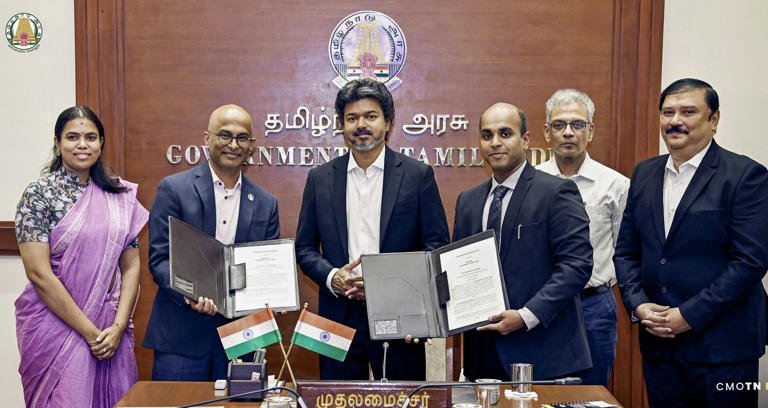
US-based coffeehouse giant Starbucks will establish its first Global Capability Centre (GCC) in India in Chennai, Tamil Nadu. The company signed a Memorandum of Understanding (MoU) with the Tamil Nadu government on September 21 for the new centre. The facility will create around 800 high-value technology jobs in its first phase.
The agreement marks a new step in Starbucks’ technology expansion in India. It also adds the company to Chennai’s growing list of global firms using the city for technology, business and specialised operations.
Starbucks Signs MoU With Tamil Nadu Government
Starbucks signed the MoU with Guidance Tamil Nadu, the state’s investment promotion agency. The agreement took place at the Tamil Nadu Secretariat in Chennai in the presence of Chief Minister C. Joseph Vijay and senior government officials.
The new GCC will operate separately from Starbucks’ retail business in India. Starbucks currently runs its Indian retail operations through a joint venture with Tata Consumer Products. The new centre will not form part of that retail partnership.
The GCC will instead support Starbucks’ wider global technology and business operations. The company plans to use the centre to access India’s large pool of skilled technology professionals.
Centre to Create Around 800 Technology Jobs
The Chennai GCC will create around 800 jobs during its initial phase. The positions will focus on high-value technology and business functions. The move could create opportunities for engineers, technology professionals and other specialised workers in Tamil Nadu.
The company has not disclosed the total financial investment for the project. However, the planned hiring highlights the scale of Starbucks’ technology operations in India.
Global Capability Centres have changed considerably in recent years. Many multinational companies now use them for software development, finance, research and development, product work and other specialised functions. These centres often support operations across several countries.
Starbucks’ Chennai facility will form part of this wider global technology network.
Chennai’s Technology Talent Attracts Starbucks
Starbucks Chief Technology Officer Anand Varadarajan highlighted several factors behind the company’s decision to choose Chennai.
He pointed to the city’s large pool of skilled technology professionals. He also mentioned employee retention, strong infrastructure and the support offered by the Tamil Nadu government.
Chennai also has a strong engineering and academic ecosystem. The city hosts technology operations for several major international companies. These include Citi, Barclays and American Express.
For Starbucks, access to experienced professionals can support the company’s plans to develop new technology solutions. The company also wants to expand its global capabilities while working with teams in other locations.
GCC Will Support Starbucks’ Global Operations
The new centre will add to Starbucks’ existing technology presence in the United States. The company has technology operations in Seattle and is also expanding its corporate presence in Nashville. The Chennai GCC will work with Starbucks teams in the US and other locations.
The centre will therefore have a global role rather than focusing only on Starbucks’ Indian business.
GCCs increasingly serve as strategic hubs for multinational companies. Companies use them to develop technology, analyse data, manage finance and support research. They can also help businesses build specialised teams in major technology markets.
Starbucks’ decision to create such a centre in India reflects the growing role of the country’s technology workforce in global operations.
Chennai Strengthens Its GCC Ecosystem
The Starbucks announcement comes as Chennai expands its GCC ecosystem. Several international companies have recently announced new centres or investments in the city.
US healthcare and pharmacy company Walgreens recently signed an agreement to establish its first India GCC in Chennai. The centre could create more than 250 high-value jobs during its first year.
Other companies, including Nordex, Chubb, EY and Sigma Technology, have also announced GCC-related investments or agreements in the region.
Tamil Nadu has also announced three dedicated GCC corridors in Chennai. The government plans to provide higher floor space index in these corridors. The initiative aims to support the development and expansion of large GCC operations.
Tamil Nadu Focuses on High-Value Employment
The Starbucks project fits into Tamil Nadu’s broader effort to attract global companies and create specialised employment.
Industries Minister S. Keerthana welcomed the Starbucks investment. She said the company’s decision to select Chennai reflects the state’s talent base and business environment. She also said the government wants international companies to build their next-generation capabilities in Tamil Nadu.
The government has increasingly focused on attracting GCCs because these centres can generate technology and business-services jobs. They can also connect local professionals with global projects.
For young technology professionals, the arrival of major international companies can create opportunities in areas such as software, engineering, finance and research.
Starbucks Expands Beyond Its Retail Business
Starbucks already has a substantial retail presence in India. The company operates around 500 cafes through its partnership with Tata Consumer Products.
The new Chennai GCC represents a different part of the company’s India strategy. Instead of focusing on stores and customer-facing operations, the centre will support global technology and business requirements.
This distinction is important because the GCC will function independently of Starbucks’ Indian retail joint venture.
The move also shows how India can serve multinational companies in multiple ways. Beyond being a major consumer market, the country provides access to technology talent and specialised business expertise.
Potential Impact on Chennai’s Technology Sector
The new Starbucks centre could add momentum to Chennai’s technology and business-services sector. The initial plan for around 800 jobs will bring a major international brand into the city’s expanding GCC network.
The centre could also create indirect opportunities for the local technology ecosystem. Companies that support GCC operations can benefit from increased demand for professional services, infrastructure and technology solutions.
The project may further strengthen Chennai’s role as a location for multinational companies seeking skilled professionals. Its established technology sector, educational institutions and infrastructure remain important factors in attracting such investments.
Hiring Expected to Begin in 2027
The company plans to build its workforce in phases. Reports indicate that hiring for the Chennai GCC is expected to begin in the first quarter of 2027. The initial phase will focus on around 800 high-value positions.
The company has not yet provided a detailed breakdown of the roles or the full timeline for the centre’s operations.
More information about recruitment is likely to emerge as Starbucks moves ahead with the project.
Conclusion
Starbucks’ decision to establish its first Global Capability Centre in India marks a new development in the company’s global technology strategy. The Chennai centre will create around 800 high-value technology jobs during its initial phase.
The centre will operate independently of Starbucks’ retail partnership with Tata Consumer Products. It will support the company’s global technology and business operations while working with teams in the United States and other locations.
For Chennai, the investment adds another major global company to its growing GCC ecosystem. With its technology talent, infrastructure and expanding GCC corridors, the city continues to attract companies seeking specialised teams and global business capabilities.