


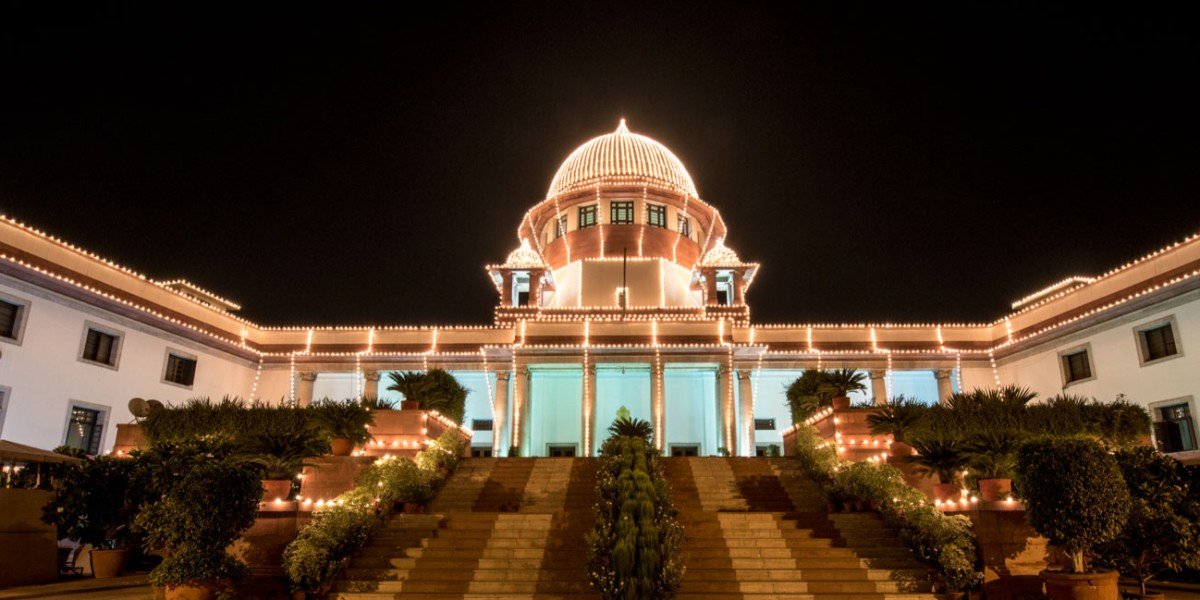
The Supreme Court on Tuesday observed that the Trinamool Congress (TMC) can file a legal plea in seats where excluded votes marked as “under adjudication” exceeded the margin of defeat. The remark came during a hearing linked to disputes over the recently concluded West Bengal Assembly elections.
The apex court said election law gives candidates and political parties the right to challenge such exclusions if they believe the decision affected the final outcome. The bench, however, did not order any immediate recount or review of votes.
Instead, the court advised aggrieved parties to follow the legal route available under election laws.
Read More: New Bengal CM Suvendu Adhikari Begins Tenure With Tribute To Tagore
Supreme Court points to election petition route
During the hearing, lawyers representing the petitioners argued that several constituencies witnessed extremely close contests. They claimed authorities excluded certain votes from the final tally because those ballots remained “under adjudication.”
According to the submissions, the number of excluded votes in some seats was higher than the margin by which candidates lost the election.
The petitioners argued that such exclusions could have changed the result in those constituencies. They urged the court to ensure transparency and fairness in the counting process.
The Supreme Court responded by stating that election petitions remain the proper mechanism for examining disputes related to vote counting and exclusions.
The bench observed that courts handling election petitions can review records, examine evidence, and determine whether the disputed votes had any effect on the result.
The judges also clarified that parties have the liberty to approach the competent authority if they believe the exclusions influenced the electoral verdict.
TMC prepares to examine legal options
The TMC welcomed the observation made by the Supreme Court. Party leaders said they would study constituency-wise data before deciding their next step.
Senior leaders from the party maintained that every valid vote should receive proper consideration during the counting process. They also stressed that voters must not lose their democratic rights because of procedural disputes.
According to party sources, the legal team may identify constituencies where victory margins remained extremely narrow. The party could then decide whether to challenge the results in those seats.
TMC leaders also alleged that confusion during counting created uncertainty in several constituencies. They argued that transparency in handling disputed votes remains essential for public confidence in elections.
The party, however, has not yet announced the number of seats it may challenge through legal proceedings.
Opposition rejects allegations
Opposition parties strongly rejected the claims raised by the TMC. Leaders from the Bharatiya Janata Party (BJP) accused the ruling party of attempting to question the electoral verdict after suffering setbacks in key constituencies.
BJP leaders stated that election officials conducted the counting process according to established rules and under the supervision of the Election Commission of India.
They also claimed that the TMC should respect the democratic mandate delivered by voters instead of raising doubts after the polls concluded.
Several opposition leaders argued that election disputes should rely on evidence instead of political allegations. They added that courts would decide the matter if petitions are formally filed.
The political exchange between both camps has intensified following the Supreme Court’s remarks.
What does ‘under adjudication’ mean?
Election experts explained that votes may come under adjudication when officials identify disputes regarding ballot validity, documentation, or procedural compliance during counting.
In such situations, returning officers or election authorities examine the ballots before making a final decision. Until that process ends, officials may temporarily exclude those votes from the final count.
Legal experts noted that such cases usually arise in closely fought elections where even a small number of disputed votes can affect the result.
They also explained that election law permits candidates to challenge outcomes if they can show that irregularities materially influenced the final verdict.
According to constitutional experts, courts handling election petitions often examine ballot records, rejected votes, postal ballots, and counting procedures before reaching conclusions.
These proceedings can continue for several months because courts must verify detailed election records.
Political significance of the controversy
The controversy over excluded votes has added another layer of tension to West Bengal politics after the Assembly elections.
The polls witnessed intense campaigning and sharp exchanges between rival political parties. Multiple complaints regarding counting procedures and election conduct also emerged during the process.
Political observers believe the issue may gain importance in constituencies where the difference between victory and defeat remained very small.
If parties file election petitions, courts may seek records from election authorities to determine whether excluded votes require reconsideration.
Analysts also believe the Supreme Court’s observation keeps legal remedies open for candidates who wish to challenge disputed counting decisions.
At the same time, the court made it clear that any challenge must follow the framework established under election law.
Focus remains on close contests
Attention now remains on constituencies where margins stayed extremely narrow during the Assembly elections.
Political parties are expected to review counting data carefully before taking legal action. Lawyers representing different sides may also examine records linked to disputed ballots and exclusions.
The Election Commission has not issued a detailed public statement on the matter so far. However, officials familiar with the process said adjudication-related exclusions form part of standard counting procedures in disputed cases.
The latest development has once again highlighted the importance of transparency and procedural clarity during elections.
As political parties prepare for possible courtroom battles, the debate over excluded votes is likely to continue across West Bengal’s political landscape.
Read More: Tripura Government Provided 20,845 Regular Jobs Since 2018, Says CM Manik Saha