


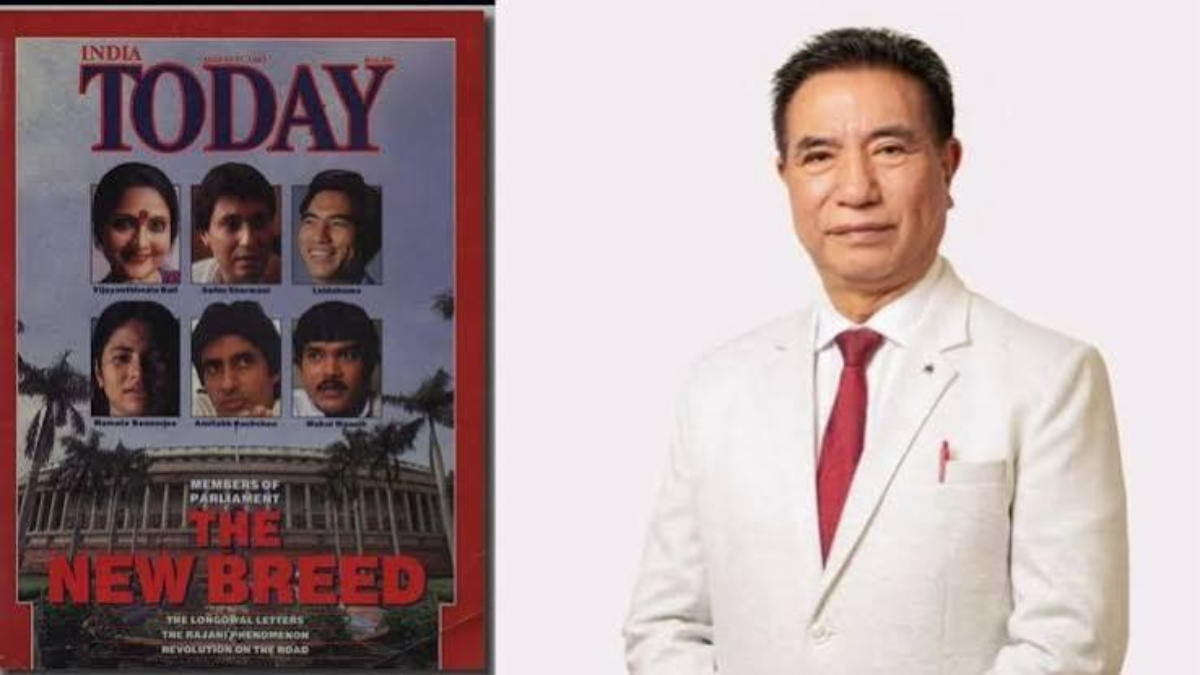
Mizoram Chief Minister Lalduhoma has recalled his appearance alongside Bollywood superstar Amitabh Bachchan on the cover of India Today in 1985. The memory resurfaced during a media interaction in Aizawl on October 14, 2026, when he discussed Mizoram’s social values, development priorities and future ambitions.
The anecdote offered a glimpse into Lalduhoma’s earlier public life. However, his remarks focused on a broader message about the state’s strengths, including social equality, civic responsibility, hospitality and the opportunities Mizoram hopes to create for future generations.
Lalduhoma India Today Cover Recalled After Four Decades
Recalling the magazine appearance, Lalduhoma said, “One thing, if you look at the front page of India Today from 1985, you will see my picture alongside Amitabh Bachchan.”
The remark connected the chief minister’s personal history with a period when India was experiencing significant political and cultural changes. Bachchan was one of the country’s most prominent film stars, while Lalduhoma was building his career in public service and politics.
According to India Today, Lalduhoma had served in the Indian Police Service before entering politics. He also worked as private secretary to Mizoram’s first chief minister, Ch. Chhunga, and played a role in discussions involving Mizo leader Laldenga and the central government.
His recollection of the 1985 cover therefore offered more than a nostalgic moment. It also highlighted the journey that eventually brought him to the highest elected office in Mizoram.
Lalduhoma India Today Cover Highlights Mizoram’s Identity
During the interaction at the Mizoram Assembly Conference Hall, Lalduhoma discussed the characteristics he believes distinguish the state from other parts of India.
He acknowledged Mizoram’s geographical remoteness and limited industrial presence. The state does not have the same concentration of large industrial houses and public sector undertakings found in some other regions.
However, he argued that economic development should not be measured by industrial activity alone. According to his remarks, Mizoram’s social environment and community values are important assets.
“There is no caste system here. There is no beggary,” he said, describing what he sees as distinctive features of Mizo society.
These comments placed social cohesion at the centre of his message. Moreover, they reflected his emphasis on preserving community traditions while pursuing economic growth.
Trust and Hospitality Remain Central to Mizo Society
Lalduhoma also cited everyday examples to explain the values he highlighted during the interaction.
In some rural areas, roadside shops operate on trust. Customers can select goods, check the displayed prices and leave their payments in a box, even when the shopkeeper is absent.
The practice illustrates how community trust can support ordinary commercial transactions without constant supervision.
Additionally, the chief minister described hospitality as a deeply rooted part of Mizo culture. He said refusing a guest was considered taboo in the state.
He also pointed to Mizoram’s peaceful atmosphere while discussing his security arrangements. Lalduhoma said he preferred a relatively small convoy and had sought to reduce the extensive arrangements associated with his position after taking office.
Together, these examples formed a central part of his argument that social values can contribute to a state’s identity and quality of life.
Mizoram 2047 Sets Out Long-Term Development Goals
Beyond his personal recollection, Lalduhoma discussed the state government’s long-term development vision, known as Mizoram 2047.
The initiative aligns with the broader Viksit Bharat 2047 vision and aims to increase Mizoram’s contribution to India’s gross domestic product to one per cent by 2047, according to the chief minister.
He described the target as an ambition for future generations, particularly Gen Z and Gen Alpha. Achieving it will require sustained economic development while making better use of the state’s available resources.
Tourism is another area receiving attention. Lalduhoma said Mizoram expected more visitors during its winter tourism festivities, raising questions about whether existing accommodation could meet demand.
Aizawl has an estimated capacity of around 3,200 beds per night, he said. However, that capacity might not be sufficient if tourist arrivals increase substantially.
Expanding infrastructure and preparing for additional visitors will therefore remain important considerations for the state.
Lalduhoma Connects Personal History With Mizoram’s Future
The 1985 magazine recollection provided a personal starting point for a wider discussion about Mizoram’s development and identity.
While the appearance alongside Amitabh Bachchan recalled an earlier chapter of Lalduhoma’s life, his present priorities concern economic growth, tourism and the preservation of community values.
The Mizoram 2047 vision sets an ambitious target, but meeting it will require investment, infrastructure and opportunities for residents.
Overall, Lalduhoma’s remarks connected memories from four decades ago with the challenges facing Mizoram today. His message was that the state’s social strengths can complement economic progress as it prepares for the future.
KIIT University and iLogitron Technologies Sign MoU to Advance AI in Bhubaneswar