


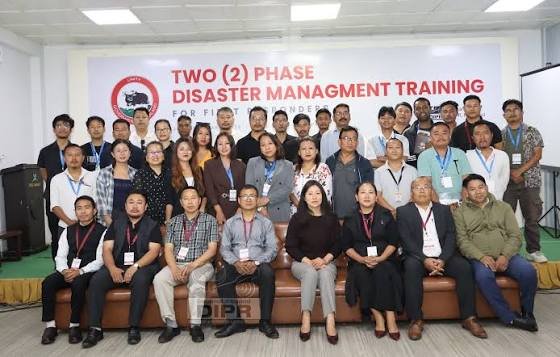
The North Tripura disaster preparedness training programme has concluded after three days of focused capacity-building on disaster preparedness plans. The programme, supported by the Department of Personnel and Training (DoPT), reflects the continuing emphasis on strengthening local administrative readiness and improving coordinated responses to emergencies. Tripura’s disaster-management framework also identifies training, mock drills and updated preparedness plans as important components of risk reduction.
The training comes as disaster preparedness remains an important administrative priority for North Tripura, a district with established systems for early-warning dissemination, emergency coordination and disaster-response planning. Moreover, the district’s preparedness framework places importance on coordination among government departments, local bodies and other stakeholders during emergencies.
North Tripura Disaster Preparedness Training Builds Local Capacity
The three-day programme focused on the preparation and strengthening of disaster preparedness plans. Such training is intended to help officials and other stakeholders understand risks, organise responsibilities and improve coordination before an emergency occurs.
Tripura’s state disaster-management framework recognises capacity building as a key element of disaster risk reduction. It calls for regular training, mock exercises and simulations to improve operational readiness and strengthen the ability of government agencies and communities to respond effectively.
The approach is particularly relevant at the district level because disasters often require several departments to act simultaneously. Therefore, preparedness plans need to establish clear responsibilities before an emergency takes place.
North Tripura already maintains a district disaster management and response framework covering preparedness, early warnings, emergency response and post-disaster assessment. The district plan identifies administrative authorities, police, health services, fire services and other departments as important components of the response structure.
Consequently, training programmes that strengthen knowledge of disaster preparedness plans can help connect existing procedures with practical implementation.
DoPT Support Highlights Importance of Administrative Training
The involvement of the Department of Personnel and Training adds an institutional dimension to the programme. DoPT has previously sponsored intensive training programmes in Tripura through the State Institute of Public Administration and Rural Development, including disaster-risk-reduction and community-based disaster-preparedness courses.
Records from SIPARD show that Tripura has used DoPT-sponsored programmes for disaster-risk-reduction training in several districts. A three-day Disaster Risk Reduction programme was previously conducted for North Tripura, while similar programmes were organised in other districts.
This training model reflects the wider principle that disaster management requires trained personnel at different levels of administration. Officials need to understand not only emergency response but also preparedness, mitigation, coordination and recovery.
Furthermore, Tripura’s State Disaster Management Plan calls for annual capacity-building programmes and specialised training for personnel involved in disaster management. It also stresses the importance of keeping records of trained personnel and conducting refresher training when required.
Therefore, the completion of the latest programme can contribute to a longer-term effort to develop institutional capacity rather than functioning as a standalone training exercise.
Preparedness Plans Focus on Multiple Disaster Risks
The North Tripura disaster preparedness training is particularly relevant because district-level plans must account for different types of emergencies. North Tripura’s existing disaster-management plan addresses hazards including floods, cyclones, drought, fire, earthquakes and other emergencies depending on local vulnerability.
The district has also developed mechanisms for early-warning dissemination through local bodies. Its preparedness framework identifies systems for communicating warnings to communities and coordinating action after alerts are received.
Safe shelters also form part of the district’s preparedness arrangements. The existing plan identifies government buildings and other suitable facilities that can serve as safe locations during emergencies. Meanwhile, health authorities and other departments have responsibilities for emergency services and damage assessment.
Such arrangements demonstrate why disaster preparedness requires planning before an emergency develops. Early warnings become more effective when authorities already know how information should reach communities and which agencies must respond.
Moreover, preparedness plans must remain updated because population patterns, infrastructure, communication systems and local vulnerabilities can change. Regular training provides an opportunity to review procedures and identify areas where coordination may need improvement.
Training Strengthens Coordination Among Agencies
Effective disaster response rarely depends on one department alone. Police, fire services, health authorities, revenue officials, local administrations and community organisations may all have responsibilities during an emergency.
Tripura’s state plan specifically calls for the development of quick-response teams and trained personnel within government departments and agencies involved in disaster management. It also recommends regular mock drills to test the effectiveness of departmental disaster-management plans.
North Tripura’s district plan similarly describes a coordinated response structure involving the district administration, police, fire services, health authorities, public works agencies and other stakeholders.
Therefore, training on disaster preparedness plans can help officials understand how their individual responsibilities connect with the broader emergency-response system.
Community participation also remains important. Tripura’s disaster-management framework recognises communities as the first responders in many emergencies and emphasises local capacity building, awareness and repeated training.
Consequently, administrative preparedness can become more effective when officials, local bodies and communities understand their respective roles before an emergency occurs.
North Tripura Disaster Preparedness Training Supports Future Readiness
The completion of the three-day programme provides an opportunity to strengthen the implementation of existing disaster-management arrangements in North Tripura. However, training alone cannot guarantee effective disaster response. Regular exercises, updated plans and coordination among agencies remain necessary.
Tripura’s State Disaster Management Plan recommends table-top exercises, simulations and mock drills to test operational readiness. It also calls for specialised training for different groups depending on their responsibilities and local risks.
The state’s framework further stresses the importance of maintaining databases of trained personnel and checking whether trained volunteers remain available for emergency duties. This approach can help authorities maintain an accurate picture of their available human resources during a crisis.
For North Tripura, these measures can complement the district’s existing early-warning and emergency-control systems. Regular preparedness activities can also help identify gaps before an actual disaster places pressure on the administration.
Furthermore, the experience gained through training can support coordination with local bodies and community groups. Such cooperation becomes particularly important in areas where professional emergency responders may need time to reach affected communities.
Conclusion
The North Tripura disaster preparedness training programme has concluded after three days of capacity building focused on disaster preparedness plans. Supported by the Department of Personnel and Training, the programme forms part of a broader emphasis on strengthening disaster-management capabilities and improving administrative readiness.
Tripura’s disaster-management framework places strong importance on training, mock drills, simulations, updated plans and community participation. North Tripura also has an established district disaster-management framework covering early warnings, emergency coordination, safe shelters and departmental responsibilities.
The latest programme can therefore help reinforce existing systems by improving understanding among personnel responsible for preparedness and response. However, sustained readiness will depend on regular exercises, coordination and continued updating of disaster plans.
As the state faces different types of natural and other emergencies, strengthening preparedness at the district and community levels remains an important part of reducing risks and improving response capabilities.
FAQs
What was the North Tripura disaster preparedness training about?
The three-day programme focused on disaster preparedness plans and capacity building for improving local readiness and emergency coordination.
Who supported the training programme?
The programme was backed by the Department of Personnel and Training, which has previously sponsored disaster-risk-reduction and community-based disaster-preparedness training programmes in Tripura.
Why are disaster preparedness plans important?
They establish responsibilities, response procedures, coordination mechanisms and preparedness measures before an emergency occurs. This can help authorities respond more systematically when disasters strike.
What types of risks does North Tripura prepare for?
The district’s disaster-management framework considers several hazards, including floods, cyclones, drought, fire and earthquakes, depending on local vulnerability.
What happens after disaster preparedness training?
Training should be followed by practical exercises, mock drills, plan reviews and refresher programmes. Tripura’s disaster-management framework recommends regular simulations and updating of preparedness arrangements.