


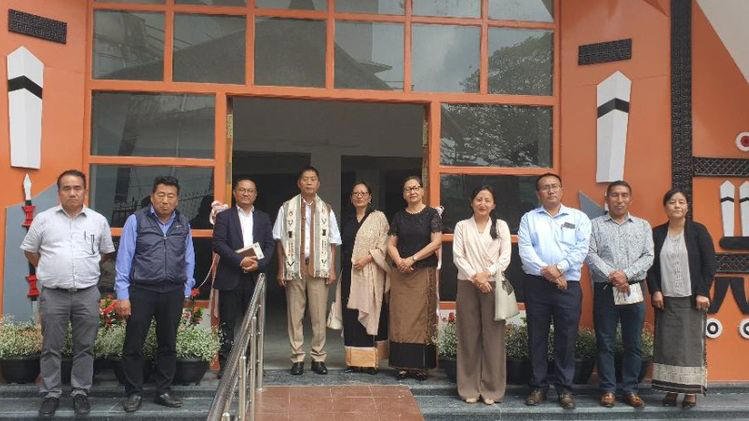
Nagaland has launched a new tribal cultural resource centre aimed at preserving the rich heritage, traditions, and historical knowledge of indigenous communities across the state.
Officials said the initiative seeks to protect traditional customs, languages, oral histories, music, crafts, and cultural practices that have shaped the identity of Naga communities for generations. The new tribal cultural resource centre will also function as a knowledge and research hub for students, scholars, artists, and cultural organisations.
The inauguration ceremony witnessed the participation of government officials, cultural experts, academicians, researchers, and community leaders from different parts of the state.
Read More: Bengal Has Got Freedom: Tripura CM Hails BJP Victory in West Bengal
Authorities described the project as an important step towards safeguarding indigenous heritage at a time when modernisation, migration, and changing lifestyles continue affecting traditional cultural systems in several regions.
The centre is expected to support documentation, research, exhibitions, and awareness programmes related to Naga cultural traditions and historical heritage.
Tribal cultural resource centre aims to preserve heritage
Officials said the tribal cultural resource centre has been designed to preserve and promote the diverse cultural identity of indigenous communities in Nagaland.
The facility will reportedly collect and document traditional knowledge systems, historical records, folk traditions, ceremonial practices, and cultural artefacts linked to different Naga groups.
Experts believe such institutions play an important role in preserving cultural memory and protecting traditional practices from disappearing over time.
Several indigenous communities in Nagaland maintain unique languages, dress styles, music traditions, and oral storytelling systems that hold deep historical significance.
Authorities stated that rapid social and technological changes have created concerns regarding the gradual decline of traditional knowledge among younger generations.
Therefore, the new centre aims to create a permanent institutional space dedicated to cultural preservation and intergenerational learning.
Focus on documentation and research
The tribal cultural resource centre will reportedly focus heavily on documentation and academic research related to indigenous heritage in Nagaland.
Officials said researchers and scholars will receive access to archives, oral history collections, cultural records, and historical materials linked to traditional communities.
Experts noted that many indigenous traditions in the Northeast have historically survived through oral transmission rather than written records. Therefore, systematic documentation remains necessary for long-term preservation.
The centre may also collaborate with universities, cultural institutions, and researchers to encourage academic studies on Naga history, traditions, and indigenous governance systems.
Authorities hope the initiative will inspire young scholars to engage more actively with local history and cultural research.
Educational workshops, seminars, and exhibitions are also expected to become regular activities at the centre.
Indigenous languages and traditions highlighted
One of the key objectives of the tribal cultural resource centre is to support the preservation of indigenous languages spoken by different Naga communities.
Experts warned that several traditional languages and dialects face challenges because younger generations increasingly adopt dominant languages for education and communication.
Officials said the centre may undertake projects related to language documentation, traditional literature preservation, and cultural education programmes.
Community leaders stressed that language remains deeply connected with identity, history, and traditional knowledge systems.
The centre will also reportedly promote traditional art forms, music, dance, weaving, woodcraft, and ceremonial practices associated with indigenous communities in Nagaland.
Cultural experts said preserving such traditions requires both institutional support and active community participation.
Community participation remains important
Government officials and cultural experts stressed that community participation will remain essential for the success of the tribal cultural resource centre.
Several local leaders attending the inauguration programme said cultural preservation efforts should involve elders, artisans, storytellers, musicians, and knowledge keepers from different indigenous communities.
Experts noted that many traditional practices survive because of strong community engagement and intergenerational teaching.
Therefore, authorities plan to involve local communities in exhibitions, training programmes, documentation activities, and cultural festivals organised by the centre.
Officials believe collaborative efforts can help ensure that preservation initiatives remain authentic and community-driven.
The centre may also provide opportunities for local artists and craftspeople to showcase traditional products and cultural practices.
Cultural preservation linked with identity
Speakers at the inauguration ceremony highlighted the strong connection between cultural preservation and indigenous identity.
Experts said traditional customs, festivals, attire, music, and oral histories form important parts of social and cultural identity in Nagaland.
Several participants expressed concern that globalisation and rapid urbanisation could weaken cultural continuity if preservation efforts remain limited.
Authorities stated that the tribal cultural resource centre will encourage awareness among younger generations regarding the value of indigenous heritage and historical memory.
Educational programmes linked to schools and colleges may also become part of the centre’s outreach activities.
Cultural scholars stressed that preserving heritage does not mean rejecting modernity. Instead, they argued that communities should balance cultural continuity with social progress and technological development.
Tourism and cultural awareness may benefit
Officials believe the tribal cultural resource centre may also strengthen cultural tourism in Nagaland by attracting researchers, tourists, and students interested in indigenous traditions.
Nagaland already attracts visitors because of its cultural festivals, scenic landscapes, and traditional heritage. Authorities hope the new centre will provide additional opportunities for cultural learning and heritage promotion.
Experts said cultural tourism can support local economies while creating awareness regarding indigenous traditions and craftsmanship.
The centre may host exhibitions, cultural showcases, and educational programmes that introduce visitors to the diversity of Naga cultural traditions.
However, officials also stressed the need for respectful and sustainable tourism practices that protect community dignity and cultural authenticity.
Observers noted that responsible cultural tourism can create economic opportunities while encouraging heritage preservation.
Government prioritises cultural initiatives
The launch of the tribal cultural resource centre reflects the Nagaland government’s broader focus on cultural preservation and heritage promotion.
Authorities said the state remains committed to supporting projects connected to indigenous knowledge, traditional arts, and community history.
Several cultural organisations welcomed the initiative and described it as an important investment in the future of indigenous heritage.
Experts also highlighted the need for continued financial and institutional support to ensure long-term success of preservation projects.
The government may reportedly expand cultural documentation programmes and collaborate with academic institutions in the future.
Officials stressed that preserving heritage requires continuous effort because traditions evolve over time and face pressure from social changes.
Youth engagement encouraged through cultural programmes
The tribal cultural resource centre also aims to encourage greater youth engagement with traditional culture and heritage.
Educational experts noted that younger generations often face growing disconnect from traditional customs because of urbanisation and changing lifestyles.
Authorities believe workshops, storytelling sessions, cultural festivals, and interactive programmes can help students and young people reconnect with indigenous heritage.
Community elders attending the inauguration encouraged youth to learn traditional songs, oral histories, and cultural practices from older generations.
Experts believe cultural awareness among youth remains essential for preserving indigenous identity and social continuity.
The centre may also create digital archives and online resources to make cultural information more accessible for students and researchers.
Nagaland strengthens heritage preservation efforts
The opening of the tribal cultural resource centre marks an important milestone in Nagaland’s ongoing efforts to preserve and promote indigenous heritage.
Officials believe the institution can become a major platform for cultural research, community participation, and heritage education in the Northeast.
The initiative reflects growing awareness regarding the importance of protecting traditional knowledge systems during a period of rapid social transformation.
Observers said similar cultural preservation projects across the Northeast may help strengthen regional identity while encouraging academic and artistic collaboration.
As the tribal cultural resource centre begins its activities, community leaders, researchers, and cultural experts hope it will play a lasting role in safeguarding the traditions, languages, and historical memory of Nagaland’s indigenous communities for future generations.
Read More: Mamata Banerjee Refuses To Back Down After Dissolution